
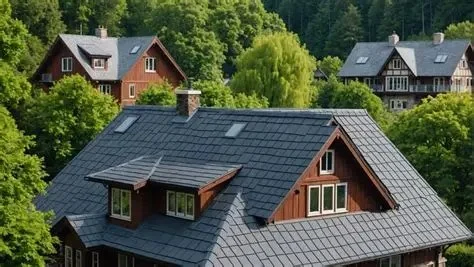
- 1-Why Roof Style Matters for Your Home’s Architectural Era
- 2-Understanding Common Roof Types in Canadian Homes
- 3-Matching Roofs to Architectural Periods
- 4-Practical Tips for Roof Selection and Maintenance
- 5-Real-Life Case Study: Successful Roof Matching
1. Why Roof Style Matters for Your Home’s Architectural Era
Every home has a story, and its roof is often the most visible element that communicates its architectural era. Selecting a roof style that complements your home’s original design not only preserves its aesthetic value but also enhances curb appeal and long-term property value. In Canada, where homes range from Victorian heritage houses in Toronto to modern suburban developments in Calgary, understanding the historical context of your home is crucial.
For example, installing a contemporary flat roof on a classic Tudor-style home could clash visually and even lower its resale value. Conversely, matching the roof to the home’s era ensures harmony, protecting both the structure and your investment.

Christensen & McLean Roofing / christensen & mclean roofing
16173 132 Ave NW, Edmonton, AB T5V 1H7, Canada
2. Understanding Common Roof Types in Canadian Homes
Before matching roofs to architectural periods, it’s essential to understand the most common roof types:
SGM Construction Roofing / sgmconstruction.ca
287 Epsom Downs Dr, North York, ON M3M 1T5, Canada
2.1 Gable Roofs
Characterized by two sloping sides that meet at a ridge, gable roofs are popular for their simplicity and efficient water drainage. They are particularly common in Colonial and Cape Cod homes. Their versatility makes them a safe choice for most traditional Canadian homes.
2.2 Hip Roofs
Hip roofs have slopes on all four sides, converging at a peak. They provide extra stability in windy areas, making them ideal for regions like the Prairies. Architecturally, they pair well with Georgian and French Colonial homes, reflecting a classic, elegant aesthetic.
2.3 Mansard Roofs
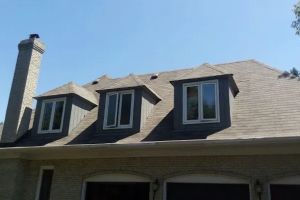
Mansard roofs feature a steep lower slope and a flatter upper slope, often incorporating dormer windows. They are iconic for Second Empire-style homes and provide extra attic space without altering the exterior footprint significantly.
2.4 Flat and Low-Slope Roofs
Common in modern and mid-century homes, flat roofs are functional for urban settings, allowing rooftop decks or gardens. While practical, they require precise drainage systems to prevent water damage, which is critical in Canada’s heavy snowfall regions.
3. Matching Roofs to Architectural Periods
Selecting the right roof style requires understanding your home’s era and its defining characteristics:
3.1 Victorian Era (1837–1901)
Victorian homes often feature steeply pitched gables, decorative shingles, and asymmetrical shapes. Matching a multi-gable or Mansard roof preserves the era’s intricate charm. Pickering Roofing offers specialized materials to replicate authentic Victorian textures while ensuring modern durability.
3.2 Edwardian and Georgian Era (1901–1930s)
These homes emphasize symmetry and classic proportions. Hip roofs with gentle slopes and muted colors work best, enhancing the architectural balance without overpowering the façade.
3.3 Mid-Century Modern (1940s–1960s)
For homes built in this era, flat or low-slope roofs are ideal. Using modern materials like metal or synthetic membranes complements the minimalist aesthetic while providing durability against Canada’s climate extremes.
3.4 Contemporary and Custom Designs (1970s–Present)
Contemporary homes often allow creative freedom in roof design. While unique shapes are common, maintaining proportionality and integrating high-quality materials ensures longevity. Consulting experts like Pickering Roofing helps balance innovation with practical roofing solutions.
4. Practical Tips for Roof Selection and Maintenance
Beyond style, homeowners need to consider functionality and longevity. Here are some practical recommendations:
4.1 Climate Considerations
Canada’s diverse climate—from heavy snowfall in Quebec to rainy coasts in British Columbia—dictates roofing material choice. Asphalt shingles, metal roofs, and slate tiles all offer distinct benefits depending on regional conditions.
4.2 Material Compatibility
Matching roof materials to architectural style is as important as the shape. For example, cedar shakes enhance the rustic charm of a Craftsman home, while clay tiles elevate Mediterranean-style aesthetics.
4.3 Professional Installation and Maintenance
Engaging certified roofers ensures proper installation, preventing issues like leaks and ice dams. Regular inspections, especially after harsh Canadian winters, preserve both appearance and function.
5. Real-Life Case Study: Successful Roof Matching
In Toronto, a homeowner wanted to restore a 1890s Victorian house. By consulting Pickering Roofing, they selected a custom-designed gable roof with patterned shingles reflecting the original era. The result was a visually stunning home that retained its historic charm while benefiting from modern insulation and waterproofing technologies. This case demonstrates how thoughtful roof selection can marry aesthetics with practicality.
By carefully considering your home’s architectural era, selecting compatible roof styles, and using professional installation services like Pickering Roofing, you can significantly enhance both the beauty and value of your Canadian home.





 Save On Roofing Ottawa Ltd0.0 (0 reviews)
 Videl Roofing Inc.5.0 (9 reviews)
 Trudel & Sons Roofing Ltd3.0 (40 reviews)
 Outdoor Contractor Inc.0.0 (0 reviews)
 Laser Cut Roofing Ltd.5.0 (34 reviews)
 Lavazza Roofing4.0 (99 reviews)
 How Much Does a New Roof Cost in 2025? Canadian Roofing Price Guide
 Top Signs Your Roof Has a Leak and What to Do About It in Canada
 Can You Install a New Roof Over an Old One in Canada?
 The Top Questions to Ask Before Hiring a Roofer in Canada
 What Are the Most Common Roofing Scams and How to Avoid Them in Canada
 How to Prepare Your Home for a Roofing Project in Canada