
- 1- The Importance of Roofing Safety
- 2- Common Roofing Accidents and How to Avoid Them
- 3- The Role of Ladders in Roofing Safety
- 4- Harnesses and Fall Protection for Roofers
- 5- Adhering to Professional Standards for Roofing Safety
- 6- Real-Life Story: How Safety Saved a Roofer's Life
- 7- Final Tips for Ensuring Roofing Safety
1- The Importance of Roofing Safety
Roofing is one of the most dangerous professions due to the risks associated with working at heights and handling heavy equipment. Proper safety measures, such as using the correct ladders, harnesses, and following professional standards, can drastically reduce the risk of accidents. Whether you're a professional roofer or a DIY enthusiast, ensuring safety during roofing work should always be a top priority.
In fact, falls are the leading cause of roofing injuries, making it crucial to understand and implement safety measures. By taking the necessary precautions and adhering to industry standards, roofers can prevent many common accidents and avoid costly injuries.
CentiMark Ltd. / centimark corporation
740 Huronia Rd Unit 9, Barrie, ON L4N 6C6, Canada
2- Common Roofing Accidents and How to Avoid Them
Roofing work involves multiple hazards that can lead to accidents if safety practices aren’t followed. Below are some of the most common roofing accidents and how you can avoid them:

1. Falls from Ladders
Falls from ladders are one of the most frequent roofing accidents. To prevent this, always ensure the ladder is securely positioned and maintained. The ladder should be on stable, level ground, and extended at least 3 feet above the edge of the roof for proper support. Never lean too far out on a ladder; instead, move the ladder to a better position if necessary.
2. Slips and Trips on Roof
Slips on the roof can happen due to wet, icy, or uneven surfaces. To avoid slipping, always wear non-slip footwear designed for roofing. If you're working in adverse weather conditions, take extra care and avoid working when it's too slippery.
3. Falling Debris or Tools
When working on a roof, tools or materials can easily fall off the side and pose a risk to people below. Always secure tools and materials with ropes or straps to prevent them from falling. It’s also essential to set up barriers or safety nets around the roof to protect workers below.
3- The Role of Ladders in Roofing Safety
Ladders are an essential part of roofing work, but they also come with their own set of safety concerns. To use a ladder safely, it's important to follow these key guidelines:
1. Choose the Right Ladder
Make sure you use a ladder that is rated for the weight load you'll be carrying, and always choose an extension ladder for roof work. Ladders made from fiberglass or aluminum are great options, but make sure the ladder is rated to handle the weight of both you and your equipment.
2. Set the Ladder Properly
For stability, place your ladder on level ground and ensure it is angled correctly (approximately a 75-degree angle). The bottom of the ladder should be one foot away from the building for every four feet of ladder height. This helps prevent tipping over when climbing or descending.
3. Secure the Ladder
To avoid the ladder slipping, secure the top of the ladder to the roof, and ensure the feet are placed firmly on solid ground. If you’re working on a steep roof, consider using a ladder stabilizer to provide extra support.
4- Harnesses and Fall Protection for Roofers
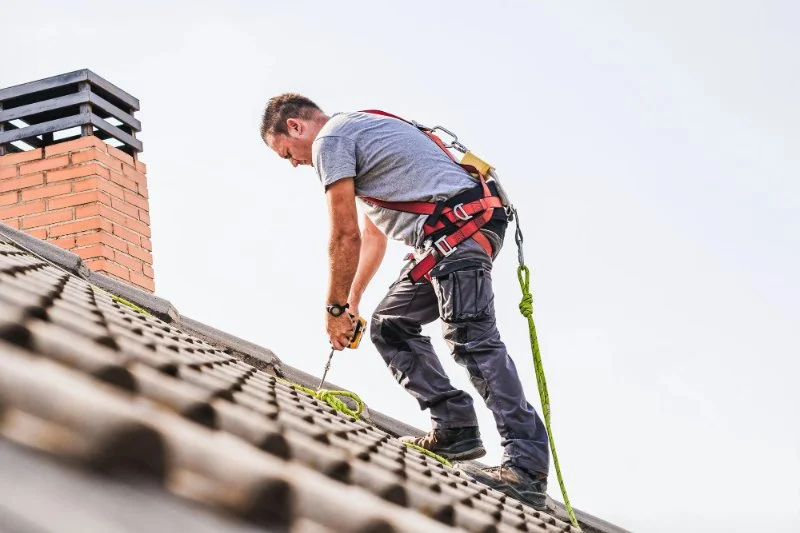
Roofing jobs require working at heights, which increases the risk of falls. Using fall protection equipment such as harnesses, ropes, and guardrails is essential for preventing serious injuries. Here's how to properly use fall protection equipment:
1. Choose the Right Harness
When selecting a harness, make sure it’s designed for roofing work and fits properly. A harness should be snug but not too tight, with adjustable straps that allow for full mobility. Always wear a full-body harness with a secure lanyard or rope to prevent any falls.
2. Set Up Fall Arrest Systems
A fall arrest system includes anchor points, ropes, and lanyards that stop a fall before the person hits the ground. Secure the anchor point to a stable and strong structure, such as a beam or roof ridge, and ensure it can support the weight of the person in the event of a fall.
3. Install Guardrails
Guardrails should be installed along the edges of the roof to prevent workers from falling off. These should be made of durable materials and extend at least 42 inches above the roof surface to be effective.
5- Adhering to Professional Standards for Roofing Safety
Professional roofing standards, such as those set by OSHA (Occupational Safety and Health Administration), are in place to ensure safety during roofing work. By adhering to these guidelines, roofers can reduce the risk of accidents and ensure they are working within legal safety requirements. Some of the key standards include:
1. Using Personal Protective Equipment (PPE)
According to professional standards, all roofers must wear appropriate PPE, such as helmets, non-slip footwear, eye protection, and gloves. These safety measures are designed to protect against falls, flying debris, and other hazards.
2. Roofing Safety Training
Roofing professionals should undergo training to learn about safety standards and proper equipment usage. Regular safety training helps roofers stay updated on the best practices for preventing accidents.
3. Inspection of Equipment
All safety equipment, including ladders, harnesses, and ropes, should be inspected before use to ensure they are in good condition. If any equipment is damaged, it should be replaced immediately to maintain safety on the job.
6- Real-Life Story: How Safety Saved a Roofer's Life
One of the best examples of why safety is so important in roofing work comes from a recent incident in my local area. A roofer, who had been working on a large residential project, fell off a ladder and was lucky to survive due to the fact that he had a safety harness and a fall arrest system in place. The roofer had secured his harness properly and was able to be caught by the system, preventing any serious injuries. This story highlights the importance of not skipping safety measures, no matter how experienced you are.
7- Final Tips for Ensuring Roofing Safety
When it comes to roofing, safety should always be the number one priority. Here are some final tips to ensure your roofing project is as safe as possible:
- Don’t Skip Safety Equipment: Always use the proper ladders, harnesses, and other fall protection devices.
- Take Regular Breaks: Roof work can be physically demanding, so take regular breaks to avoid fatigue, which can lead to accidents.
- Inspect the Weather: Never work on a roof in bad weather, such as high winds, rain, or snow, which can increase the risk of accidents.
- Work with a Partner: Whenever possible, have another person on-site to assist you in case of an emergency.
For more advice on safe roofing practices or to find professional roofing services, visit Pickering Roofing for expert recommendations and reliable solutions.
 La Fleche Roofing (1992) Ltd3.0 (4 reviews)
 Toiture Métallique5.0 (1 reviews)
 Infinite Roofing Inc.5.0 (1 reviews)
 D.C United Roofing4.0 (149 reviews)
 Couverture Franco Inc.4.0 (6 reviews)
 KCM METALS INC5.0 (5 reviews)
 How Much Does a New Roof Cost in 2025? Canadian Roofing Price Guide
 Top Signs Your Roof Has a Leak and What to Do About It in Canada
 Can You Install a New Roof Over an Old One in Canada?
 The Top Questions to Ask Before Hiring a Roofer in Canada
 What Are the Most Common Roofing Scams and How to Avoid Them in Canada
 How to Prepare Your Home for a Roofing Project in Canada