
- 1. The Importance of Accurate Roof Measurement
- 2. Tools You’ll Need for Measuring Your Roof
- 3. Step-by-Step Guide to Measuring Your Roof
- 4. Common Mistakes to Avoid When Measuring Your Roof
- 5. Get Accurate Roof Measurements with Pickering Roofing
1. The Importance of Accurate Roof Measurement
When it comes to roofing projects, the accuracy of your roof measurement plays a crucial role in obtaining an accurate quote. Incorrect measurements can lead to underestimating or overestimating the amount of material required, resulting in additional costs or delays. By taking the time to measure your roof properly, you can ensure a fair quote and avoid unpleasant surprises during your roofing project.
Lansard Bros Roofing Ltd / lansard roofing
50 Don Valley Pkwy, Sunnyside, MB R5R 0C9, Canada
2. Tools You’ll Need for Measuring Your Roof
To measure your roof area accurately, you’ll need the following tools:
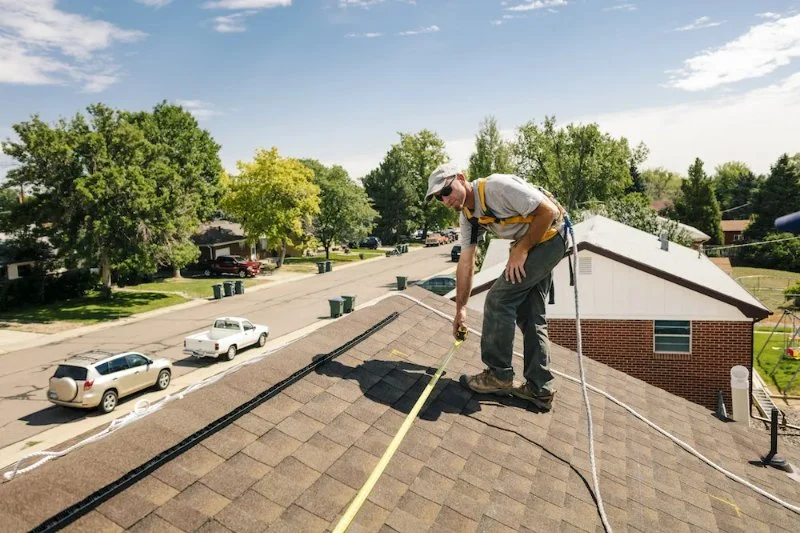
- Measuring Tape: A long measuring tape is essential for measuring the length and width of each section of your roof.
- Roofing Calculator: A roofing calculator or app can help you estimate the square footage quickly and ensure accuracy.
- Ladder: A sturdy ladder is necessary to safely access the roof if you're measuring from the ground level.
- Safety Equipment: Don’t forget safety equipment such as gloves and non-slip shoes, especially if you need to climb on the roof to measure.
3. Step-by-Step Guide to Measuring Your Roof
Follow this simple process to measure your roof area:
- Step 1: Measure the length and width of your roof's sections. For a flat roof, this is straightforward, but for a pitched roof, you’ll need to measure the length of the eaves and the slope to calculate the area accurately.
- Step 2: Multiply the length by the width for each section to get the square footage. If your roof has multiple sections, add up the measurements for each one.
- Step 3: Adjust for slope. If you have a pitched roof, you’ll need to use the roof pitch factor to account for the angled surface. You can calculate this using a pitch calculator online or by using the rise and run measurements.
- Step 4: Add a 10-15% overage for wastage and material overlap, which ensures you have enough roofing material to cover any irregularities or cuts.
4. Common Mistakes to Avoid When Measuring Your Roof
Measuring your roof can be tricky, and there are common mistakes people make that can affect the accuracy of the measurements:
- Not accounting for roof slope: Failing to adjust for the slope of a pitched roof can result in underestimating the total square footage.
- Overlooking roof sections: Be sure to measure all sections of your roof, including dormers, valleys, and overhangs. Missing any section can lead to an inaccurate quote.
- Incorrectly calculating the pitch: If you’re unsure how to calculate the pitch, consider using an online pitch calculator or ask a professional for assistance.
- Not including waste allowance: Always factor in extra material for cuts, overlap, and mistakes during installation. This will prevent shortages later on.
5. Get Accurate Roof Measurements with Pickering Roofing
While measuring your roof can be a simple task, if you’re unsure or don’t feel comfortable doing it yourself, the experts at Pickering Roofing are here to help. They offer professional roof measurement services, ensuring accurate results and a fair quote. By trusting the experts, you can avoid the hassle of DIY measuring and get a reliable estimate for your roofing project.
Visit Pickering Roofing for more information and get your roof measured the right way!

 Peaks & Valleys Construction - All Kinds of Metal Roofing in Barrie, Ontario | Roof Repairs & Installation | FREE Estimates4.0 (6 reviews)
 Hamkar Roofing5.0 (15 reviews)
 Bruce Clarke Roofing4.0 (44 reviews)
 Ontario Tech Roofing Hamilton5.0 (33 reviews)
 HeFeng Roofing5.0 (5 reviews)
 Storm Pro Exteriors4.0 (27 reviews)
 How Much Does a New Roof Cost in 2025? Canadian Roofing Price Guide
 Top Signs Your Roof Has a Leak and What to Do About It in Canada
 Can You Install a New Roof Over an Old One in Canada?
 The Top Questions to Ask Before Hiring a Roofer in Canada
 What Are the Most Common Roofing Scams and How to Avoid Them in Canada
 How to Prepare Your Home for a Roofing Project in Canada