
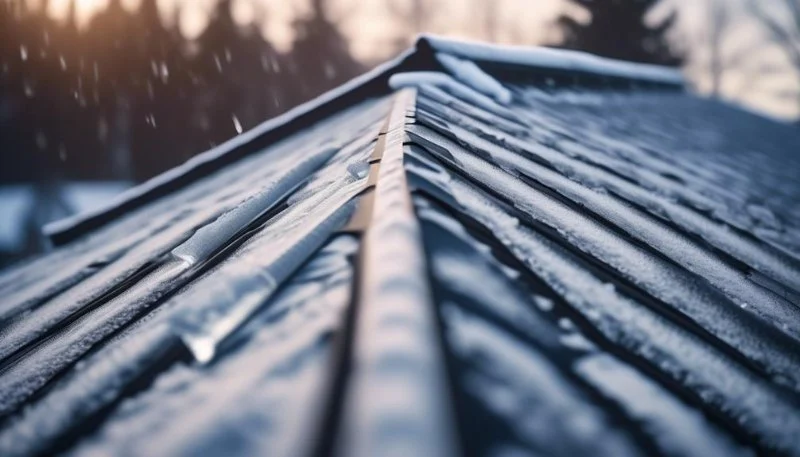
How to Reduce Ice Dam Risks with Proper Roof Ventilation
- Understanding Ice Dams
- How Roof Ventilation Helps Prevent Ice Dams
- Types of Roof Ventilation Systems
- Step-by-Step Guide to Installing Roof Ventilation
- Real-Life Case Study: Preventing Ice Dams with Proper Ventilation
- Why Choose Pickering Roofing for Roof Ventilation Solutions
Understanding Ice Dams
Ice dams are a common winter issue for homeowners, especially in colder regions like Canada. They occur when heat from the home melts snow on the roof, and the water runs down to the eaves, where it refreezes. This creates a barrier of ice that traps water on the roof, which can lead to leaks, water damage, and even structural issues.
The formation of ice dams is primarily due to improper roof ventilation, which can cause uneven heating on the roof. When the attic remains warm, it causes the snow on the roof to melt at the top, while the colder areas near the eaves remain frozen. Without proper roof ventilation, this cycle continues, and ice dams are likely to form, potentially causing significant damage to your roof and home.
Concord Roofing / roofing company richmond hill
Richmond HillRegional Municipality of YorkOntario
551 16th Ave, Richmond Hill, ON L4C 7A7, Canada
How Roof Ventilation Helps Prevent Ice Dams
Proper roof ventilation is the key to preventing ice dams. Roof ventilation helps regulate the temperature of the attic, ensuring that the roof remains uniformly cold throughout the winter. By allowing cool air to enter the attic and hot air to escape, ventilation prevents the snow from melting and refreezing, thus reducing the risk of ice dam formation.
There are two primary types of ventilation: intake ventilation, which allows cool air to enter the attic, and exhaust ventilation, which lets warm air escape. Together, these systems create a balanced airflow that keeps the attic temperature consistent with the outside temperature, preventing the heat buildup that leads to ice dams.
Horizon Roofing Ltd / horizon roofing
3735 Cabana Road E, Windsor, ON N8V 0A5, Canada
Types of Roof Ventilation Systems
There are several types of roof ventilation systems that can help prevent ice dams. Here are the most common options:
1. Ridge Vents
Ridge vents are installed along the peak of the roof and allow warm air to escape from the attic. This type of vent provides a continuous exhaust vent, which is highly effective at maintaining airflow and regulating attic temperature.
2. Soffit Vents
Soffit vents are placed under the eaves of the roof and allow cool air to enter the attic. These vents work in tandem with ridge vents to create an efficient ventilation system that promotes constant airflow.
3. Gable Vents
Gable vents are installed in the walls of the attic, usually near the top of the gable ends. These vents allow for passive airflow, but they may not be as effective as ridge and soffit vents in preventing ice dams when used alone.
4. Roof Vents
Roof vents are installed directly into the roof to allow warm air to escape. These vents can be used in conjunction with other ventilation systems to enhance airflow and reduce the likelihood of ice dams.
Step-by-Step Guide to Installing Roof Ventilation
Installing proper roof ventilation can be an involved process, but it is worth the effort to prevent ice dams and protect your home. Here’s a step-by-step guide to installing roof ventilation:
1. Assess the Attic Space
Start by inspecting the attic to determine how much ventilation is needed. Check for any existing vents and ensure they are not blocked. Measure the size of your attic to help determine the appropriate number and size of vents required.
2. Choose the Right Ventilation System
Based on your attic size and the specific needs of your home, choose the appropriate combination of ridge, soffit, or gable vents. A professional roofing contractor can assist you in selecting the best system for your home.
3. Install Soffit Vents
Soffit vents are typically installed under the eaves of the roof. Carefully measure and cut the soffit boards to fit the vents. Make sure that the vents are aligned and spaced evenly along the eaves to allow adequate airflow.
4. Install Ridge Vents
Ridge vents are installed along the peak of the roof. Cut a narrow strip of roofing material along the ridge and secure the vent in place. Ensure that the ridge vent is sealed tightly to prevent water from entering the attic.
5. Check the Airflow
After installing the vents, check the airflow in the attic to ensure that the system is functioning properly. You should be able to feel a constant flow of air entering from the soffit vents and exiting through the ridge vent.
Real-Life Case Study: Preventing Ice Dams with Proper Ventilation
A homeowner in Ontario was facing repeated ice dam issues every winter. Their attic was poorly ventilated, causing uneven heating on the roof, which led to the formation of ice dams and water leaks inside the home. After consulting with a roofing expert from Pickering Roofing, they decided to install a combination of ridge and soffit vents.
The installation process involved removing some of the existing roofing materials to make way for the new vents. After the new system was installed, the homeowner reported a significant reduction in ice dam formation, even during harsh winter conditions. The attic temperature became more consistent, preventing snow from melting and refreezing. The homeowner was thrilled with the results, and their home was now better protected against the damaging effects of ice dams.
Why Choose Pickering Roofing for Roof Ventilation Solutions
When it comes to preventing ice dams, proper roof ventilation is essential, and Pickering Roofing is here to help. Our team of experienced roofing professionals can assess your home’s unique needs and install the best ventilation system to ensure your attic stays cool and dry throughout the winter.
At Pickering Roofing, we offer reliable products and expert services that will not only prevent ice dams but also enhance the overall efficiency of your home. Visit us today for a consultation and discover the best roof ventilation solutions for your home.


 Pro Home Roofing0.0 (0 reviews)
 Toiture Cyclone Expert - Couvreur Lévis5.0 (45 reviews)
 Milena's Pro Roofers4.0 (51 reviews)
 Nomad Roofing4.0 (89 reviews)
 Markit Roofing Ltd. (Edmonton)1.0 (1 reviews)
 Marios Roofing5.0 (2 reviews)
 How Much Does a New Roof Cost in 2025? Canadian Roofing Price Guide
 Top Signs Your Roof Has a Leak and What to Do About It in Canada
 Can You Install a New Roof Over an Old One in Canada?
 The Top Questions to Ask Before Hiring a Roofer in Canada
 What Are the Most Common Roofing Scams and How to Avoid Them in Canada
 How to Prepare Your Home for a Roofing Project in Canada