
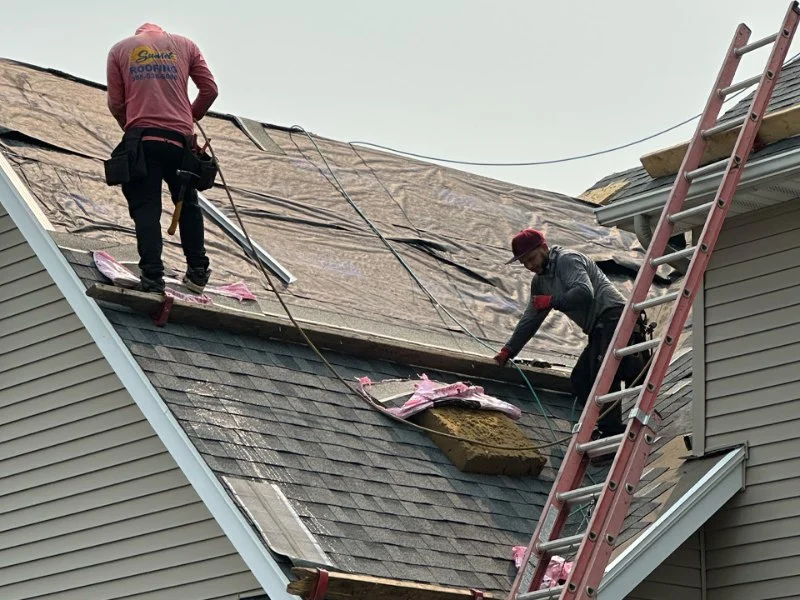
Roof Repair Checklist After Roof Storms & High Winds
- 1. Inspect the Roof Safely After a Storm
- 2. Look for Visible Signs of Roof Damage
- 3. Check Gutters, Flashing, and Structural Areas
- 4. Apply Temporary Fixes to Prevent Further Damage
- 5. When to Call Roofing Professionals
- 6. Real-Life Examples from Canadian Homeowners
- 7. Long-Term Maintenance and How Pickering Roofing Can Help
1. Inspect the Roof Safely After a Storm
After heavy winds or storms hit, your first priority should always be safety. Before checking for roof damage, wait until the weather clears and it’s safe to go outside. Avoid climbing onto the roof immediately—many injuries happen when homeowners try to inspect unstable surfaces.
Instead, begin your inspection from the ground. Use binoculars to look for missing shingles, torn flashing, or debris buildup. If you suspect major damage, contact a professional roofing service. For Canadian homeowners, Pickering Roofing provides expert post-storm inspections that ensure your home remains protected.
2. Look for Visible Signs of Roof Damage
High winds and storms can cause several types of roof damage, and catching these signs early helps you prevent long-term issues such as leaks or mold growth. Here are some key things to look for:

GoldHill Roofing / goldhill
526 Welham Rd Unit 1, Barrie, ON L4N 8Z7, Canada
Missing or Lifted Shingles
Strong winds can rip shingles right off your roof or cause them to lift, exposing the underlayment. Even minor lifting allows moisture to seep underneath, which can lead to rot and leaks.

Custom Contracting Roofing & Eavestrough Repair Waterloo / eavestrough repair waterloo
WaterlooWaterloo Regional MunicipalityOntario
165 Margaret Ave S, Waterloo, ON N2J 2E3, Canada
Damaged Flashing and Seals
Flashing around chimneys, vents, and skylights often loosens during storms. Damaged flashing is one of the most common sources of post-storm leaks.
Interior Water Stains
If you notice brown or yellow stains on your ceilings or walls, it could mean water has already entered your home through the roof. Immediate attention can prevent costly water damage repairs.
3. Check Gutters, Flashing, and Structural Areas
Storms don’t just affect shingles—they also impact connected components of your roof system. Gutters, fascia boards, and soffits are particularly vulnerable to wind damage. Clogged or bent gutters can redirect water toward your home’s foundation, while loose fascia boards can compromise roof integrity.
Inspect for granule buildup in your gutters, as this often signals shingle wear. Also, check that vents and ridge caps remain firmly attached. If anything seems loose, contact a roofing technician before the next rainfall. Pickering Roofing offers full inspections that cover these often-overlooked problem areas, ensuring your roof’s full structural health.
4. Apply Temporary Fixes to Prevent Further Damage
If you’ve identified a problem, quick action can prevent further deterioration. While waiting for professional repair services, use temporary fixes to protect your home from water intrusion:
Cover Leaking Areas
Use a waterproof tarp to cover exposed sections of your roof. Secure it tightly to prevent wind from lifting it off.
Seal Small Leaks
Roof sealant or roofing cement can temporarily stop small leaks until a contractor arrives. However, avoid using too much, as improper sealing can trap moisture underneath.
Clear Debris Safely
Remove branches, leaves, or other debris blocking gutters or valleys. These can prevent proper drainage, leading to standing water that worsens the damage.
5. When to Call Roofing Professionals
While minor repairs can be handled temporarily, larger issues—such as structural damage, extensive leaks, or roof sagging—require professional intervention. A certified roofing contractor can perform a detailed damage assessment, document the damage for insurance claims, and restore your roof safely and effectively.
Canadian homeowners often experience severe wind damage, especially during winter storms. Pickering Roofing specializes in post-storm inspections and offers fast emergency repair services across Ontario, helping homeowners protect their properties from escalating water damage.
6. Real-Life Examples from Canadian Homeowners
Last year, a homeowner in Pickering faced heavy shingle loss after a late-winter windstorm. Instead of delaying repairs, they called a roofing professional the next morning. The inspection revealed that water had already seeped into the attic insulation. Thanks to immediate action, only minor repairs were needed—saving them thousands in potential water damage restoration costs.
On the other hand, another homeowner in Oshawa ignored a loose vent cap after a storm, assuming it was minor. A month later, melted snow entered through the vent, causing mold and ceiling discoloration. Their experience serves as a reminder that even small roof issues should never be ignored after a storm.
7. Long-Term Maintenance and How Pickering Roofing Can Help
Preventive maintenance is key to minimizing storm-related damage in the long run. Schedule roof inspections twice a year—once before winter and once after spring thaw. Cleaning gutters, trimming overhanging branches, and checking flashing regularly can drastically extend your roof’s lifespan.
Pickering Roofing offers maintenance programs designed specifically for Canadian weather conditions. Their team ensures your home stays leak-free, energy-efficient, and protected year-round. Whether you need an emergency repair or proactive maintenance, their reliable experts make post-storm roofing care stress-free and affordable.


 Dillon Bros. Roofing4.0 (11 reviews)
 Mr. Roofing & Siding5.0 (7 reviews)
 Innovation Renovation & Roofing4.0 (18 reviews)
 Agassiz Roofing4.0 (30 reviews)
 Ainger Group Roofing and Exteriors4.0 (321 reviews)
 Green Roofing Solutions0.0 (0 reviews)
 How Much Does a New Roof Cost in 2025? Canadian Roofing Price Guide
 Top Signs Your Roof Has a Leak and What to Do About It in Canada
 Can You Install a New Roof Over an Old One in Canada?
 The Top Questions to Ask Before Hiring a Roofer in Canada
 What Are the Most Common Roofing Scams and How to Avoid Them in Canada
 How to Prepare Your Home for a Roofing Project in Canada