
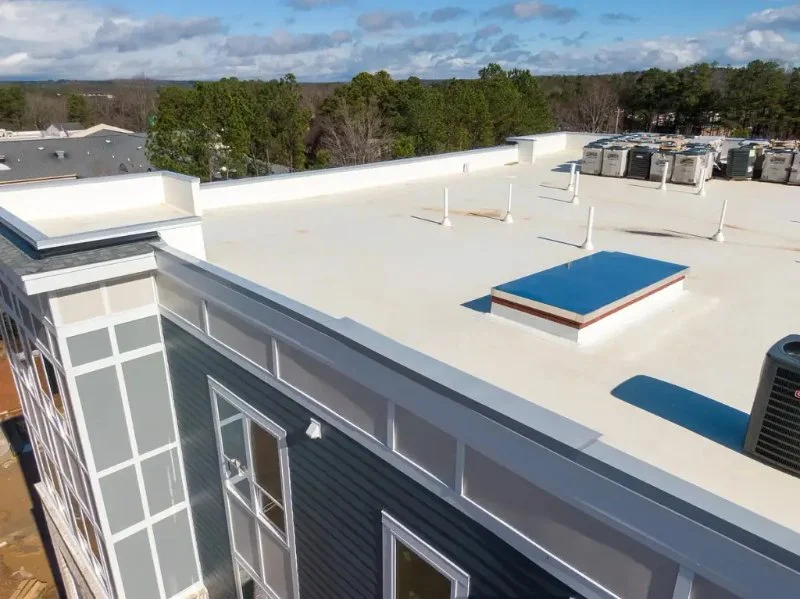
- tpo-roofing-basics-white-vs-black-heat-reflection-performance
- energy-savings-comparison-cooling-and-heating-efficiency-impact
- climate-effect-canadian-weather-roofing-performance-analysis
- real-homeowner-case-study-roof-temperature-and-bill-differences
- choosing-the-right-roofing-system-with-pickering-roofing-experts
Understanding White vs Black TPO Roofing in Canada’s Climate
When homeowners start researching white vs black TPO roofing, the conversation almost always begins with one question: which option helps control indoor temperature better in Canada’s highly variable climate? Thermoplastic Polyolefin (TPO) roofing has become one of the most popular flat-roof systems for both residential and commercial properties because of its durability and reflective properties.
In Canada, where summers can be surprisingly hot and winters extremely cold, roofing material choice directly impacts energy consumption. The difference between white and black membranes is not just aesthetic—it plays a major role in how much heat a building absorbs or reflects.
Contractors from Pickering Roofing often point out that roofing decisions today are less about appearance and more about long-term efficiency. Homeowners are increasingly focused on reducing cooling costs in summer while maintaining insulation performance during winter.

Custom Contracting Roofing & Eavestrough Repair Waterloo / eavestrough repair waterloo
WaterlooWaterloo Regional MunicipalityOntario
165 Margaret Ave S, Waterloo, ON N2J 2E3, Canada
How TPO Roofing Works and Why Color Matters
Basic Structure of TPO Roofing Systems
TPO roofing is a single-ply membrane made from a blend of polypropylene and ethylene-propylene rubber. It is heat-welded at seams, creating a waterproof surface that resists UV damage and chemical exposure.
The color of the membrane directly affects its solar reflectivity. This is where the debate of white vs black TPO roofing becomes essential for energy efficiency planning.
Flynn Canada Ltd. - Toronto / flynn mississauga
MississaugaRegional Municipality of PeelOntario
6435 Northwest Dr, Mississauga, ON L4V 1X1, Canada
Solar Reflectance and Heat Absorption Principles
White TPO surfaces reflect most sunlight, reducing heat absorption. Black TPO, on the other hand, absorbs more solar radiation, increasing roof temperature but potentially offering benefits in colder seasons by retaining heat.
This thermal behavior creates a balance between summer cooling savings and winter heat retention, which is especially relevant in Canada’s mixed climate zones.
Energy Efficiency Comparison in Real Canadian Conditions
White TPO Roofing and Summer Cooling Performance
White TPO roofing is widely considered the most energy-efficient option for warm months. By reflecting sunlight, it reduces rooftop surface temperatures significantly. In urban Canadian areas like Toronto or Vancouver, this can translate into noticeable reductions in air conditioning usage.
In one residential case study shared by Pickering Roofing, a commercial building in Ontario reported a measurable drop in cooling costs after switching to white TPO roofing. The building’s HVAC system ran less frequently during peak afternoon hours, improving overall efficiency.
Black TPO Roofing and Winter Heat Retention
Black TPO roofing absorbs more heat, which can be beneficial during colder months. In provinces like Alberta or Manitoba, where winters dominate the year, some property owners prefer black membranes for their potential passive heat retention benefits.
However, this advantage is limited and often offset by increased cooling demands in summer. This makes black roofing more situational than universally efficient.
Real-Life Example: Two Homes, Two Roofing Choices
A practical comparison comes from two neighboring properties in suburban Ontario. One homeowner installed white TPO roofing, while the other chose black TPO based on aesthetic preference.
During a particularly hot summer, the white-roof home reported significantly lower indoor temperatures without heavy air conditioning use. The black-roof home, however, required extended cooling periods to maintain comfort.
Interestingly, during winter, both homes performed similarly in terms of heating costs, showing that insulation quality often outweighs color influence in cold conditions.
Durability, Maintenance, and Long-Term Performance
UV Resistance and Material Longevity
White TPO roofing typically performs better under UV exposure due to its reflective properties, which reduce material degradation over time. Black TPO may experience slightly faster surface wear in high-sun regions.
Maintenance Requirements Over Time
Both white and black TPO systems are relatively low maintenance compared to traditional roofing materials. However, white surfaces may show dirt more easily, requiring periodic cleaning to maintain reflectivity.
Black roofing hides stains better but may absorb more heat stress over long periods.
Climate Considerations Across Canadian Regions
Cold Regions vs Mixed Climate Zones
In northern Canada, where heating dominates energy use, black TPO may seem appealing. However, most experts still recommend white TPO due to its year-round efficiency balance.
In mixed climate cities like Toronto or Ottawa, white TPO roofing generally provides better overall energy savings across all seasons.
Urban Heat Island Effect
Cities with dense infrastructure benefit significantly from reflective roofing systems. White TPO helps reduce ambient heat buildup, contributing to cooler urban environments and reduced energy demand.
Professional Insights from Roofing Specialists
Experienced contractors emphasize that roofing decisions should not rely solely on color preference. Instead, they recommend evaluating insulation layers, building usage, and long-term energy goals.
Pickering Roofing specialists often advise clients to prioritize white TPO roofing for commercial properties due to its measurable impact on cooling efficiency and HVAC load reduction.
Common Misconceptions About TPO Roofing Colors
“Black Roofing Is Always Warmer Inside”
While black TPO absorbs more heat, interior temperature depends heavily on insulation quality. A well-insulated black-roof building can still perform efficiently.
“White Roofing Is Only for Hot Climates”
White TPO is often thought to be useful only in warm regions, but in reality, its reflective properties help reduce energy consumption year-round, especially in buildings with cooling demands.
Choosing the Right System for Long-Term Value
Selecting between white and black TPO roofing is ultimately a balance between energy efficiency, climate conditions, and building design. Most Canadian homeowners lean toward white TPO because of its consistent performance across seasons.
However, in specific architectural designs or regional conditions, black TPO may still have a place when paired with strong insulation systems.
For those exploring roofing upgrades or installations, Pickering Roofing provides professional consultation and tailored recommendations based on property type and regional climate needs, helping homeowners make informed long-term decisions.



 Roque Roofing Inc3.0 (16 reviews)
 Couvreur R & G Ltée0.0 (0 reviews)
 Jakes Roof Repairs5.0 (35 reviews)
 Canmak Roofing & Fencing4.0 (21 reviews)
 Revibe Roofing0.0 (0 reviews)
 Average Joe's Roofing4.0 (40 reviews)
 How Much Does a New Roof Cost in 2025? Canadian Roofing Price Guide
 Top Signs Your Roof Has a Leak and What to Do About It in Canada
 Can You Install a New Roof Over an Old One in Canada?
 The Top Questions to Ask Before Hiring a Roofer in Canada
 What Are the Most Common Roofing Scams and How to Avoid Them in Canada
 How to Prepare Your Home for a Roofing Project in Canada