
Attic Frost and Condensation: Record Clues Before a Roof Check
On this page
Quick answer
Frost, droplets, damp sheathing, dark staining, or wet insulation in a Canadian attic can come from indoor moisture condensing on cold surfaces, an exterior roof leak, ventilation problems, air leakage, or more than one issue. Do not diagnose the source from one stain. Photograph what you can see from a stable attic access point, note weather and indoor conditions, protect the space below, and arrange an assessment by appropriate roofing, insulation, ventilation, or building professionals.
Do not walk on ceiling drywall, squeeze between rafters, touch wet electrical equipment, or climb onto an icy or wet roof.

Toitures Bernier et Fils / toitures bernier
QuébecCapitale-NationaleQuébec
1095 Chem. de la Canardière #4, Québec, QC G1J 2C2, Canada
Recognize possible moisture clues
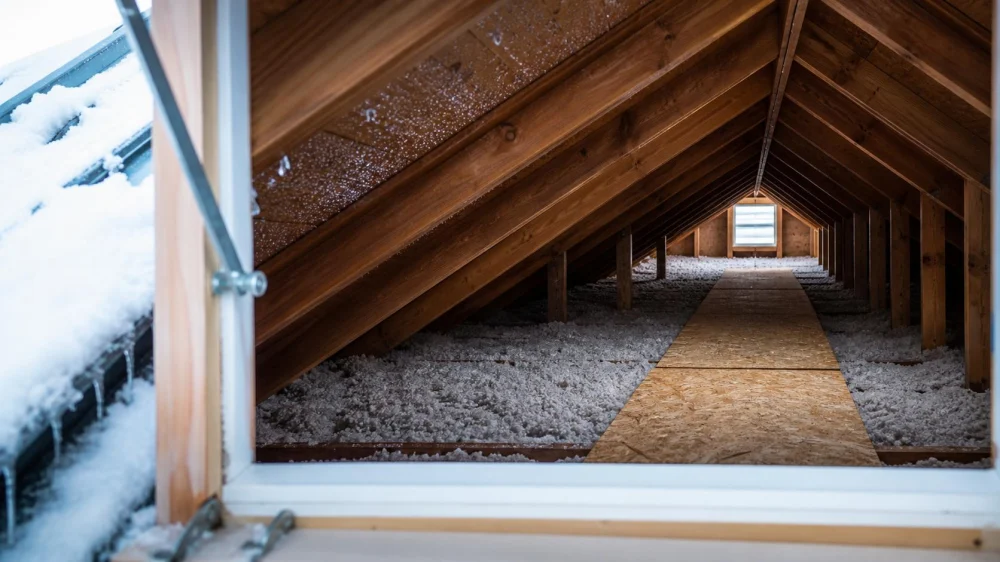
- White frost on nail tips or roof sheathing during cold weather.
- Droplets or dampness that appear after a sharp temperature change.
- Compressed, displaced, or visibly wet insulation.
- Darkened wood, peeling coatings, musty odour, or ceiling marks.
- Bathroom or kitchen ducts that end in the attic instead of outdoors.
These observations are clues, not conclusions. A roof opening can leak during wind-driven rain, while warm indoor air can create moisture without a hole in the roof.
Edmonton Roofing Company / replace roof edmonton
8023 182 St NW, Edmonton, AB T5T 0T6, Canada
Inspect only from a safe position
Turn on a fixed attic light if one exists and look from the hatch or a proper walkway. Wear suitable protective equipment for dust and insulation, keep another adult nearby, and avoid disturbing suspected asbestos, mould, animal waste, or damaged wiring. Stop if footing, visibility, temperature, or air quality is unsafe.
Never cover soffit vents, alter wiring, cut openings, or install a fan as an improvised fix. Changes can worsen moisture movement or create code and safety problems.
Build a useful record
- Write down the date, outdoor conditions, and recent rain, snow, thaw, or deep cold.
- Note indoor humidity readings if you have a reliable monitor.
- Photograph the broad attic area, then the specific clue, without stepping off safe access.
- Mark which room is below the affected area.
- Record when exhaust fans, humidifiers, or fireplaces were used.
- Repeat observations only when it is safe and conditions change.
A short timeline helps a contractor distinguish a recurring seasonal pattern from a one-time event.
Understand possible causes
Warm moist air can enter the attic through gaps around hatches, lights, wiring, plumbing, or ducts. Insufficient or blocked ventilation may reduce drying. Exhaust ducts can leak or terminate in the wrong place. Exterior causes can include damaged roofing, flashing, vents, or ice-related water movement.
Because the systems interact, replacing shingles alone may not solve an indoor air-leakage or humidity problem. Likewise, adding vents without assessing intake, exhaust, insulation, and air sealing may not create balanced performance.
Know who to call
Contact a qualified roofer when the evidence points to roofing, flashing, penetrations, or storm damage. An insulation or building-envelope professional may be needed for air sealing and thermal issues, and an HVAC professional for exhaust or humidity control. If water is near electrical components, keep clear and contact an electrician or emergency service as appropriate.
For active water entry, protect people and belongings below without entering unsafe areas. Ask the professional to document the source, proposed scope, and how the repair will be verified.
Important limitations
This is general information for Canadian homeowners, not a remote diagnosis or code interpretation. Building designs, local requirements, climate zones, insulation, ventilation, and roof assemblies vary. Mould, structural damage, electrical hazards, and extensive water entry require qualified assessment.
Evidence notes
The guidance uses basic building-science principles: moisture moves with air and vapour, cold surfaces can reach condensation conditions, and roofs must manage both exterior water and interior drying. A time-and-weather record helps separate competing explanations but cannot confirm a cause by itself.
FAQ
Does attic frost mean the roof leaks?
Not necessarily. It can result from indoor moisture reaching cold attic surfaces, but an exterior leak must also be considered.
Should I remove the frost?
Do not scrape or heat the roof assembly. Prevent damage below and seek professional guidance.
Can I add more roof vents myself?
Not as a first response. Ventilation must work with air sealing, insulation, intake, exhaust, and the roof design.
Should I lower indoor humidity?
Possibly, but an appropriate target depends on weather, comfort, health, and the building. Use qualified guidance.
Can photos identify the cause?
They help, but an on-site assessment may be needed to confirm moisture pathways and damage.
Next steps
Photograph visible clues from safe access, record recent weather and indoor humidity, keep people away from hazards, and book an assessment that considers roofing, ventilation, insulation, and air leakage together.


 South Simcoe Roofing4.0 (8 reviews)
 RoofLife Roofing Company4.0 (55 reviews)
 Clover Roofing & Sheetmetal Inc5.0 (11 reviews)
 D.C United Roofing4.0 (149 reviews)
 Toiture Ultratoit Inc3.0 (14 reviews)
 Toitures XLS Québec4.0 (16 reviews)
 How Much Does a New Roof Cost in 2025? Canadian Roofing Price Guide
 Top Signs Your Roof Has a Leak and What to Do About It in Canada
 Can You Install a New Roof Over an Old One in Canada?
 The Top Questions to Ask Before Hiring a Roofer in Canada
 What Are the Most Common Roofing Scams and How to Avoid Them in Canada
 How to Prepare Your Home for a Roofing Project in Canada