
Ice Dams on Canadian Roofs: Warning Signs and Safe Action
On this page
Quick answer
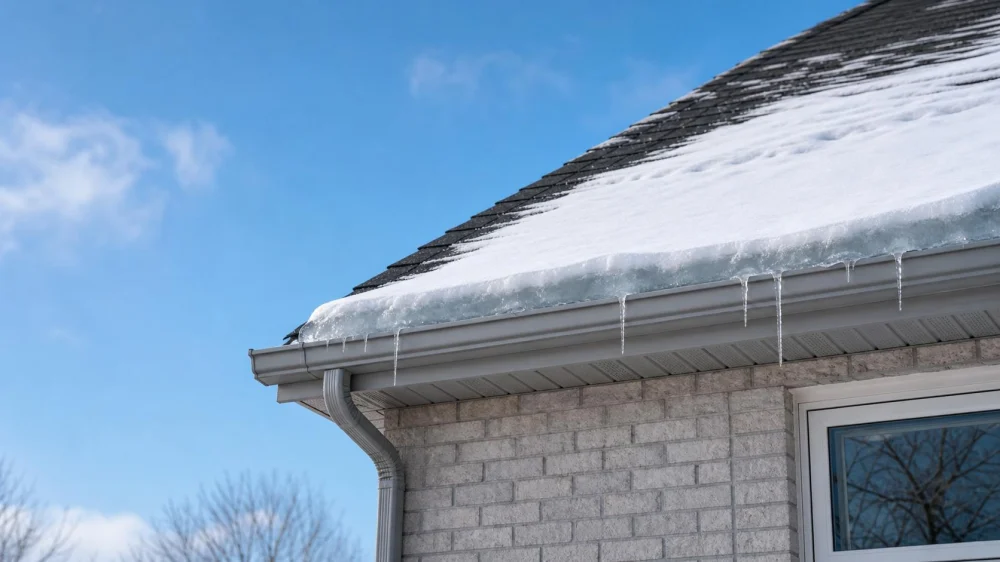
An ice dam is a ridge of refrozen meltwater near a roof edge that can hold water behind it and force moisture under roofing. Look from the ground for persistent edge ice, unusual icicle patterns and melt-freeze bands, and inspect ceilings and exterior walls for moisture. Keep people away from falling ice, control active indoor leaks and call qualified roofing or building-envelope professionals—do not climb onto an icy roof.
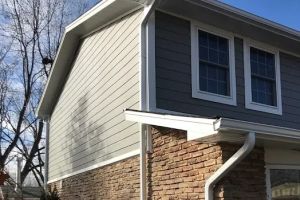
D'Angelo and Sons | Eavestrough Repair & Roofing Burlington / eavestrough burlington ontario
BurlingtonRegional Municipality of HaltonOntario
460 Brant St unit #300, Burlington, ON L7R 4B6, Canada
What an ice dam is
An ice dam forms when snow melts on a warmer part of a roof, flows toward a colder edge and refreezes. Additional meltwater can pool behind the ice and reach openings or laps that normally shed rain. Heat loss, air leakage, insulation discontinuities, roof geometry, sun, snow depth and weather cycles can all contribute.
Not every icicle proves an ice dam, and an ice dam does not identify the exact defect. Canadian homes vary widely in roof assembly, attic configuration and climate. A safe inspection must consider the whole building envelope.
Toiture TNT / Gatineau Outaouais / avis sur toiture tnt / gatineau outaouais
1700 Rue Schryer, Gatineau, QC J8R 1S2, Canada
Warning signs from safe locations
Outside, from the ground
- A continuous ridge of ice near eaves or in valleys.
- Snow melting high on the roof while the edge remains frozen.
- Icicles concentrated below one warm interior area or around roof transitions.
- Ice behind gutters or water staining on soffits and exterior walls.
- Repeated melt-and-refreeze bands after similar weather.
Inside the home
- New ceiling or wall stains near exterior walls.
- Peeling paint, wet trim, damp insulation or dripping around windows.
- Musty odour or moisture that appears during thawing.
- Frost in an attic or roof space visible only from a safe access point.
Best evidence: dated ground-level photos, indoor moisture locations and weather timing. Not ideal: standing beneath icicles, leaning from windows, flying a drone near people or power lines, or entering an unsafe attic.
Immediate actions when water appears
- Protect people. Block the area below falling ice and slippery runoff. Do not chip ice while anyone is underneath.
- Address electrical risk. Keep away from water near lights, wiring, panels or outlets and call emergency or electrical help when needed.
- Contain indoor water. Move belongings, place a container under a safe drip and protect floors without disturbing a bulging ceiling.
- Document conditions. Photograph stains, drips and exterior ice from safe positions before temporary work changes the evidence.
- Call appropriate professionals. A roofer can assess exterior leakage; an insulation or building-envelope professional may be needed for heat and air-leak causes.
- Notify the insurer when warranted. Follow policy reporting and mitigation instructions without assuming coverage.
A bulging, saturated ceiling can collapse. Keep people out of the area and seek urgent professional help rather than puncturing it without understanding electrical and structural hazards.
What not to do
- Do not walk on a snowy or icy roof.
- Do not use an axe, hammer, pressure washer, torch or boiling water on roofing.
- Do not throw ordinary road salt or an unknown chemical onto shingles, metal, gutters or landscaping.
- Do not pull heavy snow or ice onto yourself with an improvised tool.
- Do not install heat cable without an approved design, electrical protection and product instructions.
- Do not assume clearing a gutter fixes the heat-loss mechanism.
Professional steam removal may be appropriate in some situations, but equipment, access, fall protection and roof material matter. Verify the contractor’s method and insurance before authorizing work.
Long-term prevention
After conditions are safe and dry, a qualified assessment may examine:
- air leakage from ceiling penetrations, attic hatches and partition tops;
- insulation depth, continuity and compression;
- ventilation paths and blocked intake or exhaust openings;
- bathroom and kitchen exhaust termination;
- roof valleys, low slopes, dormers and complex transitions;
- eave protection, underlayment and flashing condition;
- indoor humidity and mechanical-system balance.
Air sealing should generally be planned before adding insulation, and both must preserve safe combustion, ventilation and moisture control. Local building requirements and the existing assembly determine the solution. Heat cable may manage symptoms in specific details but does not replace correcting major heat loss.
Choosing qualified help in Canada
Ask a roofing contractor whether the visit includes safe access planning, leak tracing, roof-covering assessment and written temporary versus permanent recommendations. For recurring dams, ask who will evaluate insulation and air leakage. Verify current business details, insurance, credentials required in your province or municipality, warranty terms and emergency fees.
Pickering Roofing is an information and discovery resource; do not assume it directly performs work unless a listing clearly says so. Confirm service area and current qualifications with each provider.
Sources and evidence notes
This guide reflects general building-science and winter roof-safety principles: warm-roof melt, cold-edge refreezing, water backup, air sealing and safe professional removal. Exact causes and repairs require site assessment. Provincial rules, local code, product instructions and qualified professional guidance take priority.
Frequently asked questions
Do large icicles always mean an ice dam?
No. Icicles show meltwater and freezing, but the presence and location of backed-up water require further assessment.
Will cleaning gutters prevent ice dams?
Clear drainage is useful maintenance, but ice dams often form from roof heat and refreezing. Clean gutters alone do not correct air leakage or insulation gaps.
Can I use a roof rake from the ground?
Only with a tool designed for the roof and safe conditions, following manufacturer guidance. Stay clear of power lines, falling snow and ice, and avoid damaging roofing.
Should I add more attic insulation?
Not blindly. Air leakage, ventilation, moisture and insulation continuity should be assessed together. Adding insulation can conceal or worsen unresolved problems.
Can ice dams happen on metal roofs?
Yes. Roof material changes snow and water behaviour but does not eliminate warm-roof melt, cold edges or complex details.
Conclusion and next steps
Observe from safe locations, protect people from falling ice, document indoor and outdoor signs and call professionals for active leakage or recurring dams. Once winter danger passes, investigate air leakage, insulation, ventilation and roof details as one system. The durable fix is usually root-cause control, not repeated chipping at the eave.

 A M Roofing Systems Inc3.0 (15 reviews)
 ANDRE'S ROOFING4.0 (8 reviews)
 Cover GTA Roofing5.0 (47 reviews)
 Stark Roofing4.0 (4 reviews)
 BNS Roofing4.0 (131 reviews)
 Royal Roofs Ltd4.0 (61 reviews)
 How Much Does a New Roof Cost in 2025? Canadian Roofing Price Guide
 Top Signs Your Roof Has a Leak and What to Do About It in Canada
 Can You Install a New Roof Over an Old One in Canada?
 The Top Questions to Ask Before Hiring a Roofer in Canada
 What Are the Most Common Roofing Scams and How to Avoid Them in Canada
 How to Prepare Your Home for a Roofing Project in Canada