
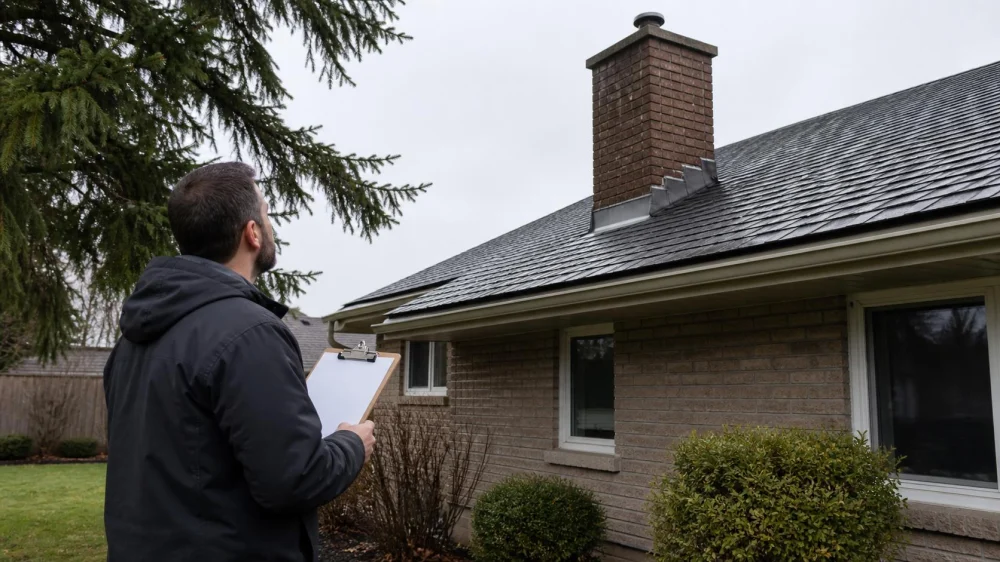
Chimney Flashing Leaks: Ground-Level Clues Before Repair
On this page
Quick answer
Water near a chimney can enter through flashing, masonry, roofing, a cap, condensation, or another path, so a ceiling stain does not prove the source. Stay off the roof, protect the room, note when and where moisture appears, photograph clues from safe locations, and contact a qualified roofer. Urgent hazards need immediate professional help.
Vancouver Moss Removal / moss removal north vancouver
VancouverMetro VancouverBritish Columbia
1615 Frances St #105, Vancouver, BC V5L 1Z3, Canada
Why chimney-area leaks are difficult to trace
Step flashing, base flashing, counter flashing, roofing, sealant joints, masonry, chimney caps, and nearby roof penetrations overlap to shed water. Wind can push rain sideways, while water can travel along decking or framing before appearing indoors. Freeze-thaw cycles common in Canada can widen masonry and sealant defects, but diagnosis still requires direct professional inspection.
This guide is for Canadian homeowners and property managers documenting possible water entry near a masonry or framed chimney. It is not a roof-climbing, repair, insurance, or building-code guide. Roof pitch, height, weather, materials, access, and local requirements change the safe response.
Christensen & McLean Roofing / christensen & mclean roofing
16173 132 Ave NW, Edmonton, AB T5V 1H7, Canada
Practical checklist
- The first date, time, room, and exact location where a stain, drip, damp smell, or finish change appeared.
- Weather at the time: steady rain, wind-driven rain, melting snow, freeze-thaw conditions, or dry weather.
- Safe indoor observations in the attic or room, without touching wet wiring, unstable materials, mould, or contaminated insulation.
- Ground-level or window-view photos of visible gaps, lifted metal, damaged shingles, cracked masonry, or a missing cap, without climbing.
- Whether the chimney is active, recently serviced, shared, abandoned, or connected to fuel-burning equipment.
- Previous roof, flashing, masonry, skylight, gutter, or chimney work and any available warranties or invoices.
- Interior electrical fixtures, sagging finishes, active dripping, occupant vulnerability, and the safest way to isolate the area.
Step-by-step plan
- Keep people and pets away from active drips, bulging ceilings, fallen material, and wet electrical fixtures. Turn off power only if you can do so safely from a dry location.
- Place a stable container under a minor drip and move dry belongings away. Do not puncture a ceiling or open a wall unless an appropriate professional directs the work.
- Record moisture boundaries with dated photos and a small removable mark where appropriate. Note changes after each weather event.
- From the ground, describe the chimney location, roof slope, storey height, access constraints, and any safely visible exterior clue. Never use binoculars while walking or stand below falling debris.
- Call a qualified roofer and explain the timing, weather, interior location, chimney use, and repair history. Mention masonry concerns so the right trade can be coordinated.
- Ask how the contractor will distinguish flashing, roofing, masonry, cap, and condensation sources and how temporary protection will be secured.
- After repair, retain photos, scope, materials, invoice, warranty, and drying records. Monitor the area during suitable later weather without recreating unsafe conditions.
Create a simple leak log with rainfall or snowmelt conditions, wind direction if known, start and stop times, stain size, drip rate, odour, indoor temperature, and photographs. Record every contractor visit, temporary measure, moisture reading, repair component, and follow-up observation.
Limits and important notes
Do not climb onto a wet, icy, steep, fragile, or snow-covered roof; do not lean a ladder against a chimney; and do not smear roof cement over unknown details. A quick sealant patch can redirect water or hide failed flashing. Indoor stains can remain visible after drying, so appearance alone does not confirm an active leak or completed drying.
Call emergency services for fire, smoke, suspected carbon monoxide, structural collapse, or an immediate electrical hazard. Contact a roofer urgently for heavy active water entry, displaced materials, or a temporary covering that has failed. A fuel-burning appliance or chimney concern may also require the appropriate licensed heating or chimney professional.
Frequently asked questions
Does a ceiling stain beside the chimney prove flashing failed?
No. Water can travel from roofing, masonry, caps, penetrations, condensation, or flashing before appearing beside the chimney.
Can I inspect chimney flashing with a ladder?
Leave roof and ladder inspection to a qualified, insured professional with appropriate access and fall protection.
Will roof sealant permanently fix the leak?
Not necessarily. Sealant may be temporary or inappropriate when metal details, masonry, roofing, or underlying materials need repair.
Should a roofer or mason inspect first?
Start with the trade best able to assess the visible symptoms, and ask them to coordinate when both flashing and masonry may be involved.
How can I tell whether the repair worked?
Retain repair details, allow materials to dry, monitor during later relevant weather, and report any recurring moisture promptly.
Sources and evidence
Use the contractor's written inspection, current manufacturer instructions for the installed roofing and flashing materials, appliance and chimney service information, and applicable municipal permit or code guidance. Weather records and dated observations support diagnosis but do not replace direct inspection.
Conclusion and next steps
Protect the interior, stay off the roof, and document the moisture pattern and weather. Give a qualified roofer the chimney history and safe observations, then request a written diagnosis that separates flashing, roofing, and masonry work. Keep the repair and drying record so recurrence is easier to evaluate.

 Himalaya Group | Roofing , Siding, Eaves & Commercial , London Ontario4.0 (87 reviews)
 D&D Commercial Roofing Ltd.4.0 (15 reviews)
 Proof Roofing5.0 (47 reviews)
 Lakewood Roofing1.0 (1 reviews)
 Appleton Steel Roofing4.0 (16 reviews)
 PRO-MASTER ROOFING LTD5.0 (9 reviews)
 How Much Does a New Roof Cost in 2025? Canadian Roofing Price Guide
 Top Signs Your Roof Has a Leak and What to Do About It in Canada
 Can You Install a New Roof Over an Old One in Canada?
 The Top Questions to Ask Before Hiring a Roofer in Canada
 What Are the Most Common Roofing Scams and How to Avoid Them in Canada
 How to Prepare Your Home for a Roofing Project in Canada