
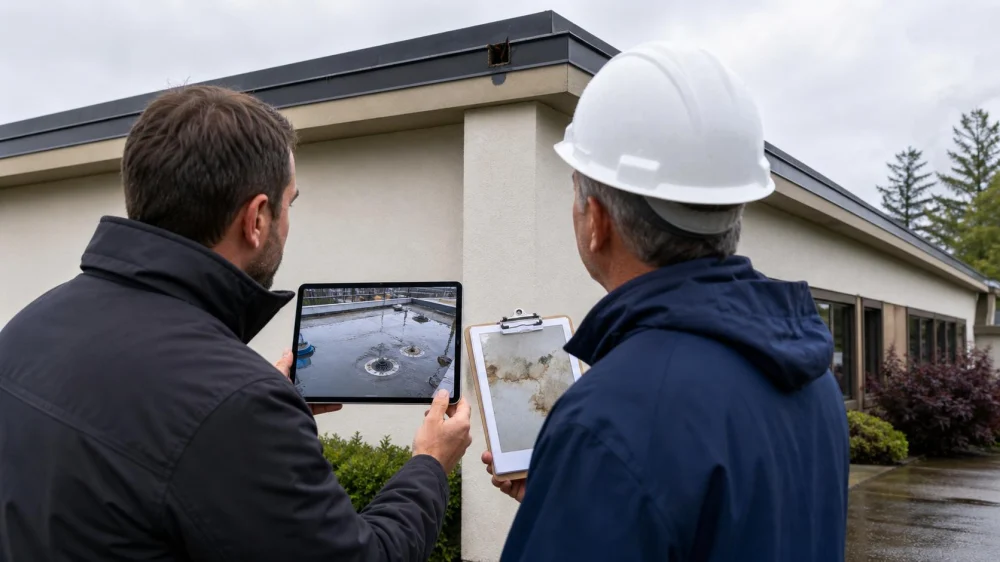
Flat Roof Ponding Water: Record It and Call a Roofer
On this page
Quick answer
If water remains on a flat or low-slope roof after precipitation, do not climb up to push it, puncture a drain, or operate a pump from the roof. From the ground or a safe interior location, photograph the extent and time, note recent rain or snowmelt, check visible discharge points, and look indoors for stains or sagging. Keep people away from affected ceilings and contact a qualified roofer or building manager.
Ck Roofing Solutions / ck roofing solutions
MarkhamRegional Municipality of YorkOntario
8 Hikers Ln, Markham, ON L6B 0K3, Canada
Observe from safe locations
- Record when rain or melt stopped and when water is still visible.
- Photograph from an adjacent safe building or ground-level vantage without using a ladder.
- Note approximate boundaries using permanent roof features, not by walking the area.
- Observe whether scuppers or downspouts discharge, but do not reach into roof drains.
- Record debris, ice, vegetation, membrane bubbles, displaced material, or equipment visible remotely.
- Compare with prior photos and maintenance reports.
Never step onto a snow-covered, icy, wet, soft, or unfamiliar roof. Water can hide openings and membrane damage, and a flat appearance does not indicate structural capacity.

J.R. Trory & Company Ltd / burrard roofing & drainage
North VancouverMetro VancouverBritish Columbia
1443 Crown St, North Vancouver, BC V7J 1G4, Canada
Check indoors
Look for new ceiling stains, dripping, bubbling paint, wet insulation, musty odour, swollen materials, or changes around roof drains and penetrations. Use binoculars or a camera zoom where helpful. Do not open wet ceilings or touch water near electrical equipment.
Place a container under a minor drip only when the area is structurally and electrically safe. Move people and valuables, mark the boundary, and notify the owner, insurer, or manager. A sagging ceiling, cracking sounds, sudden deflection, or rapid water entry requires immediate evacuation of the area and emergency assessment.
What a roofer evaluates
- Blocked, frozen, undersized, elevated, or poorly located drains and scuppers
- Inadequate slope, deck deflection, insulation compression, or settlement
- Membrane seams, punctures, blisters, flashings, curbs, and penetrations
- Overflow drainage and consequences of primary drain blockage
- Snow, ice, equipment, ballast, and water loads
- Past repairs that created dams or changed drainage
- Interior moisture and structural conditions
The right repair may involve cleaning, drainage work, tapered insulation, membrane repair, structural correction, or another system-specific change. Coating over the area without correcting drainage can conceal rather than solve the cause.
Urgent warning signs
- Ceiling sagging, cracking, falling material, or visible movement
- Rapidly increasing pond, blocked overflow, or water entering multiple areas
- Water near electrical panels, lights, outlets, or equipment
- New roof depression, structural noise, door binding, or wall cracking
- Heavy rain-on-snow, rapid thaw, or additional storm forecast
- Occupied area directly below suspected overload or failure
Clear the area and use emergency building and utility contacts. Do not wait below the ceiling to monitor a suspected structural hazard.
Ponding checklist
- Precipitation stop time and observation times recorded
- Photos taken from a safe location
- Visible drains and discharge observed remotely
- Interior ceilings, walls, and equipment checked
- People kept away from affected areas
- Weather forecast and freeze-thaw conditions noted
- Roof plans and maintenance history gathered
- Qualified roofer or manager contacted
- Emergency escalation criteria understood
Limitations
Some designed systems temporarily retain water, while unintended ponding can signal drainage or structural problems. A photo cannot measure depth, load, membrane condition, or deck capacity. Roof access, fall protection, drainage design, and repairs must follow applicable Canadian codes, manufacturer requirements, and professional assessment.
FAQ
How long is too long for water to remain?
Systems differ. Record the timeline and ask the roof manufacturer or qualified roofer; do not rely on a universal internet cutoff.
Can I sweep water to the drain?
Not from an unsafe roof. Access and load conditions must be assessed first.
Should I drill a drain hole?
No. Puncturing the assembly can cause major leakage, damage, and structural risk.
Will a roof coating fix ponding?
A coating does not necessarily correct slope, drainage, or structure. Obtain a diagnosis.
Who should I call first?
For an active hazard, use emergency or building contacts; otherwise contact the owner or manager and a qualified flat-roof contractor.
Evidence notes
CMHC maintenance guidance treats roof ponding as a service condition and identifies drain location as a possible cause requiring roofing work. CMHC moisture guidance also advises correcting pooling on flat roofs to prevent water entry. See CMHC building operations manual.
Conclusion
Document ponding without stepping onto the roof, inspect the space below, protect occupants, and give the roofer a clear timeline and photo record. Correct drainage or structural causes instead of hiding the symptom.

 Atlas-Apex Roofing Inc.0.0 (0 reviews)
 CentiMark Ltd.4.0 (15 reviews)
 City Wide Roofing0.0 (0 reviews)
 Top Metal Roofs Mississauga4.0 (46 reviews)
 Nova Toiture5.0 (8 reviews)
 Advanced Level Homes5.0 (27 reviews)
 How Much Does a New Roof Cost in 2025? Canadian Roofing Price Guide
 Top Signs Your Roof Has a Leak and What to Do About It in Canada
 Can You Install a New Roof Over an Old One in Canada?
 The Top Questions to Ask Before Hiring a Roofer in Canada
 What Are the Most Common Roofing Scams and How to Avoid Them in Canada
 How to Prepare Your Home for a Roofing Project in Canada