
Gutter Overflow at the Roof Edge: Ground-Level Checks in Canada
On this page
Quick answer
If water is spilling over a gutter, stay on the ground, keep people away from the drip and splash zone, and record where and when it happens. Leaves, ice, poor slope, blocked downspouts, loose components, inadequate capacity, or roof drainage details may contribute. Do not climb a wet or icy ladder, walk on the roof, or reach from a window. Arrange an inspection by an insured roofing or gutter professional.
Active interior leakage, sagging materials, electrical exposure, or falling ice and components require faster help and a protected area below.

Lansard Bros Roofing Ltd / lansard roofing
50 Don Valley Pkwy, Sunnyside, MB R5R 0C9, Canada
Observe safely
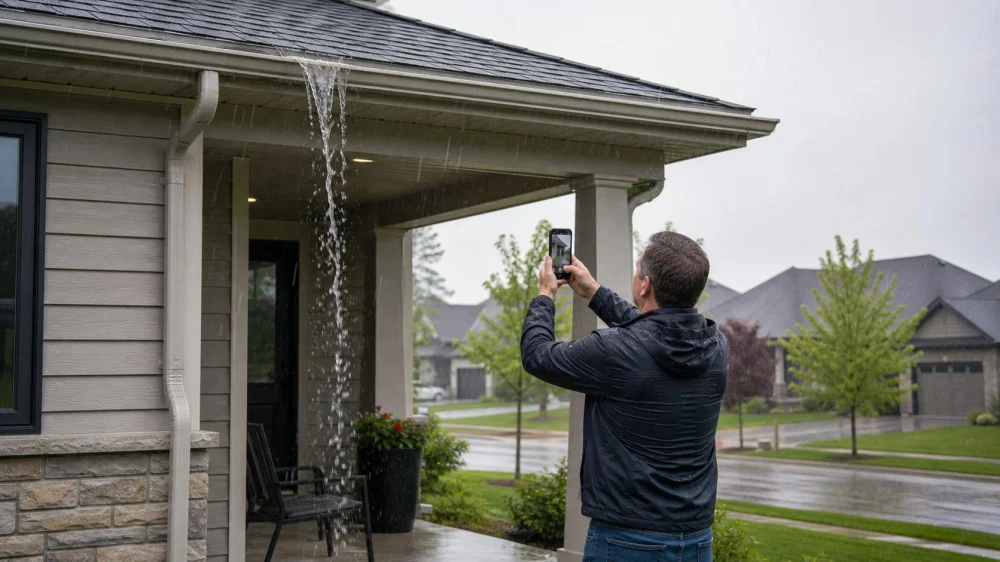
Watch from indoors or a firm ground-level location during rain. Note whether water spills along a long section, at one corner, behind the gutter, or near a downspout. Use binoculars or a zoom camera from a safe distance; do not stand directly beneath the eaves.
After the weather clears, look for staining, washed-out soil, wet foundation areas, detached joints, tilted troughs, and downspout discharge near the building. Do not touch overhead lines or metal drainage components near electrical equipment.

Ottawa Eavestrough Group / eavestrough repair ottawa
340 Albert St, Ottawa, ON K1R 7Y6, Canada
Possible causes
- Leaves, needles, nests, or roof granules restricting flow
- A blocked, crushed, disconnected, or frozen downspout
- A gutter that is loose, deformed, or sloped away from its outlet
- Too few outlets or insufficient capacity for the roof and rainfall
- Water passing behind the gutter because of edge or flashing details
- Snow, ice, or an ice dam redirecting meltwater
- Roof valleys concentrating water faster than the gutter handles it
Several causes can occur together. Overflow location alone does not establish which repair is needed.
What to record
- Photograph the full roof edge from the ground.
- Capture the overflow while it occurs without entering the splash zone.
- Mark the affected wall, corner, downspout, and nearest window.
- Note rainfall intensity, temperature, snow or ice, and wind direction.
- Check accessible interior ceilings and walls for dampness or staining.
- Record when gutters were last professionally cleaned or repaired.
- Save invoices, warranty details, and prior roof photographs.
A short video showing flow direction can help a contractor distinguish a clog from water missing the gutter.
Protect the property
Keep people, pets, and vehicles away from falling water, ice, or loose materials. Move portable belongings from an indoor leak only when it is safe and place a container beneath drips without contacting electrical fixtures. If water is near wiring, a panel, outlets, or ceiling lights, leave the area and contact emergency or electrical help as appropriate.
Do not attach tarps, heat cables, or extensions from a ladder during bad weather. Temporary drainage changes can send water toward a neighbour, walkway, or foundation.
When to call a roofer
Arrange service for repeated overflow, water behind the gutter, loose sections, roof-edge damage, interior staining, damaged soffit or fascia, or persistent drainage near the foundation. Ask the contractor to assess the gutter, outlets, downspouts, edge flashing, roof slope, valleys, and discharge path as one system.
Request a written scope that distinguishes cleaning, adjustment, component replacement, and roof repair. Verify insurance and applicable provincial workplace coverage before work begins.
Cold-weather limits
Canadian freeze-thaw conditions can make gutters, ladders, roofs, and ground surfaces especially hazardous. Never strike or pull ice from below, pour hot water from a ladder, or use an open flame. Falling ice can injure people and damage windows, siding, and gutters.
For a suspected ice dam or frozen downspout, cordon off the area and consult a professional who can choose a controlled method and examine insulation, air leakage, ventilation, and drainage where relevant.
Frequently asked questions
Can I clean the gutter from a ladder?
Wet, icy, high, or awkward access can be dangerous. Use a qualified professional rather than taking a fall risk.
Why does water spill only in heavy rain?
Capacity, outlet size, roof valleys, partial blockages, or installation details may become apparent only at high flow.
Is gutter overflow always a roofing problem?
No. The gutter, downspout, grading, and roof edge all need evaluation.
Should downspouts discharge beside the foundation?
Water should follow local requirements and the property’s drainage plan. A professional can assess safe routing.
Will gutter guards prevent every clog?
No. They may reduce some debris but still require compatible design, inspection, and maintenance.
Sources and evidence notes
This guide uses common roof-drainage and fall-prevention principles: observe from a safe location, document flow, protect people below, and have height work performed with suitable equipment and training. Exact drainage, electrical, and workplace requirements vary across Canada.
Follow municipal rules, manufacturer instructions, and advice from insured local professionals.
Conclusion and next steps
Record the overflow from the ground, check for interior effects, and keep the area below clear. Give the contractor weather notes, photographs, and maintenance history, then request an inspection of the entire route from roof edge to discharge point. Safe diagnosis is more valuable than a quick ladder attempt during rain or ice.



 All Coast Roofing4.0 (82 reviews)
 Tremco Roofing & Building Maintenance4.0 (5 reviews)
 Cathedral Roofing & Exteriors4.0 (15 reviews)
 Safeway Contractors Ontario5.0 (1 reviews)
 Action 1 Roofing5.0 (9 reviews)
 Rydel Roofing4.0 (24 reviews)
 How Much Does a New Roof Cost in 2025? Canadian Roofing Price Guide
 Top Signs Your Roof Has a Leak and What to Do About It in Canada
 Can You Install a New Roof Over an Old One in Canada?
 The Top Questions to Ask Before Hiring a Roofer in Canada
 What Are the Most Common Roofing Scams and How to Avoid Them in Canada
 How to Prepare Your Home for a Roofing Project in Canada