
How to Check a Skylight Leak Safely From Inside Your Home
On this page
- Quick answer
- Protect people and property first
- Observe the moisture pattern
- Separate condensation from water entry
- Document conditions for a roofer
- Know when action is urgent
- Indoor skylight checklist
- Limitations and important notes
- Frequently asked questions
- Sources and evidence notes
- Create a safe moisture record
Quick answer
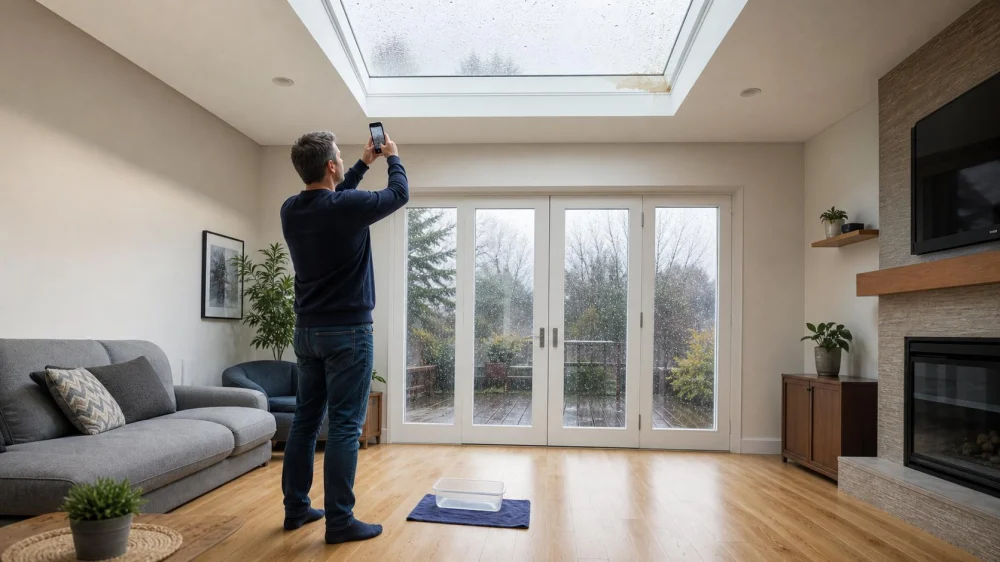
Check a skylight leak from the floor or a safe upper-level viewpoint without climbing onto furniture, ladders, or the roof. Move people and belongings away, place a container only where it will not create a trip or electrical hazard, and record where moisture first appears, the weather, temperature, and duration. Bubbling drywall, sagging material, active electrical exposure, or heavy water entry needs urgent professional help.
This guide is for homeowners in Canada. Skylight, roofing, attic, and vapour-control assemblies vary by climate and building. Use a qualified roofer or appropriate building professional.
Roof Doctor / roof doctors
KelownaCentral OkanaganBritish Columbia
715 Evans Ct, Kelowna, BC V1X 6G4, Canada
Protect people and property first
Keep people and pets away from wet flooring and any swollen ceiling material. Move furniture only if it can be done safely. Do not stand under sagging drywall or poke a ceiling to release water.
If water is near lights, wiring, a fan, or an outlet, avoid contact and shut power only when the electrical panel can be reached safely. Contact emergency electrical or building help as appropriate.
Do not climb to touch the skylight during rain, snow, ice, or wind. Interior ladders can also be unsafe on wet flooring.

Observe the moisture pattern
From a safe location, note whether water appears on the glass, frame, drywall corner, light shaft, ceiling uphill from the skylight, or a lower wall. Water can travel along framing, insulation, or finishes, so the visible drip may not be the roof entry point.
Record whether it occurs during wind-driven rain, snowmelt, freeze-thaw cycles, after a long storm, or without precipitation. Note the roof-facing direction and which side becomes wet first.
Look for staining, peeling paint, softened drywall, dark marks, damaged trim, and recurring odour without disturbing material.
Separate condensation from water entry
Condensation often forms on the interior glass or frame when warm humid indoor air meets a cold surface. A roof leak may show at joints, shaft corners, or surrounding ceiling, but patterns can overlap.
Record indoor humidity when a reliable instrument is available, outdoor temperature, bathroom or cooking activity, and whether blinds or coverings restrict airflow. Do not assume condensation is harmless; repeated moisture can damage finishes and support mould.
A professional may need to assess flashing, roofing, seals, drainage, insulation, air leakage, and vapour control to identify the source.
Document conditions for a roofer
Take wide photos showing room and skylight orientation, then closer photos of staining and active water from a safe standing position. Include a ruler only when reachable without climbing.
Keep a log with date, precipitation, wind direction if known, temperature, snow on roof, indoor activity, first wet location, and drying time. Share skylight age, past repairs, roof type, and warranty information.
Do not apply caulk, paint, roof cement, or an interior patch before assessment; it can hide evidence and may redirect water.
Know when action is urgent
Seek prompt help for sagging ceilings, falling material, major active flow, electrical involvement, cracked skylight glazing, structural movement, or water affecting multiple rooms.
During severe weather, follow public safety guidance. Do not send anyone onto an icy or storm-exposed roof. A qualified professional can decide when exterior inspection is safe.
Indoor skylight checklist
- Keep people away from wet or sagging areas.
- Protect electricity and avoid contact.
- Observe only from a safe floor-level position.
- Record first moisture location and weather timing.
- Compare glass condensation with surrounding stains.
- Take wide and close photos without climbing.
- Do not cover evidence with DIY sealants.
- Arrange qualified inspection for recurring moisture.
Limitations and important notes
- An indoor check cannot confirm the roof entry point.
- Snow and ice can conceal exterior defects and create fall hazards.
- Mould, wet insulation, and damaged drywall may require additional specialists.
- Warranty terms may require authorised inspection and materials.
- Tenants should report water promptly through the property process.
Frequently asked questions
Can a skylight leak only in wind?
Yes. Wind direction can drive rain into a vulnerable area. Record direction and intensity for the roofer.
Is water on the glass always condensation?
No. It may be condensation, infiltration, or both. Pattern and professional assessment matter.
Should I seal the inside frame?
Not before diagnosis. Interior sealant can trap or redirect water and hide evidence.
Can I inspect from the attic?
Only if the attic has safe designed access and you are trained to enter it. Wet insulation, wiring, low clearance, and hidden footing create hazards.
Who should inspect it?
A qualified roofer experienced with the skylight and roof system is a practical starting point; other specialists may be needed.
Sources and evidence notes
The method reflects common building-envelope practice: protect occupants, track moisture timing and path, distinguish interior moisture from exterior entry, preserve evidence, and avoid unsafe roof access. Qualified professionals provide assembly-specific diagnosis.
Create a safe moisture record
Photograph the entire skylight and first wet location from the floor, then write the weather, temperature, indoor activity, and time. Protect the area and send that record to a qualified roofer. If materials sag or electricity is involved, treat it as urgent rather than waiting for another storm.


 A+ Roofing Canada5.0 (4 reviews)
 Alborz Roofing Inc.4.0 (15 reviews)
 Best Roofer & Renovation5.0 (1 reviews)
 Roy Dennis Roofing4.0 (42 reviews)
 Morin Insulation & Roofing Ltd4.0 (26 reviews)
 FORLIFE NICA ROOFING (FLAT ROOFING COMPANY)4.0 (38 reviews)
 How Much Does a New Roof Cost in 2025? Canadian Roofing Price Guide
 Top Signs Your Roof Has a Leak and What to Do About It in Canada
 Can You Install a New Roof Over an Old One in Canada?
 The Top Questions to Ask Before Hiring a Roofer in Canada
 What Are the Most Common Roofing Scams and How to Avoid Them in Canada
 How to Prepare Your Home for a Roofing Project in Canada