
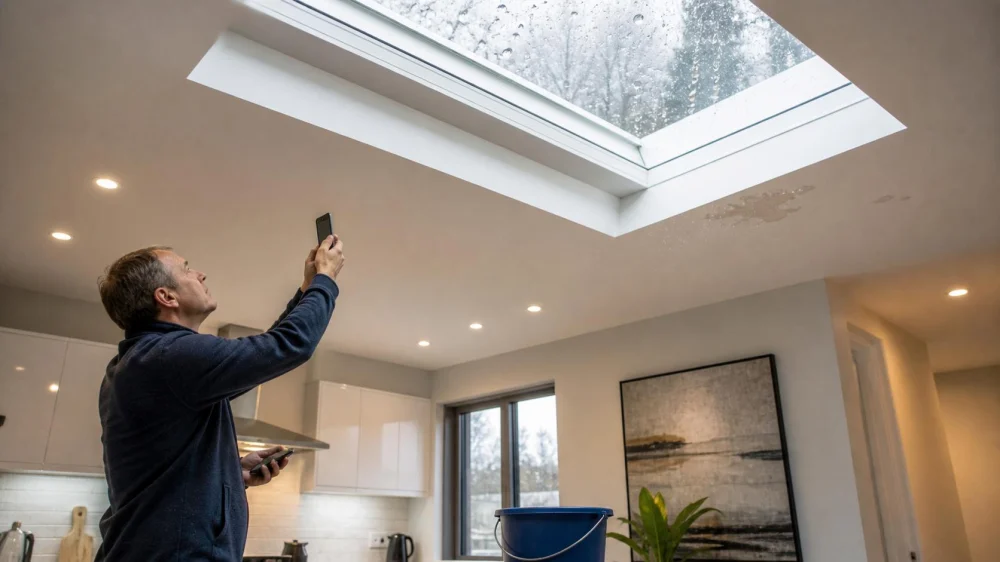
Moisture Around a Skylight: Record Clues Before Repair
On this page
Quick answer
Moisture near a skylight may come from exterior leakage, indoor condensation, flashing or seal problems, roof drainage, ice, or another source that travels before appearing. Photograph the location, note weather and indoor humidity, protect the area below, and arrange an inspection. Do not climb onto the roof, lean through the opening, remove interior trim, or apply sealant before the cause is identified.
A single stain cannot reliably distinguish condensation from a roof leak. Timing and patterns give the contractor better evidence.
Atlas-Apex Roofing Inc. / atlas apex toronto
65 Disco Rd, Etobicoke, ON M9W 1M2, Canada
Possible causes
- Condensation on cold glazing or frames during high indoor humidity
- Water entering at flashing, roofing, fasteners, or nearby penetrations
- Blocked or poorly directed drainage above the skylight
- Snow or ice affecting roof-edge or skylight drainage
- A failed glazing seal or damaged skylight component
- Air leakage carrying warm moist air into a cold assembly
- Water travelling from another roof area before becoming visible
Several mechanisms can overlap, particularly during Canadian freeze-thaw weather.
Observe from indoors
- Stand on the floor and photograph the entire skylight and surrounding ceiling.
- Take close photographs of droplets, staining, bubbling paint, cracks, and frame joints.
- Note whether moisture is on the room-side glass, frame, drywall, or inside the glazing unit.
- Check nearby ceilings and walls for a broader pattern.
- Record bathroom, cooking, humidifier, or laundry activity before the moisture appeared.
- Use a household hygrometer if available and record indoor humidity without treating it as a diagnosis.
- Keep dates and photographs together for comparison.
Do not probe wet drywall or touch water near electrical fixtures.
Build a weather log
Record rain intensity and direction, outdoor temperature, snow depth, thawing, wind, and how long moisture took to appear. Note whether the problem occurs during rain, after rain stops, on very cold clear mornings, or when snow melts.
Also record whether blinds or shades were closed, indoor fans were running, and the room felt unusually humid. This context helps separate surface condensation from water entering the assembly, though it does not replace inspection.
Protect the room
Move furniture and electronics away when safe. Place a stable container under a drip and protect the floor without creating a trip hazard. Keep children and pets out of the area. If ceiling material is swollen, sagging, cracking, or dropping debris, keep everyone well back.
Do not tape plastic tightly over wet surfaces or paint over stains. Trapping moisture can conceal change and complicate drying. Use ventilation or dehumidification only when safe and appropriate for the room; it will not repair exterior entry.
Arrange the right inspection
A roofing professional may need to examine roofing, flashing, drainage, underlayment details, and adjacent penetrations. A skylight specialist may assess glazing, gaskets, frame, weep paths, and manufacturer requirements. Interior air sealing, insulation, or ventilation may also need evaluation when condensation is involved.
Provide model information, installation age, repair history, weather log, and photographs. Request a written diagnosis and scope before approving sealant, flashing work, skylight replacement, or interior repair.
Urgent warning signs
Seek urgent help for active heavy leakage, sagging ceiling material, falling glass or components, a visibly open roof area, water near lights or wiring, or signs of structural movement. Avoid the room and contact emergency or electrical services when appropriate.
After a storm, keep clear of fallen lines, unstable trees, and roof debris. Exterior assessment should wait for safe conditions and trained access.
Frequently asked questions
Do droplets on the glass mean the roof leaks?
They can be condensation, but location and timing matter. Record the pattern and arrange evaluation if it repeats.
Can I caulk the skylight from inside?
Blind sealing can trap water or hide the source. Get a diagnosis first.
Why does staining appear after snow melts?
Meltwater, ice, drainage, flashing, and condensation are possible contributors. A professional should inspect.
Should I replace stained drywall immediately?
Correct the moisture source and verify drying before cosmetic repair.
Can a roof leak appear far from the skylight?
Yes. Water can travel along framing or layers before becoming visible.
Sources and evidence notes
This guide reflects building-envelope practice: document timing and location, distinguish observations from diagnosis, control interior exposure, and evaluate roofing, flashing, glazing, air leakage, and humidity as connected factors. Exact construction and warranty requirements vary.
Use local codes, manufacturer instructions, and insured Canadian roofing and skylight professionals.
Conclusion and next steps
Photograph the entire pattern, log weather and indoor conditions, and protect the space below without disturbing the assembly. Share the record with a qualified contractor and request a written cause and scope. Once the source is corrected and materials are dry, interior finishes can be repaired with far less risk of hiding a recurring problem.


 All Coast Roofing4.0 (82 reviews)
 Tremco Roofing & Building Maintenance4.0 (5 reviews)
 Cathedral Roofing & Exteriors4.0 (15 reviews)
 Safeway Contractors Ontario5.0 (1 reviews)
 Action 1 Roofing5.0 (9 reviews)
 Rydel Roofing4.0 (24 reviews)
 How Much Does a New Roof Cost in 2025? Canadian Roofing Price Guide
 Top Signs Your Roof Has a Leak and What to Do About It in Canada
 Can You Install a New Roof Over an Old One in Canada?
 The Top Questions to Ask Before Hiring a Roofer in Canada
 What Are the Most Common Roofing Scams and How to Avoid Them in Canada
 How to Prepare Your Home for a Roofing Project in Canada