
Prepare Your Home Interior Before Roofing Work Starts
On this page
- Quick answer
- Confirm the contractor’s work plan
- Protect walls, shelves, and fragile items
- Prepare the attic and upper floor
- Plan for dust and ventilation
- Plan for people, pets, and noise
- Review utilities and roof-mounted equipment
- Keep access routes clear
- Use a daily start-and-finish routine
- Safety boundaries and limitations
- Interior preparation checklist
- Frequently asked questions
- Sources and evidence notes
- Next steps
Quick answer
Before roofing work begins, confirm the schedule and interior access needs, remove fragile items from walls and high shelves, cover attic belongings, close doors and windows, and plan for noise, vibration, dust, children, and pets. Keep electrical panels and agreed access routes clear. Do not enter the work zone or climb onto the roof; direct concerns to the contractor’s site lead.
This guide is for Canadian homeowners preparing the occupied interior of a home. The roofing contractor remains responsible for planning and controlling the construction work. Requirements vary by province or territory and by project, so confirm the applicable permit, safety, and contract details locally.
Roof Doctor / roof doctors
KelownaCentral OkanaganBritish Columbia
715 Evans Ct, Kelowna, BC V1X 6G4, Canada
Confirm the contractor’s work plan
Ask for a pre-start conversation several days before materials arrive. Identify the site lead and the best phone number for urgent questions. Confirm the expected start date, daily working hours, estimated duration, weather-delay process, and the rooms or building systems that may need access.
Useful questions include:
- Will workers need the attic, garage, electrical panel, mechanical room, or a specific interior hatch?
- Will roof decking be removed or replaced in any area?
- Where will materials, bins, ladders, and equipment be placed outside?
- Which doors and driveways must remain clear?
- Could power, internet, heating, cooling, alarms, skylights, or ventilation be interrupted?
- What weather protection will be used if the roof is opened?
- How should the homeowner report an interior crack, leak, falling debris, or unusual odour?
- Who will inspect the attic and interior at the end?
Put agreed access and protection measures in writing. Take dated photos of ceilings, upper walls, skylight wells, attic contents, and any existing cracks or stains. This is a condition record, not a prediction of damage.

Flynn Canada Ltd. - Toronto / flynn mississauga
MississaugaRegional Municipality of PeelOntario
6435 Northwest Dr, Mississauga, ON L4V 1X1, Canada
Protect walls, shelves, and fragile items
Roof removal and fastening can create vibration that travels through framing. The amount depends on the structure, tools, roofing system, and work. Walk through the top floor and rooms with tall or shared walls.
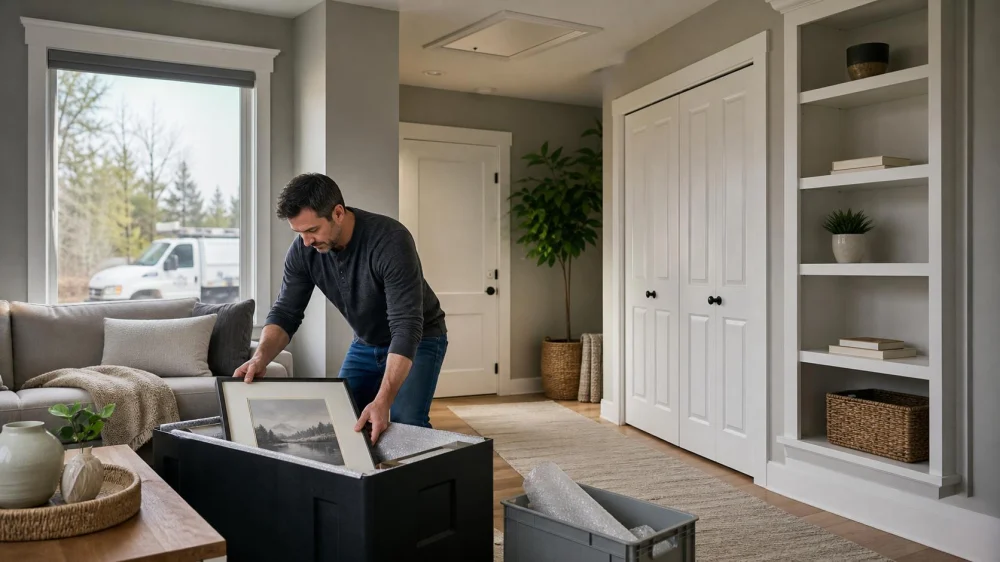
Remove framed art, mirrors, clocks, wall-mounted decor, and unsecured objects from high shelves. Set them flat in a protected room away from the work area. Do not lean glass items against a wall where vibration, a pet, or a child can tip them.
Move fragile ceramics, glassware, collectibles, and electronics away from the edges of shelves and cabinets. Close cabinet doors. If a tall bookcase or display is already unstable, secure it appropriately before work rather than relying on roofing day as the moment to improvise.
Check ceiling-mounted objects such as hanging lights, mobiles, plant hooks, and decorative panels. Ask the contractor whether a particular room is likely to experience heavier vibration. Do not disconnect electrical fixtures yourself unless you are qualified and the work is within the approved project plan.
Prepare the attic and upper floor
The attic is closest to roofing activity. Dust, granules, small wood fragments, and old fastener debris may fall when roof materials are removed or decking is disturbed. Ask whether the contractor will install interior protection and whether attic access is needed.
Remove valuable, delicate, or hard-to-clean belongings from the attic. Group remaining items in sealed plastic bins with secure lids. Cover large objects with durable sheeting without blocking required ventilation, electrical equipment, smoke alarms, or the contractor’s access route. Do not lay coverings over recessed lights, hot equipment, or anything the contractor says must remain exposed.
Keep insulation undisturbed. If loose-fill insulation, vermiculite, suspected asbestos-containing material, mould, pest contamination, or damaged wiring is present, tell the contractor before work. Arrange assessment by an appropriate qualified professional rather than sweeping or moving questionable material.
Plan for dust and ventilation
Most roofing work occurs outside, but open roof areas, attic hatches, ventilation pathways, and frequent door use can allow dust or odours indoors. Ask the contractor which activities may affect indoor air and how openings will be controlled.
Close windows and exterior doors near the work zone. Turn off window fans that would pull outdoor dust inside. Discuss heating, ventilation, and air-conditioning operation with the contractor; do not block vents or switch off essential systems without understanding the effect on the home.
For a required attic visit, agree on a path and keep the hatch area clear. The contractor may use temporary floor protection or a dust barrier. Remove the barrier only after the site lead says access work is complete.
Plan for people, pets, and noise
Nailers, tear-off work, material movement, and debris loading can be loud and irregular. People working from home, infants, older adults, shift workers, and anyone sensitive to noise may be more comfortable elsewhere during the loudest stages.
Keep children away from windows, doors, and outdoor areas beneath the roof edge. Explain that the crew’s equipment, ladders, bins, and materials are off-limits. An adult should supervise any necessary movement through the property.
Pets can react to vibration, strangers, and nail-gun sounds. Use a secure interior room away from access doors, arrange daycare, or keep the pet off-site. Update the contractor about a pet in the home and place a reminder on the agreed entrance. Do not leave a stressed animal loose where a worker may open a door.
Review utilities and roof-mounted equipment
Identify systems that pass through or attach to the roof: plumbing vents, exhaust ducts, chimneys, skylights, satellite dishes, antennas, solar panels, electrical service masts, and rooftop mechanical equipment. Ask who is responsible for disconnecting, protecting, reinstalling, and testing each item.
Specialized systems may require another qualified trade or the utility provider. Do not detach electrical, fuel-burning, solar, or communications equipment yourself simply to keep the roofing schedule moving. Confirm coordination in writing before the start date.
Inside, ensure the electrical panel, water shutoff, alarm controls, and attic hatch are accessible if the contractor says they may be needed. Do not give workers unrestricted access to unrelated rooms. Agree on the entrance, access window, and notification process.
After work, check indoor indicators you normally monitor: ceiling stains, skylight condensation, exhaust fan operation, smoke and carbon monoxide alarms, and internet or television service. Report a change promptly; do not climb onto the roof to investigate.
Keep access routes clear
Choose one interior entrance for planned access and remove shoes, toys, cords, boxes, and small furniture from that route. Protect floors according to the contract. Keep household members out of the path while workers are carrying tools or materials.
Outside access affects the interior plan. Move vehicles before the crew blocks a driveway, and identify the door the household can safely use. Never walk beneath active roof edges, ladders, lifting operations, or debris transfer. If the planned exit becomes unsafe, call the site lead and wait for instructions.
Use a daily start-and-finish routine
Before work starts each day:
- confirm who is home and where pets are secured;
- close windows near the work area;
- clear the agreed interior route;
- move vehicles and deliveries as requested;
- check the weather and contractor message;
- keep the site lead’s contact information available.
At the end of the day, wait for the contractor to release the area. Then look from inside for new water marks, daylight through an unexpected opening, loose ceiling material, unusual dust, or a changed alarm or ventilation condition. Photograph and report concerns without touching debris or entering the attic unless the contractor has confirmed it is safe.
Do not judge roof completion from an upstairs window or ladder. The contractor’s inspection, documentation, and final walkthrough should cover the exterior work.
Safety boundaries and limitations
Residential roofing involves fall hazards, falling objects, sharp materials, noise, dust, electrical hazards, and changing weather. CCOHS advises job-specific planning, hazard assessment, fall protection, tool control, and appropriate personal protective equipment for workers.
A homeowner should not enter barricaded areas, move ladders, handle dropped roofing materials, or climb onto the roof to monitor progress. Ask the site lead for photos or a ground-level explanation. Safety duties and training requirements vary by jurisdiction; in Ontario, official guidance tells homeowners to ask whether roofing workers are trained and equipped for work at heights.
This article is a household preparation guide, not a work procedure, engineering assessment, environmental assessment, or legal opinion. Follow the written contract, manufacturer requirements, local permits, and directions from qualified trades.
Interior preparation checklist
- Record the site lead, schedule, daily hours, and weather process.
- Photograph ceilings, walls, attic areas, and existing damage.
- Remove wall art and fragile objects from high shelves.
- Seal or remove stored attic belongings.
- Disclose suspected hazardous materials or damaged wiring.
- Close windows and discuss HVAC operation.
- Arrange a quiet location for people who need it.
- Secure pets away from access doors.
- Clear the agreed route to the attic and utility controls.
- Confirm responsibility for roof-mounted equipment.
- Keep everyone out of exterior work zones.
- Complete an interior check after the site is released.
Frequently asked questions
Do I need to remove every picture from every wall?
Usually focus on upper floors, shared structural walls, fragile frames, mirrors, and items the contractor identifies as vulnerable. When uncertain, removing a delicate item is a simple precaution.
Should I cover everything in the attic?
Remove valuables and use sealed bins for what remains. Discuss coverings with the contractor so you do not block ventilation, electrical components, hot fixtures, or required access.
Can I stay home during a roof replacement?
Often yes, but noise, vibration, access, health needs, pets, and project type may make another location more practical. Ask the contractor what to expect for each stage.
Should I turn off my HVAC system?
Do not assume. Ask how the work may affect air intakes, vents, and indoor dust, then follow guidance appropriate to the system and project.
What if debris falls into the attic?
Keep people away, photograph it from a safe location if possible, and tell the site lead. The contract should address protection and cleanup. Do not disturb suspect material.
May I climb a ladder to check the work?
No. Request contractor photos and use the final walkthrough. Roofing work requires trained workers, job-specific controls, and appropriate fall protection.
Sources and evidence notes
- Canadian Centre for Occupational Health and Safety: Residential Roofing outlines roofing hazards, planning, fall protection, falling-object controls, and worker protective equipment.
- Government of Ontario: Hiring a Roofer covers contractor checks, written contracts, references, worker training, and fall-protection questions for homeowners.
- Government of Ontario: Working Safely on Low-Rise Construction Projects identifies falling debris and working-at-heights controls relevant to residential construction.
The interior preparation steps are practical risk-reduction measures. They do not replace the contractor’s site-specific safety plan or the legal requirements of the applicable Canadian jurisdiction.
Next steps
Book a 15-minute pre-start call with the site lead. Confirm interior access, attic protection, roof-mounted equipment, daily hours, and the reporting process. Then photograph existing conditions, remove fragile wall and shelf items, secure pets, and clear one safe access route. Keep all roof and work-zone checks with the trained crew.



 N1 Imperial Roofing5.0 (1 reviews)
 Toiture Delta5.0 (48 reviews)
 Clark Roofing (1964) Ltd4.0 (10 reviews)
 Toronto Roofing & Masonry5.0 (1 reviews)
 Toiture Fleur de Lys4.0 (10 reviews)
 D.M MANAGEMENT5.0 (1 reviews)
 How Much Does a New Roof Cost in 2025? Canadian Roofing Price Guide
 Top Signs Your Roof Has a Leak and What to Do About It in Canada
 Can You Install a New Roof Over an Old One in Canada?
 The Top Questions to Ask Before Hiring a Roofer in Canada
 What Are the Most Common Roofing Scams and How to Avoid Them in Canada
 How to Prepare Your Home for a Roofing Project in Canada