
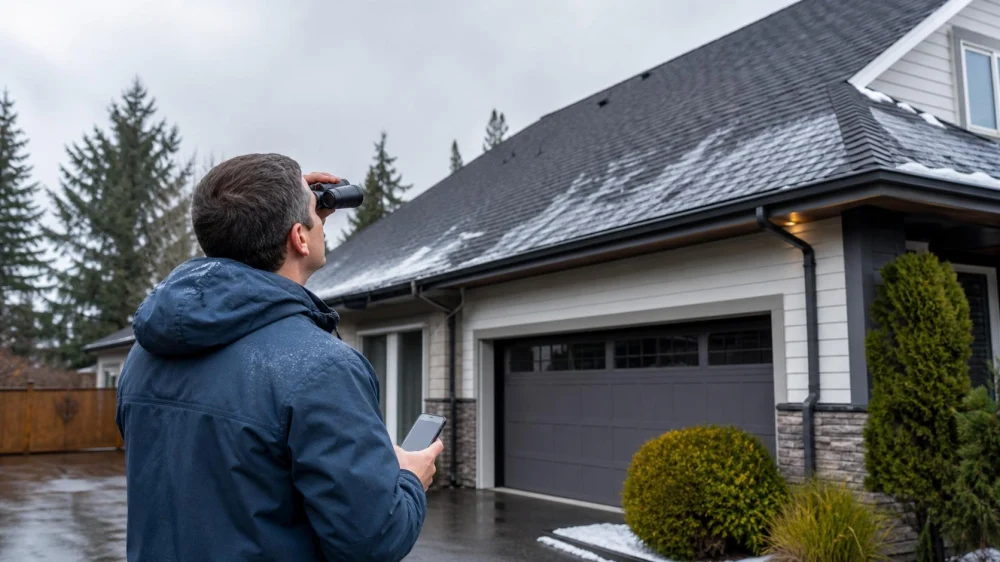
How to Check Your Roof After a Storm From the Ground
On this page
Quick answer
After a storm, check your roof from the ground with binoculars or phone zoom. Look for missing shingles, lifted edges, damaged flashing, sagging gutters, roof debris, interior stains, attic dampness, and water around vents or chimneys. Do not climb onto a wet, icy, steep, or damaged roof; call a roofer when safety or hidden damage is uncertain.
Why start from the ground
A ground roof inspection is a visual check done from safe areas such as the driveway, yard, sidewalk, or interior of the home before deciding whether professional roof access is needed.
Canadian weather can involve wind, rain, freeze-thaw cycles, hail, heavy snow, and ice. Starting from the ground helps homeowners document concerns without adding fall risk.
Toiture Royale Expert Inc. / toiture royale expert
LévisChaudière-AppalachesQuébec
7921 Rue de l'Orge, Lévis, QC G6Y 0G1, Canada
Outside signs to look for
Walk around the property only where footing is safe. Look for:
- Missing, cracked, curled, or lifted shingles.
- Loose metal flashing around chimneys, vents, skylights, or valleys.
- Branches, ice, or debris sitting on the roof.
- Sagging, detached, overflowing, or bent gutters.
- Granules collecting near downspouts or on walkways.
- Damaged soffit, fascia, siding, or roof edge materials.
Inside signs of roof trouble
Storm damage may show indoors before it looks obvious outside. Check ceilings, upper walls, attic areas, skylight surrounds, bathroom fans, and chimney areas for new stains, damp insulation, musty odours, bubbling paint, or dripping.
Take photos with dates and keep notes about when the storm occurred. Documentation can help when speaking with a contractor or insurance provider.
When to call a roofing contractor
Call a roofing contractor if you see missing shingles, active leaks, damaged flashing, sagging rooflines, repeated ice dam issues, heavy debris, or interior water signs. Also call if the roof is steep, high, icy, or difficult to view safely.
This check is best for deciding whether professional inspection is needed. It is not ideal for diagnosing hidden structural damage, walking the roof, or making repairs without proper training and safety equipment.
Ground-check checklist
- Wait until the storm has fully passed.
- Stay on stable ground; do not climb onto the roof.
- Use binoculars or phone zoom from multiple angles.
- Check gutters, downspouts, roof edges, valleys, and flashing areas.
- Look inside for stains, dampness, or musty smells.
- Photograph visible concerns and note the date.
- Move valuables away from active drips if safe.
- Contact a roofer for leaks, missing materials, or uncertain damage.
Important notes
This article is general roof maintenance guidance for homeowners in Canada. It does not replace professional roofing advice, building code requirements, insurance instructions, or emergency services.
Do not climb ladders or roofs during wet, icy, windy, or unstable conditions. If water is near electrical fixtures or a ceiling is sagging, avoid the area and seek urgent professional help.
FAQ
Should I climb onto my roof after a storm?
No. Start from the ground. Wet, icy, damaged, or steep roofs are dangerous, and hidden damage can make footing unreliable.
What roof damage is easiest to see from the ground?
Missing shingles, loose gutters, debris, lifted roof edges, damaged flashing, and obvious sagging can often be spotted with binoculars or phone zoom.
Can small leaks wait?
Small leaks can become larger and may damage insulation, drywall, and framing. Document the issue and contact a qualified roofer promptly.
What should I photograph?
Photograph exterior damage, interior stains, downspout granules, debris, and the wider area around each problem so the location is clear.
Evidence notes
This guide is based on common roof maintenance and storm-response practices: visual documentation, ground-based observation, leak monitoring, gutter checks, and professional inspection when access or damage risk is uncertain.
Next steps
After the next major storm, do a safe ground check, photograph concerns, and call a local roofing contractor if anything looks damaged or if water appears indoors.

 I Roof Alberta4.0 (34 reviews)
 Rydel Roofing4.0 (56 reviews)
 Red Seal Roofing Ltd.0.0 (0 reviews)
 Vantage Roofing Ltd. - Burnaby Roofers & Roofing Contractors5.0 (40 reviews)
 Gta Roofing and Waterproofing// Toronto Waterproofing5.0 (4 reviews)
 Mara Roofing and Exteriors Inc4.0 (56 reviews)
 How Much Does a New Roof Cost in 2025? Canadian Roofing Price Guide
 Top Signs Your Roof Has a Leak and What to Do About It in Canada
 Can You Install a New Roof Over an Old One in Canada?
 The Top Questions to Ask Before Hiring a Roofer in Canada
 What Are the Most Common Roofing Scams and How to Avoid Them in Canada
 How to Prepare Your Home for a Roofing Project in Canada