
Roof Flashing Problems: Where Leaks Commonly Start
On this page
Quick answer
Roof flashing directs water away from joints, edges, walls, chimneys, vents, and valleys. Leaks can begin when flashing is missing, loose, corroded, poorly lapped, or separated from sealant. Check safely from indoors and ground level, document patterns, control interior water, and hire a qualified roofer rather than climbing onto a wet or icy roof.

Christensen & McLean Roofing / christensen & mclean roofing
16173 132 Ave NW, Edmonton, AB T5V 1H7, Canada
What roof flashing does
A roof covering sheds most water, but interruptions create vulnerable joints. Flashing uses shaped metal or another approved material to direct water over and away from those transitions. It must work with the underlayment, shingles, siding, masonry, and drainage path as a system.
Caulk alone is not a permanent substitute for correctly integrated flashing. Sealants age, move, and can trap water when applied over the wrong detail. A repair should address the pathway, not only cover the visible gap.

Custom Contracting Roofing & Eavestrough Repair Waterloo / eavestrough repair waterloo
WaterlooWaterloo Regional MunicipalityOntario
165 Margaret Ave S, Waterloo, ON N2J 2E3, Canada
Common flashing locations
- Chimneys: step and counterflashing connect roofing to masonry.
- Walls and dormers: step flashing channels water at roof-to-wall intersections.
- Plumbing vents: boots or collars seal around pipes.
- Roof valleys: metal or membrane details carry concentrated runoff.
- Skylights: manufacturer-designed flashing integrates the unit with roofing.
- Eaves and rakes: drip edge helps guide water away from deck edges.
A stain near one location does not prove that component failed. Water can enter uphill, travel along sheathing or framing, and appear elsewhere.
Indoor leak clues
Check the attic or upper rooms only where access is safe. Look for damp sheathing, stains, wet insulation, peeling paint, mould-like growth, or rusted fasteners. During rain, record where moisture first appears without touching wiring or unstable materials.
Note whether the leak follows wind-driven rain, snowmelt, freeze-thaw cycles, or every storm. In Pickering and the broader Greater Toronto Area, winter ice and repeated temperature changes can expose weaknesses, but condensation can mimic a roof leak.
Safe ground-level checks
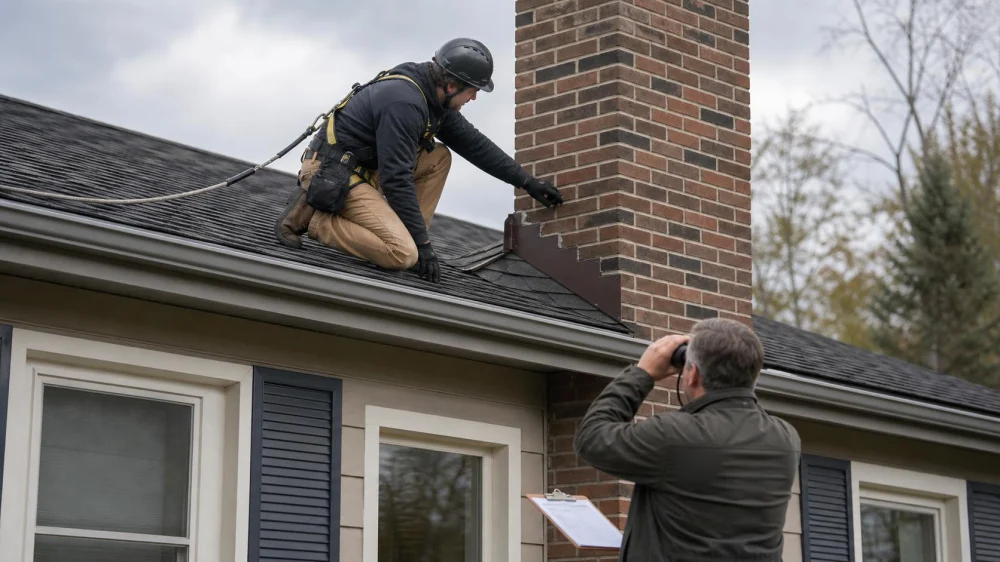
- Use binoculars from a stable public or private ground position.
- Look for lifted metal, missing shingles, gaps, damaged vent boots, or debris in valleys.
- Check downspouts and gutters for overflow from a safe position.
- Photograph the area after each weather event.
- Mark interior moisture boundaries lightly and note the time.
Do not use a ladder during rain, strong wind, snow, or ice. Keep clear of overhead power lines and falling debris.
What not to do
Do not walk on the roof to find a leak. Roofing may be slippery, brittle, steep, or structurally damaged. Do not pry up shingles, drive screws through flashing, or spread roof cement over a broad area without knowing the assembly.
A temporary tarp can also be dangerous to install and may cause damage when fastened incorrectly. Ask an insured roofing professional about emergency stabilization.
What a roofer should inspect
A qualified contractor can examine flashing laps, fasteners, corrosion, membrane continuity, sealant condition, nearby shingles, deck condition, and the water path. They should distinguish a localized detail failure from broader installation or material problems.
Ask for photos before and after the repair. If masonry, siding, a skylight, or mechanical equipment contributes to the joint, coordination with another trade may be necessary.
Clarify the repair scope
- Identify the suspected entry point and evidence.
- List materials to be removed and replaced.
- State whether damaged deck or insulation is included.
- Explain how new flashing will integrate with existing roofing.
- Define cleanup, weather protection, warranties, and exclusions.
- Use a written change order for hidden damage discovered later.
Confirm contractor insurance, applicable workplace coverage, permits, and manufacturer requirements before work begins.
Urgent warning signs
Keep people away and seek urgent professional help when water contacts electrical fixtures, the ceiling bulges, materials fall, the roofline visibly sags, or a storm has opened the structure. Turn off power only if it can be done safely from a dry location and follow emergency-service or utility directions.
Important limitations
This article is general homeowner information, not a diagnosis, engineering opinion, or repair specification. Roof assemblies, warranties, Ontario building requirements, and site conditions vary. Only an on-site qualified professional can determine the cause and safe repair.
Sources and evidence notes
- National Research Council Canada: Canadian roofing and building-envelope research.
- Canada Mortgage and Housing Corporation: homeowner guidance on moisture and building maintenance.
- Infrastructure Health and Safety Association: Ontario fall-prevention and ladder-safety resources.
- Manufacturer installation instructions: product-specific flashing and warranty requirements.
Frequently asked questions
Can flashing be repaired without replacing the roof?
Sometimes. It depends on access, surrounding material condition, installation details, and whether the water has damaged the deck.
Does silicone stop a flashing leak?
Sealant may be part of an approved detail, but surface caulk alone often fails to correct improper laps or concealed damage.
Why does the leak appear only with wind?
Wind-driven rain can move water beneath edges or into vertical joints that ordinary rainfall does not reach. A professional should reproduce the likely pathway cautiously.
Could the stain be condensation?
Yes. Ventilation, air leakage, plumbing, and indoor humidity can create similar symptoms. Record weather and moisture patterns for diagnosis.
Conclusion
Flashing protects the places where roofing changes direction or meets another surface. When a leak appears, document it safely, limit interior damage, and avoid rooftop troubleshooting. A durable repair traces the full water path and integrates new flashing with the entire assembly instead of relying on a surface patch.


 AJ Roofing and Construction5.0 (2 reviews)
 East Coast Roofing2.0 (11 reviews)
 Shield Pro Roofing Inc.4.0 (24 reviews)
 MO Precision Roofing5.0 (13 reviews)
 Canadian Country Roofing and Renovations0.0 (0 reviews)
 Noor roofing5.0 (4 reviews)
 How Much Does a New Roof Cost in 2025? Canadian Roofing Price Guide
 Top Signs Your Roof Has a Leak and What to Do About It in Canada
 Can You Install a New Roof Over an Old One in Canada?
 The Top Questions to Ask Before Hiring a Roofer in Canada
 What Are the Most Common Roofing Scams and How to Avoid Them in Canada
 How to Prepare Your Home for a Roofing Project in Canada