
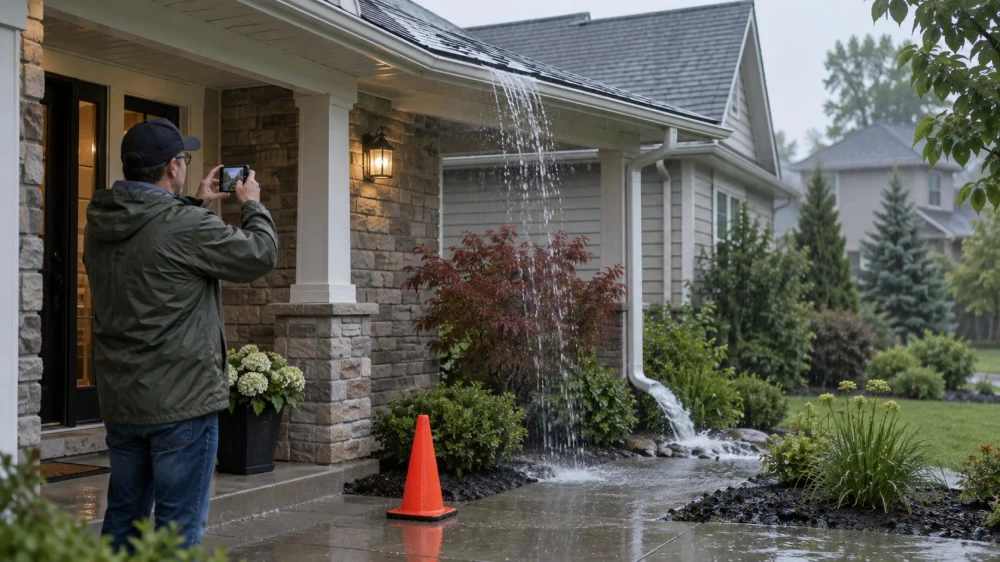
Roof Gutter Overflow: Observe the Pattern From the Ground
On this page
Quick answer
During rain, observe gutter overflow only from a protected ground-level position or safely through a window. Note the exact section, rainfall intensity, downspout discharge, foundation pooling, stains, and whether water runs behind the gutter. Do not climb a wet ladder, reach from a roof edge, or push tools into a downspout. Redirect people away from falling water and slippery surfaces, then give a qualified contractor photos and a timeline.

Lansard Bros Roofing Ltd / lansard roofing
50 Don Valley Pkwy, Sunnyside, MB R5R 0C9, Canada
Record when and where it overflows
From a safe location, film a short wide view and a closer zoom that shows the overflow relative to corners, outlets, valleys, and downspouts. Record whether it begins immediately or only in heavy rain and stops quickly or continues afterward.
Check the ground for erosion, basement-window exposure, foundation pooling, ice risk, and water crossing walkways. Inside, note ceiling, wall, or attic moisture without disturbing insulation, wiring, or suspected mold.
Repeat observations in different rain intensities only when it is safe. Never stand beneath loose gutters, ice, or falling debris.
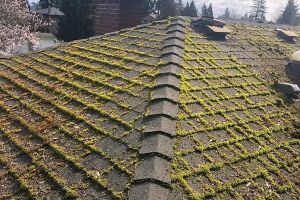
Vancouver Moss Removal / moss removal north vancouver
VancouverMetro VancouverBritish Columbia
1615 Frances St #105, Vancouver, BC V5L 1Z3, Canada
Separate possible causes
Overflow can involve debris, a blocked or frozen outlet, poor slope, undersized components, loose hangers, roof-valley concentration, damaged flashing, or a downspout that cannot discharge. More than one factor may be present.
Water spilling over the front, escaping behind the gutter, and appearing at an end cap are different clues. A full downspout during intense rain does not prove a simple clog.
Do not diagnose capacity from one storm without context. Record rainfall severity, roof changes, leaf fall, snowmelt, and previous gutter work.
Plan professional inspection
Ask the contractor to inspect attachment, slope, seams, outlets, downspouts, discharge, roof edges, valleys, and affected building surfaces. Request a written cause, proposed work, exclusions, and photographs.
Confirm safe access, fall protection, insurance, debris removal, and responsibility for testing after work. Ask how discharge will be kept away from foundations, neighbouring property, sidewalks, and prohibited connections.
Cleaning may not solve sizing, slope, drainage, or roof-detail problems. Compare the complete water path rather than accepting a single-component fix.
Use a ground-level checklist
- Keep people away from the overflow and slippery area.
- Photograph the whole elevation from safe ground.
- Mark the exact section, outlet, and rainfall conditions.
- Observe each downspout's discharge without touching it.
- Check ground pooling and indoor moisture clues.
- Collect previous gutter and roofing records.
- Request a qualified inspection of the full drainage path.
- Document performance during a later safe rainfall.
Limitations and urgent boundaries
This guide cannot identify a blockage or design fault from ground observations. Canadian climate, ice, roof geometry, local drainage rules, and building conditions affect the solution.
Seek prompt help for a detached gutter, falling ice or material, electrical exposure, active interior flooding, structural movement, or water threatening occupants. Avoid ladders during rain, wind, snow, or ice.
Sources and evidence notes
The method follows safe roof-drainage diagnosis: document the event, trace water from roof collection to lawful discharge, assess the entire assembly, keep untrained people off wet elevated surfaces, and verify the repair under appropriate conditions.
Frequently asked questions
Does overflow always mean clogged gutters?
No. Slope, sizing, outlets, downspouts, attachment, ice, or concentrated roof flow may contribute.
Can I clear it from a ladder during rain?
No. Wet-weather ladder and roof-edge work is hazardous. Keep clear and arrange safe professional service.
Why does water run behind the gutter?
Attachment, roof-edge details, flashing, ice, or damage may be involved. It needs close professional inspection.
Should a downspout empty by the foundation?
Discharge should follow local rules and protect the building; ask a qualified contractor about the site-specific route.
How do I verify a repair?
Review completion photos and observe a later rainfall safely, checking the same gutter, downspout, ground, and interior locations.
Conclusion and next steps
Record the overflow location, storm conditions, discharge, and resulting moisture from safe ground. Give that evidence to a qualified contractor and request evaluation of the entire path from roof edge to final drainage. Keep people away from the hazard and verify performance later without climbing.



 Flat Roofs Toronto5.0 (14 reviews)
 Cordner Brothers roofing a gutter services2.0 (2 reviews)
 Elite Construction4.0 (125 reviews)
 OK Roof Revival4.0 (27 reviews)
 Evandale Roofing & Siding4.0 (23 reviews)
 D & R Roofing Inc4.0 (47 reviews)
 How Much Does a New Roof Cost in 2025? Canadian Roofing Price Guide
 Top Signs Your Roof Has a Leak and What to Do About It in Canada
 Can You Install a New Roof Over an Old One in Canada?
 The Top Questions to Ask Before Hiring a Roofer in Canada
 What Are the Most Common Roofing Scams and How to Avoid Them in Canada
 How to Prepare Your Home for a Roofing Project in Canada