
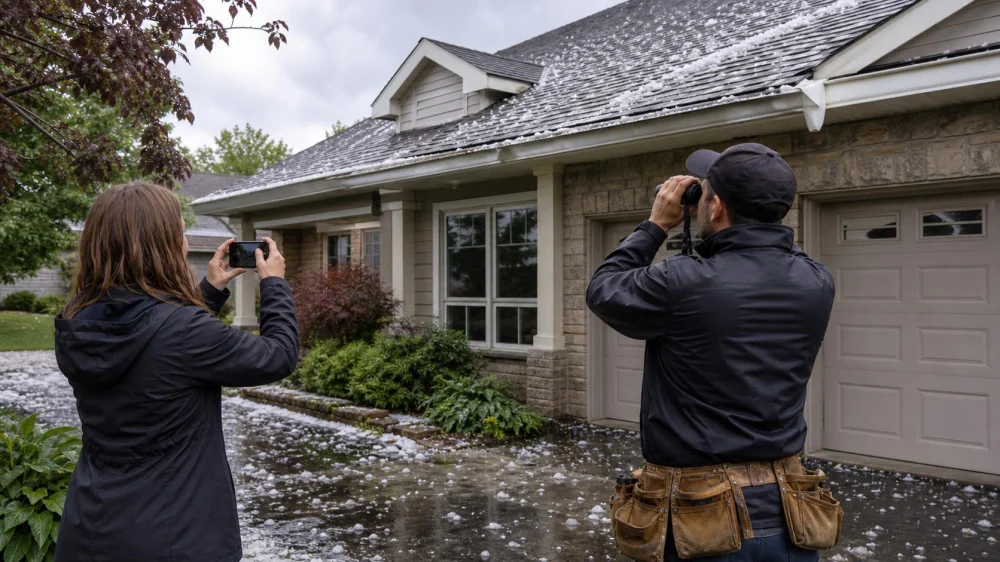
Roof Hail Damage: Check Safely From the Ground First
Table of contents
Quick answer
After a hailstorm, stay off the roof and inspect only from safe ground or an indoor window. Photograph hail size, fallen debris, damaged siding, eavestroughs, skylights, and visible roof areas without using a ladder. Check the attic for active leaks, protect interiors without touching wiring, and arrange a qualified roofing inspection before signing repair agreements.

Ottawa Eavestrough Group / eavestrough repair ottawa
340 Albert St, Ottawa, ON K1R 7Y6, Canada
Wait until the storm is over
Remain indoors during hail and follow Environment and Climate Change Canada alerts. Hail may arrive with lightning, high wind, heavy rain, and local flooding. Afterward, keep away from downed lines, broken glass, unstable trees, flooded areas, and loose building materials.
Do not climb a wet, icy, or damaged roof. Ontario safety guidance identifies falls from roofs and ladders, unstable ladder setup, damaged equipment, and overhead hydro lines as serious roofing hazards.

Flynn Canada Ltd. - Ottawa / flynn ottawa
1655 Comstock Rd, Gloucester, ON K1B 5L2, Canada
Ground-level clues
- dents or cracks in metal eavestroughs, downspouts, vents, or flashing;
- pieces of shingles, shakes, tile, or roofing granules on the ground;
- cracked skylight glazing or damaged window trim;
- fresh dents on siding, outdoor equipment, or vehicles that indicate impact intensity;
- water stains, drips, damp insulation, or a musty smell in the attic or top floor;
- blocked drainage from accumulated hail, leaves, or debris.
Absence of visible ground clues does not prove the roof is undamaged. Some impact marks require close professional inspection.
Document and report
- Record the date, approximate time, weather alert, and hail size beside a familiar object after it is safe.
- Take wide and close photos from public or owned ground without stepping into traffic.
- Photograph interior moisture before moving belongings.
- Contact the insurer promptly and ask what evidence, mitigation, and contractor process it requires.
- Save estimates, inspection reports, invoices, and all temporary-repair receipts.
Use buckets or plastic sheeting indoors only when it can be placed safely. Keep away from wet electrical fixtures and sagging ceilings; call emergency services or the utility when there is an immediate hazard.
Choose an inspection
Verify the roofer’s business identity, insurance, workplace coverage where applicable, written scope, and references. Ask how impact damage will be distinguished from normal wear and what photos will be supplied. Do not accept pressure to sign over insurance benefits or approve a full replacement before understanding the assessment.
Limitations
Hail effects vary with size, wind, roof age, material, slope, and prior condition. Ground photos cannot establish an insurance-covered loss or remaining service life. Policy terms, deductibles, claim deadlines, and contractor requirements differ; obtain current information from the insurer and municipality.
FAQ
Should I collect hailstones?
A photo beside a common object is often safer and more useful. Do not remain outdoors during active hail.
Can a drone replace an inspection?
Images may help, but flight rules, privacy, weather, and blind spots apply. A qualified assessment may still be needed.
What if there is no leak?
Lack of a current leak does not exclude damage. Arrange an inspection when impact was substantial or exterior clues are present.
Should I clean granules from the eavestrough?
Photograph them first and avoid ladder work. Ask the roofer whether collection or cleaning is useful.
Sources and evidence notes
- Government of Canada: Hailstorms—Get Prepared — alerts, drainage, home protection, and roofing-material context.
- Ontario: Working Safely on Low-Rise Construction Projects — roofing, ladder, fall, and overhead-line hazards.
Next steps
Wait for the all-clear, document conditions from safe ground, check interior spaces without entering hazards, and call the insurer. Then arrange a credentialed roofer’s written inspection and compare the findings with policy requirements before authorising work.



 Royal Roofing5.0 (3 reviews)
 Denali Exteriors4.0 (41 reviews)
 Building Products of Canada Corp. (BP Canada)4.0 (133 reviews)
 Ebenezer Roofing4.0 (102 reviews)
 Main Element LTD5.0 (30 reviews)
 Over the Top Roofing3.0 (6 reviews)
 How Much Does a New Roof Cost in 2025? Canadian Roofing Price Guide
 Top Signs Your Roof Has a Leak and What to Do About It in Canada
 Can You Install a New Roof Over an Old One in Canada?
 The Top Questions to Ask Before Hiring a Roofer in Canada
 What Are the Most Common Roofing Scams and How to Avoid Them in Canada
 How to Prepare Your Home for a Roofing Project in Canada