
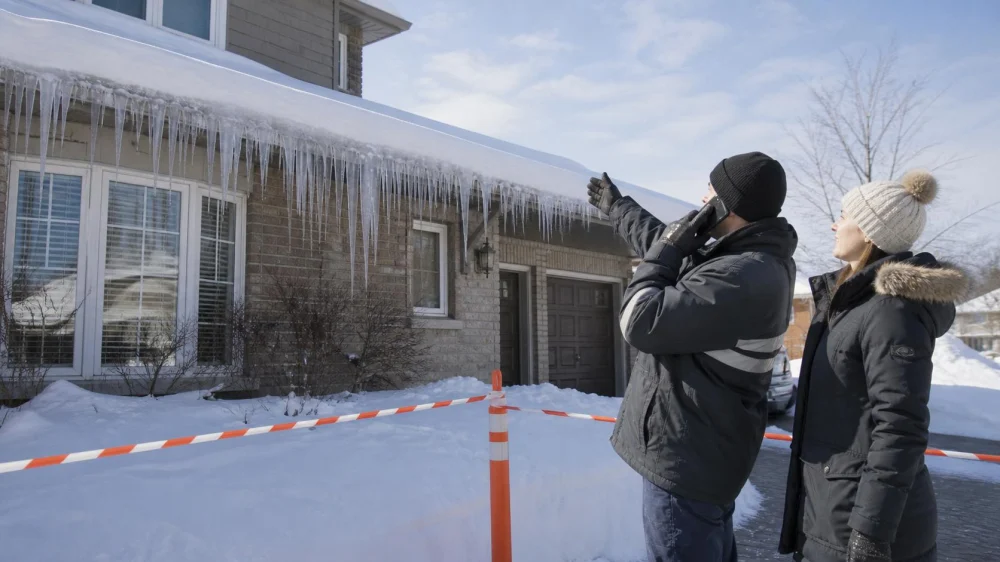
Roof Ice Dams: Check Ground-Level Signs and Stay Off
On this page
Quick answer
An ice dam forms when roof meltwater refreezes near a colder edge and blocks drainage. From the ground, look for thick edge ice, icicles with water backing behind them, ceiling stains, damp insulation clues, or repeated freeze-thaw patterns. Do not climb an icy roof, chip with sharp tools, or apply unapproved chemicals. Protect the interior, keep people away from falling ice, and call a qualified roofer.

Custom Contracting Burlington Roofing & Eavestrough Repair Burlington / eavestrough burlington
BurlingtonRegional Municipality of HaltonOntario
687 Waterloo St, Burlington, ON L7R 2S9, Canada
Why it matters
A roof ice dam is a ridge of ice that prevents meltwater from draining normally. Water may move beneath roofing or into walls and ceilings, while heavy ice and falling icicles create exterior hazards.
This guide is for Canadian properties, including Pickering. Roof design, insulation, ventilation, weather, height, utilities, and emergency access differ. Follow municipal, provincial, manufacturer, and contractor guidance.
Stokes Roofing / stokes roofing
PeterboroughPeterborough CountyOntario
641 Bellaire St, Peterborough, ON K9J 3Y5, Canada
Practical checklist
- Inspect only from a safe ground position or interior window; never stand beneath heavy icicles.
- Photograph roof edges, valleys, gutters, downspouts, upper melt patterns, and interior stains.
- Move people, vehicles, and fragile property away from falling-ice zones.
- Check attic or ceiling areas only through safe access for dampness, frost, or staining.
- Protect interior belongings and catch drips without touching wet electrical fixtures.
- Call a qualified roofer for safe ice management and envelope assessment.
- Plan long-term review of air leakage, insulation, ventilation, drainage, and roof details.
Step-by-step plan
- Map the pattern from the ground. Note where snow melts first, where ice grows, and which rooms lie below.
- Control the exclusion zone. Do not walk, park, or place ladders where ice or snow can fall.
- Protect the interior. Move dry contents and use containers where safe; stop and call an electrician or emergency help when water reaches electrical equipment.
- Avoid damaging shortcuts. Axes, picks, torches, boiling water, salt, and improvised roof access can injure people and damage shingles, metal, gutters, or landscaping.
- Call the right contractor. Ask about training, insurance, access method, roof protection, debris control, and whether emergency water mitigation is needed.
- Document the cause investigation. Ice removal addresses the immediate blockage; air sealing, insulation, ventilation, and roof drainage may need coordinated evaluation.
- Review after thaw. Inspect ceilings, attic materials, wall finishes, and roof edge for hidden moisture or recurring defects.
Keep dated weather, photos, affected rooms, leak timing, prior repairs, insulation or ventilation work, and contractor findings. Avoid publishing address details with damage photos.
Limits and warning signs
Icicles alone do not prove an interior leak, and a clear gutter does not eliminate ice-dam risk. Roof rakes and de-icing systems can introduce hazards or damage when used incorrectly. Heat cables require compatible design and electrical installation.
Call emergency services for collapse risk, falling material threatening people, fire, shock, sparking, or major flooding. Keep clear of overhead utility lines and never access an icy roof. Seek urgent professional water mitigation for saturated ceilings or active interior damage.
Frequently asked questions
Should I knock icicles down?
Do not stand beneath or strike large ice. Establish a safe zone and ask a qualified contractor about removal.
Can salt melt a roof ice dam?
Unapproved salts can damage roofing, metal, masonry, plants, and water systems. Use only manufacturer- and professional-approved methods.
Will cleaning gutters prevent every ice dam?
No. Drainage helps, but attic heat loss, roof geometry, snow, and weather also matter.
Can I inspect the attic?
Only through a safe accessible route. Stop for unsafe ladders, wet wiring, fragile ceilings, mould, or limited footing.
Sources and evidence
The article reflects common Canadian cold-climate roofing safety: observe from the ground, exclude falling-ice areas, protect interiors, avoid roof access and damaging thaw methods, and investigate heat, moisture, insulation, ventilation, and drainage together.
Conclusion and next steps
Photograph the pattern from a safe location, block access below the ice, and protect the interior. Call a qualified roofer for immediate management and a building-envelope review. The long-term fix targets why snow melted and refroze, not only the visible ridge.


 Lansdowne Roofing3.0 (2 reviews)
 Coastal Roofing3.0 (17 reviews)
 Ontario Tech Roofing INC. | Oakville4.0 (67 reviews)
 Kion Construction5.0 (6 reviews)
 M J Roofing & Supply Ltd3.0 (55 reviews)
 The Roof Whisperer of Kitchener - Roof Repair & Skylight Contractor5.0 (27 reviews)
 How Much Does a New Roof Cost in 2025? Canadian Roofing Price Guide
 Top Signs Your Roof Has a Leak and What to Do About It in Canada
 Can You Install a New Roof Over an Old One in Canada?
 The Top Questions to Ask Before Hiring a Roofer in Canada
 What Are the Most Common Roofing Scams and How to Avoid Them in Canada
 How to Prepare Your Home for a Roofing Project in Canada