
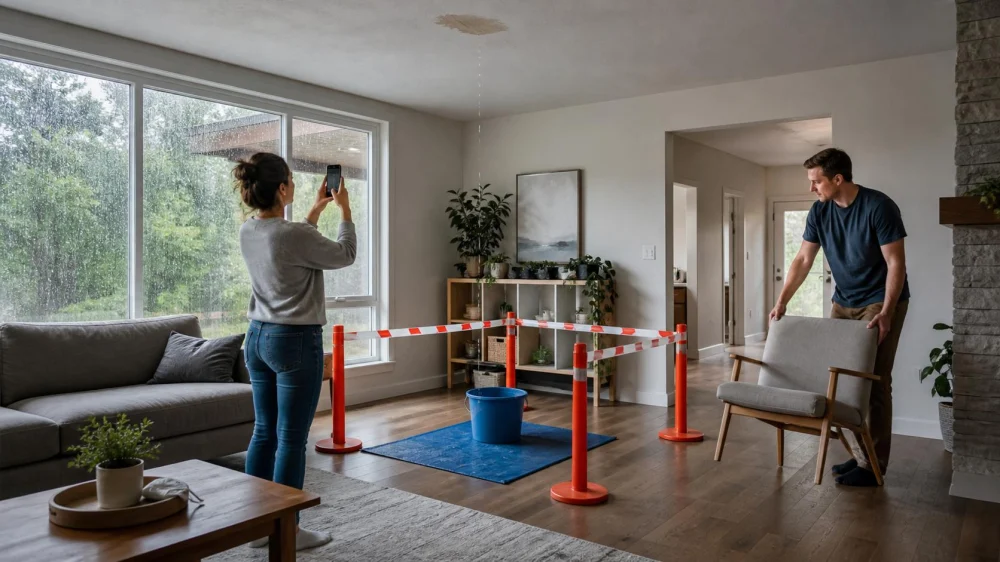
Roof Leak During Rain: Protect the Room and Record Clues
An active roof leak needs calm indoor action, not a climb onto wet shingles. Water may travel along framing before it appears, so the ceiling stain is a clue—not proof of the exterior entry point. Protect people first, keep clear of electricity and a sagging ceiling, contain water only where safe, and document conditions for the roofer.
Quick answer
Move people and valuables away from the wet area. Do not stand beneath a bulging ceiling, touch wet electrical equipment, enter water near energized systems, or climb onto the roof. If it is safe to approach, place a stable container under a simple drip and protect the floor. Photograph the stain, drip rate, weather, and surrounding room, then call a roofing professional. Use emergency services for fire, shock, collapse, or another immediate threat.
Ck Roofing Solutions / ck roofing solutions
MarkhamRegional Municipality of YorkOntario
8 Hikers Ln, Markham, ON L6B 0K3, Canada
Check for immediate danger
From a dry location, look and listen before moving anything. Warning signs that require distance and urgent professional help include:
- a ceiling that is bowed, swollen, cracking, or shedding material;
- water running through a light, smoke alarm, outlet, switch, fan, or electrical panel;
- sparking, buzzing, burning odor, smoke, or repeated loss of power;
- a large volume of water spreading across floors or walls;
- roof movement, fallen tree limbs, or storm damage to the structure;
- anyone experiencing electric shock, injury, or difficulty breathing.
Close the room and keep children and pets away. Do not puncture a ceiling bulge. Although online tips sometimes recommend releasing trapped water, the ceiling and insulation can fall without warning, and electricity may be involved.

Flynn Canada Ltd. - Ottawa / flynn ottawa
1655 Comstock Rd, Gloucester, ON K1B 5L2, Canada
Treat water near electricity seriously
Water can make electrical equipment and surrounding materials dangerous. The Ontario Electrical Safety Authority explains in its water-ingress guidance that exposed equipment may require evaluation, reconditioning, or replacement by qualified persons before it returns to service.
Do not touch a wet fixture, cord, appliance, switch, outlet, or panel. Do not walk through water to reach a breaker. If the panel and route to it are completely dry and you already know how to operate it safely, follow emergency instructions from the utility or a licensed electrical contractor; otherwise, stay back and call for guidance. Never guess which wet circuit is safe.
“Letting it dry” does not establish that wiring or equipment is safe. Arrange the required electrical evaluation after water exposure.
Contain water without creating risk
For a small drip in a structurally sound, electrically clear area, set a stable bucket or waterproof container on a dry, nonslip surface. Place absorbent towels around—not under—your walking path, and change them before they become saturated. A wooden spoon or cloth clipped across the bucket can sometimes reduce splashing, but do not build an arrangement that can tip.
Move furniture and removable valuables to a dry room only when the path is safe. Use plastic sheeting to protect an item from splash, not to trap moisture against a wall or ceiling. Do not staple or screw anything into wet building materials.
Check containers frequently. Lifting a full bucket on a slippery floor can cause injury, so use smaller containers or ask for help. Stop containment and leave the area if the ceiling changes shape, the flow increases, or electrical warning signs appear.
Record useful clues
A roofer benefits from a timeline and context more than a single close-up. From safe indoor and ground-level locations, record:
- when the drip began and whether rain was light, heavy, wind-driven, or mixed with melting snow;
- the room, wall, or ceiling location and its relation to chimneys, valleys, plumbing vents, or roof transitions;
- how the stain and drip rate changed over time;
- previous repairs or leaks in the same area;
- photos with a wider view and a safe size reference;
- visible exterior clues observed from the ground, without using a ladder.
Mark the stain boundary with removable tape only on dry, sound paint if doing so will not cause damage. Keep original photo times and save invoices, messages, and emergency work records for insurance questions.
Call the right help
Call emergency services for fire, electrical arcing, structural collapse, serious flooding, or injury. Call the utility or a licensed electrical contractor for electrical exposure. Contact a qualified roofing contractor for the roof assessment and temporary weather protection, and your insurer when the policy or damage warrants a claim.
Tell the roofer that the leak is active, describe any ceiling sag or electrical proximity, and ask what indoor actions are safe while waiting. Confirm the contractor’s identity, coverage, scope, price basis, and authorization before emergency work. A legitimate urgent repair should still be documented.
Do not hire someone to work on the roof during conditions they consider unsafe. A temporary interior containment step may be the only appropriate immediate action until wind and rain ease.
What to do after the rain
Keep the area restricted until the ceiling, insulation, electrical system, and roof have been assessed as needed. Water can remain above finishes after dripping stops. A roofing inspection should trace likely entry paths and examine related flashing, penetrations, underlayment, drainage, and damaged materials.
Drying and restoration need a defined plan. Ask which materials can be dried, which should be removed, who will test moisture, and how the repaired area will be monitored during the next rain. Electrical components exposed to water require the appropriate qualified evaluation.
A seal applied only at the visible interior stain is not a roof repair. Require photos and a written explanation connecting the proposed exterior work to the observed leak path.
Limits and emergency notes
This article gives general homeowner planning information for Ontario and does not diagnose a roof, electrical system, or structure. Building design and damage differ. Do not enter an unsafe room, attic, flooded area, or roof. Follow instructions from emergency responders, the electrical utility, a licensed electrical contractor, the insurer, and the roofing professional on site.
Frequently asked questions
Should I go into the attic to find the leak?
Not during an active storm or when access, wet wiring, soaked insulation, mould, pests, or weak framing may create danger. Give the roofer your indoor observations and let qualified people plan access.
Can I put a tarp on the roof while it is raining?
No. Wet roofing, wind, lightning, poor visibility, and unsecured materials make this dangerous. Ask a roofing contractor when temporary exterior protection can be installed safely.
Does the stain show the exact roof hole?
Not necessarily. Water can move along decking, rafters, fasteners, and insulation before becoming visible.
Can wet electrical equipment be used after it dries?
Do not assume so. Ontario ESA guidance calls for appropriate evaluation of water-exposed electrical equipment before return to service.
Next steps
Restrict the wet area, address any emergency, contain only a simple safe drip, and record a timeline from dry locations. Call the roofer and electrical help appropriate to what was exposed. After the weather clears, require a written diagnosis, repair scope, moisture plan, and verification—not just a cosmetic patch beneath the stain.


 Roofing Monkeys4.0 (13 reviews)
 Milena's Pro Roofers4.0 (51 reviews)
 Ample Roofing & Construction5.0 (12 reviews)
 Courtney Roofing Inc.4.0 (35 reviews)
 Toiture, couvreur et déneigement ville de Québec Quebectoiture.com5.0 (4 reviews)
 Pagani & Fils Couvreurs4.0 (11 reviews)
 How Much Does a New Roof Cost in 2025? Canadian Roofing Price Guide
 Top Signs Your Roof Has a Leak and What to Do About It in Canada
 Can You Install a New Roof Over an Old One in Canada?
 The Top Questions to Ask Before Hiring a Roofer in Canada
 What Are the Most Common Roofing Scams and How to Avoid Them in Canada
 How to Prepare Your Home for a Roofing Project in Canada