
Roof Moss and Algae: Safe Checks for Canadian Homes
On this page
Quick answer
Check roof growth from the ground with binoculars or a zoom camera. Moss usually forms raised green mats, while algae often appears as dark streaking, but dirt, lichen and material weathering can look similar. Do not climb onto a damp roof or use a pressure washer, scraping tool or improvised chemical. Ask a qualified roofer to identify the growth, assess roof condition and choose a material-compatible treatment.
Moss, algae and look-alikes
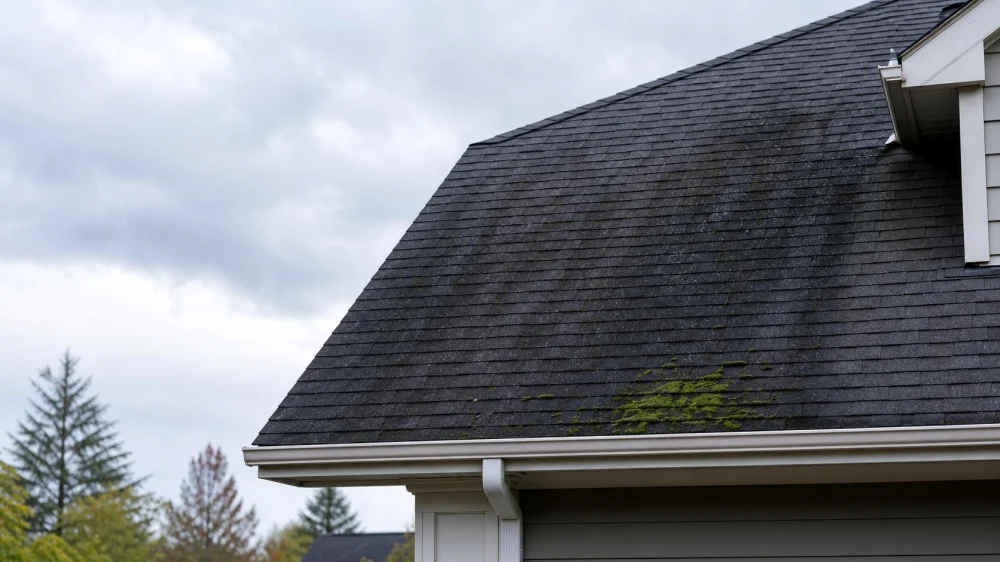
Roof biological growth is visible moss, algae, lichen or another organism living on or adhering to a roof surface. Its appearance depends on moisture, shade, nutrients, material and climate. A photograph can suggest a category but may not confirm it.
- Moss: often raised, soft-looking green or brown clumps that hold moisture.
- Algae: often flat dark or greenish staining, sometimes in streaks below metal or shaded areas.
- Lichen: crusty or leaf-like patches attached firmly to the surface.
- Dirt and soot: may create uniform discoloration or runoff marks.
- Material wear: granule loss, oxidation or coating change can resemble staining.
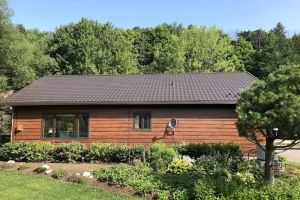
Canadian regions differ in rainfall, humidity, shade, freeze-thaw exposure and roofing materials. Growth on asphalt shingles does not call for the same treatment as growth on metal, cedar, tile or a membrane.
Atlas-Apex Roofing Inc. / atlas apex toronto
65 Disco Rd, Etobicoke, ON M9W 1M2, Canada
A safe ground-level check
- Choose dry daylight. Stand on stable public or private ground away from traffic and overhead hazards.
- Photograph each slope. Use zoom rather than a ladder, leaning from a window or walking on the roof.
- Map shade and moisture. Note tree cover, north-facing areas, valleys, chimneys, skylights and places below overflowing gutters.
- Look for roof damage. From the ground, note lifted edges, missing pieces, sagging, damaged flashing or debris piles.
- Check drainage. Observe gutters and downspouts during rain only from a safe location; do not stand under runoff or ice.
- Inspect indoors. Look for ceiling stains, musty odour or attic moisture from a safe access point.
- Compare over time. Dated photos show whether growth is spreading without repeated risky access.
Best DIY role: documentation and ground-level observation. Not ideal for DIY: roof walking, chemical application, aggressive brushing or work near power lines and steep edges.
Why roof growth matters
Moss can retain moisture and lift or disturb some roof coverings as it thickens. Lichen can bond tightly, making removal damaging. Algae may be primarily cosmetic on some products, but staining can hide wear or indicate persistent dampness. Debris and shade can slow drying.
The growth itself may not be the only issue. A professional should check:
- remaining roof-covering condition and manufacturer restrictions;
- drainage, gutter overflow and valley debris;
- overhanging branches and persistent shade;
- flashing, penetrations and edge details;
- attic humidity, exhaust termination and ventilation where relevant;
- safe runoff management for treatment products.
What not to do
- Do not pressure-wash asphalt shingles or other materials unless the manufacturer and qualified contractor specify a safe method.
- Do not scrape, wire-brush or pull moss aggressively; this can remove granules, coatings or surface material.
- Do not mix bleach, ammonia, acids, detergents or roof chemicals. Dangerous gases and burns can result.
- Do not apply a product that lacks clear compatibility, dilution, runoff, plant and personal-protection instructions.
- Do not install zinc, copper or treatment strips without checking roof design, runoff effects, galvanic compatibility and warranty terms.
- Do not walk on wet, frosty or treated roofing.
A cleaner result is not worth shortening roof life, contaminating drainage or risking a fall. “Soft washing” is a broad service term, not proof that a method is safe for every material.
Professional assessment and treatment
A qualified contractor may recommend leaving limited growth alone, applying a material-approved treatment, removing debris with non-damaging methods, replacing damaged sections or coordinating tree and drainage work. Treatment often works gradually; forcing instant visual removal can damage the roof.
Ask the contractor to state:
- what the growth appears to be and how that was determined;
- the roof material and its current condition;
- the exact product, concentration and application method;
- manufacturer and warranty compatibility;
- fall protection, landscaping and runoff controls;
- expected timeline, limitations and follow-up inspection;
- whether repairs should happen before cleaning.
Reduce recurrence safely
- Keep gutters and drainage functioning through safe professional maintenance.
- Have branches assessed and pruned by qualified tree professionals where they trap debris or shade the roof excessively.
- Correct leaks, overflow and misdirected exhaust rather than relying on repeated chemical treatment.
- Maintain attic moisture control and ventilation according to the building design.
- Use material-compatible components when reroofing in growth-prone locations.
- Take annual ground-level photographs to identify change early.
Do not remove healthy trees solely from a roof photo. Balance shade management, property goals, local bylaws, arborist advice and ecosystem considerations.
Sources and evidence notes
This article reflects general roof-maintenance, fall-prevention and material-care principles. Growth identification and treatment require site and product-specific assessment. Roofing manufacturer instructions, warranty terms, environmental rules and qualified contractor guidance take priority.
Frequently asked questions
Are black streaks always mould?
No. They may be algae, dirt, runoff, soot or material weathering. A qualified inspection is needed before choosing treatment.
Will roof moss cause an immediate leak?
Not necessarily, but thick growth can hold moisture and disturb some materials. Active leaks or damaged roofing deserve prompt assessment.
Can I spray household bleach from the ground?
Do not improvise. Concentration, material compatibility, runoff, plants and personal safety require a defined approved method.
Does a metal roof get moss?
Growth can occur where moisture, debris and shade persist. Cleaning methods must suit the coating, fasteners, seams and runoff system.
Should moss be removed before selling a home?
Get an inspection first. Aggressive cosmetic cleaning can create damage, while documented condition and a suitable plan provide better information.
Conclusion and next steps
Photograph roof growth from the ground, note shade, drainage and indoor moisture, then ask a qualified roofer to identify both the organism and the roof condition. Avoid pressure washing, scraping and improvised chemistry. The safest plan protects people, roofing materials, landscaping, drainage and the warranty while correcting conditions that keep the roof damp.

 A M Roofing Systems Inc3.0 (15 reviews)
 ANDRE'S ROOFING4.0 (8 reviews)
 Cover GTA Roofing5.0 (47 reviews)
 Stark Roofing4.0 (4 reviews)
 BNS Roofing4.0 (131 reviews)
 Royal Roofs Ltd4.0 (61 reviews)
 How Much Does a New Roof Cost in 2025? Canadian Roofing Price Guide
 Top Signs Your Roof Has a Leak and What to Do About It in Canada
 Can You Install a New Roof Over an Old One in Canada?
 The Top Questions to Ask Before Hiring a Roofer in Canada
 What Are the Most Common Roofing Scams and How to Avoid Them in Canada
 How to Prepare Your Home for a Roofing Project in Canada