
Roof Moss and Algae: Clean Without Damaging Shingles
On this page
Quick answer
Do not pressure-wash, scrape, or walk on a mossy roof. Identify the growth from ground level, check the roofing manufacturer's cleaning instructions, and hire an insured professional for safe treatment. The right method uses a compatible cleaner, controlled application, runoff protection, and time; aggressive removal can strip granules, lift shingles, and create leaks.
Ck Roofing Solutions / ck roofing solutions
MarkhamRegional Municipality of YorkOntario
8 Hikers Ln, Markham, ON L6B 0K3, Canada
Distinguish moss, algae, and stains
Moss often forms raised green clumps that hold moisture. Algae commonly creates dark streaks, especially on shaded roof slopes. Lichen can appear as crusty, attached patches. Dirt, soot, metal runoff, and tree debris can look similar from the ground.
Identification matters because the cleaning method and urgency differ. A photograph can help a roofer assess the pattern, but only a close professional inspection can confirm surface condition and whether shingles are already damaged.
Toitures Garant et Frères Inc / toiture garant
LévisChaudière-AppalachesQuébec
6615 Rue Alfred-Pellan, Lévis, QC G6V 9S9, Canada
Why growth matters
Moss retains moisture and can work beneath shingle edges as it thickens. Organic debris also slows drainage. Algae is often more cosmetic, but staining can hide wear and affect the appearance of the home.
Growth may indicate shade, overhanging branches, poor debris clearance, or a roof surface that stays damp. It does not automatically mean the roof needs replacement. Age, granule loss, curling, leaks, deck condition, and warranty terms must be considered together.
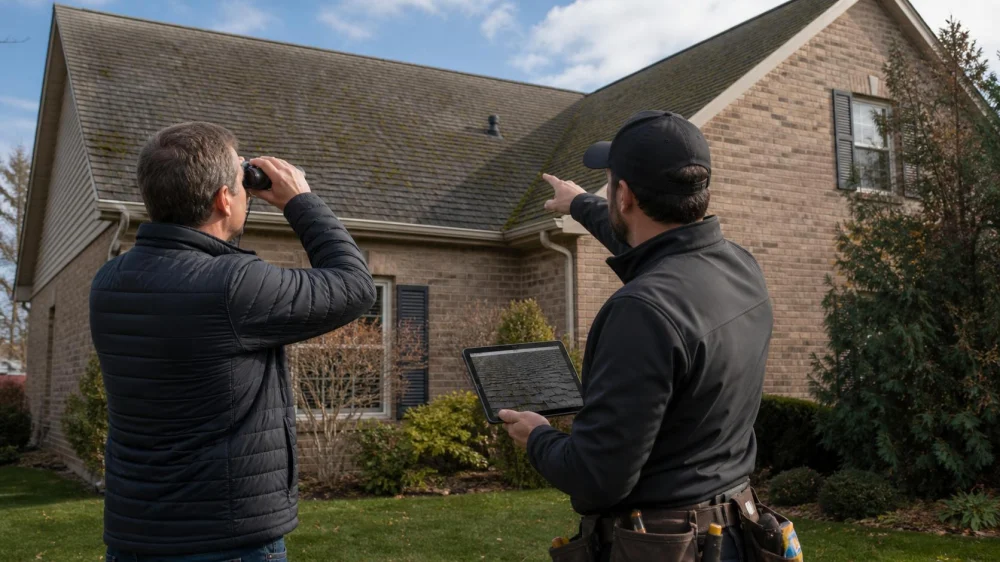
Inspect from a safe place
- Stand on stable ground and use binoculars or a zoom camera.
- Photograph each roof slope in consistent light.
- Note shade, branches, debris, and gutter overflow.
- Check ceilings and attic areas for moisture where access is safe.
- Compare changes over several months rather than climbing up.
Moss makes roofing slippery. In Pickering, frost, snow, rain, and freeze-thaw cycles add risk. Keep ladders down and leave roof access to trained workers using proper fall protection.
Methods to avoid
- Pressure washing: can remove protective granules, force water under shingles, and damage seals.
- Aggressive scraping: can tear or lift roofing and spread debris.
- Unapproved chemicals: may discolor materials, corrode metal, harm plants, or void a warranty.
- Walking on wet growth: creates a serious fall hazard and can damage softened materials.
- Mixing cleaners: can release toxic gas or trigger dangerous reactions.
Do not assume a homemade formula is compatible with asphalt shingles, metal flashing, gutters, siding, rainwater systems, and nearby vegetation.
Professional cleaning plan
A qualified contractor should identify the roofing product and follow its manufacturer instructions. A typical low-pressure treatment uses a compatible solution applied in a controlled way. Dead moss may release gradually with weather rather than being forcibly stripped.
Ask the contractor to explain application pressure, dilution, dwell time, rinsing, runoff collection, plant protection, worker fall protection, and what happens if damaged shingles are found. The roof should be inspected after treatment without assuming every stain must disappear immediately.
Protect people and landscaping
Keep children, pets, vehicles, and neighbours away from the work zone. Cover or move outdoor furniture and close windows. Downspouts may need controlled routing so solution does not enter a pond, garden, storm drain, or rain barrel.
Plants may require pre-wetting, temporary protection, and a clean-water rinse depending on the approved product. The contractor should follow the label, environmental rules, and site-specific precautions. Never enter a treated area until it is safe.
Reduce future growth
- Have overhanging branches assessed and pruned by a qualified arborist.
- Keep gutters and roof drainage working.
- Remove accumulated debris using a safe professional method.
- Address attic moisture and ventilation issues based on a full assessment.
- Discuss algae-resistant roofing when replacement is eventually due.
Do not remove healthy trees solely on a guess. Shade, orientation, roof material, moisture, and local conditions all contribute.
Contractor checklist
- Verify liability insurance and applicable Ontario workplace coverage.
- Request the exact cleaner and its safety information.
- Confirm compatibility with the roofing warranty.
- Ask how workers, occupants, pets, plants, and runoff will be protected.
- Get the roof area, process, price, and exclusions in writing.
- Require approval before repairs beyond the cleaning scope.
- Keep before-and-after photos and the paid invoice.
Important limitations
This is general maintenance information, not a cleaning formula or diagnosis. Roofing products and warranties vary, as do municipal environmental requirements. Chemical labels and manufacturer instructions must be followed. A deteriorated roof may not be suitable for cleaning and may require repair or replacement.
Sources and evidence notes
- Asphalt Roofing Manufacturers Association: technical guidance for cleaning algae and moss from asphalt roofing.
- Canadian roofing manufacturers: product-specific maintenance and warranty instructions.
- Infrastructure Health and Safety Association: Ontario ladder and fall-protection guidance.
- Health Canada and product labels: safe handling requirements for registered cleaning products.
Frequently asked questions
Can I brush moss off with a broom?
Do not work from the roof, and avoid aggressive brushing. It can damage shingles and creates a fall risk. Ask a professional for a compatible method.
Will roof moss die in winter?
Cold weather may slow growth but does not reliably remove established moss. Freeze-thaw conditions can make access more dangerous.
Are dark roof streaks always moss?
No. They may be algae, dirt, or runoff staining. Identification should precede treatment.
Does cleaning restore an old roof?
No. Cleaning can improve appearance and remove growth, but it cannot replace lost granules, repair a failing deck, or renew expired service life.
Conclusion
Roof moss and algae call for a measured response, not force. Observe from the ground, confirm the roofing product, avoid pressure washing and scraping, and use an insured contractor who follows manufacturer directions. A safe plan protects the roof, workers, occupants, landscaping, and drainage while addressing the conditions that encouraged growth.

 AJ Roofing and Construction5.0 (2 reviews)
 East Coast Roofing2.0 (11 reviews)
 Shield Pro Roofing Inc.4.0 (24 reviews)
 MO Precision Roofing5.0 (13 reviews)
 Canadian Country Roofing and Renovations0.0 (0 reviews)
 Noor roofing5.0 (4 reviews)
 How Much Does a New Roof Cost in 2025? Canadian Roofing Price Guide
 Top Signs Your Roof Has a Leak and What to Do About It in Canada
 Can You Install a New Roof Over an Old One in Canada?
 The Top Questions to Ask Before Hiring a Roofer in Canada
 What Are the Most Common Roofing Scams and How to Avoid Them in Canada
 How to Prepare Your Home for a Roofing Project in Canada