
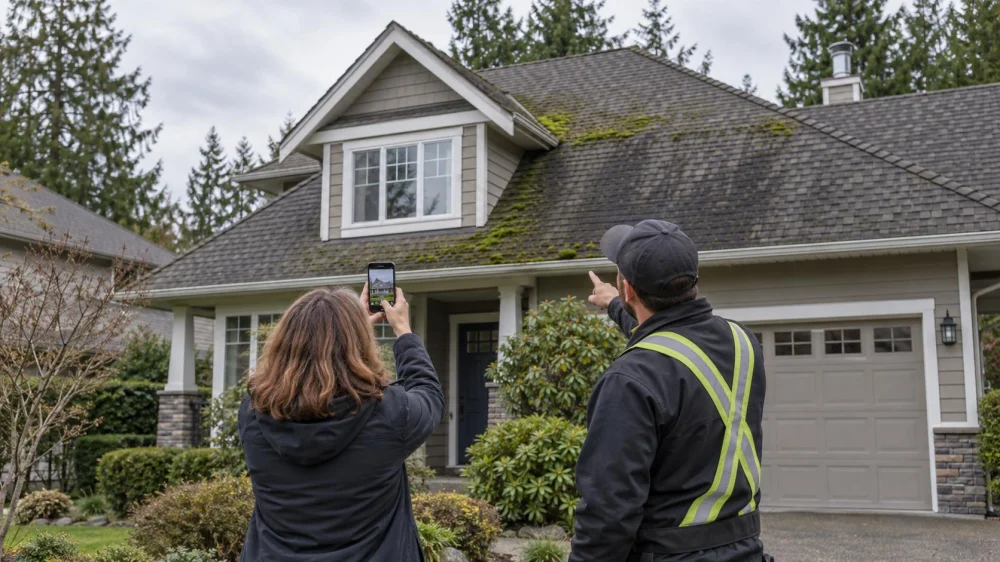
Roof Moss and Algae: Document Growth Before Treatment
On this page
Quick answer
Photograph roof staining or green growth from the ground at consistent angles, note shade, drainage, tree cover, roof age, and recent weather, then ask a qualified roofing contractor to identify the roof material and condition before treatment. Do not climb onto the roof, pressure-wash shingles, scrape with a tool, or apply a generic chemical mix. The wrong access or method can injure someone, damage the roof, void coverage, or contaminate landscaping and runoff.
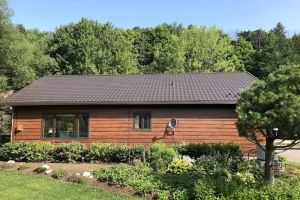
Observe safely from the ground
Use a camera zoom from public or owned ground, or view from a safely accessible window without leaning out. Record which roof planes are affected and whether growth is concentrated below trees, beside walls, near valleys, or along slow-draining edges.
Look for ground-level consequences: granules at downspouts, displaced material, sagging, damaged flashing, blocked gutters, or interior moisture. Growth and a leak may coexist without one proving the cause of the other.
Never use a ladder, drone, or neighbouring property without suitable training, permission, and compliance with local rules.
Vancouver Moss Removal / moss removal north vancouver
VancouverMetro VancouverBritish Columbia
1615 Frances St #105, Vancouver, BC V5L 1Z3, Canada
Record conditions, not assumptions
Dark streaks, lichen, moss, dirt, and shadow can look similar at a distance. Moisture retention, shade, roof orientation, nearby vegetation, material type, and age all affect appearance. An onsite professional may need a closer inspection.
Write down when the pattern first appeared and how it changed. Include previous cleaning, repairs, coatings, warranty documents, and the manufacturer if known.
Do not assume cosmetic growth means immediate replacement, or that a clean-looking roof has no damage. Condition and treatment compatibility require material-specific assessment.
Compare treatment proposals
Ask each contractor to describe the identified growth, roof condition, access plan, fall protection, treatment product, application method, runoff containment, plant protection, expected timeline, and areas excluded from the quote.
Confirm compatibility with the roof manufacturer and existing warranty. Request proof of insurance, required licensing or registration, references, and written responsibility for damage or cleanup.
Be cautious with instant-results claims, high-pressure washing, uncontrolled scraping, or an unlabeled chemical recipe. A gradual appearance change may be part of a gentler approved process.
Use a safe checklist
- Stay on the ground and photograph every visible roof plane.
- Note shade, trees, drainage, weather, roof age, and material.
- Check ceilings and attic areas for moisture without disturbing hazards.
- Collect warranty, repair, and product records.
- Ask qualified contractors for a written diagnosis and method.
- Verify insurance, worker safety, runoff, and property protection.
- Compare scope, exclusions, follow-up, and warranty—not appearance promises alone.
- Photograph the roof again after the agreed interval.
Limitations and urgent boundaries
This guide cannot identify biological growth or determine roof integrity from photos. Roof materials and approved treatments differ. Local environmental, worker-safety, pesticide, water-discharge, and property rules may apply in Ontario.
Keep people away and seek prompt professional help for falling material, sagging, active interior water near electricity, storm damage, or any condition that threatens occupants. Do not access a wet, icy, steep, or deteriorated roof.
Sources and evidence notes
The approach follows manufacturer-first roof care and working-at-heights principles: diagnose the material and condition, avoid damaging pressure and unsafe access, control runoff, protect adjacent property, and use qualified workers with a documented method.
Frequently asked questions
Can I pressure-wash roof moss?
Do not assume so. Pressure can damage roofing and drive water where it does not belong. Follow the roof manufacturer's approved method.
Should I scrape growth off?
Scraping from a roof combines fall risk with possible surface damage. Have a qualified contractor assess the appropriate method.
Do dark streaks prove algae?
No. Several materials and shadows can look alike from the ground.
Will trimming trees solve it?
It may change shade and debris, but tree work has its own hazards and does not replace roof assessment.
How do I compare quotes?
Compare diagnosis, material compatibility, safety, runoff control, preparation, follow-up, exclusions, and warranty.
Conclusion and next steps
Document the pattern from the ground, assemble roof and warranty records, and obtain a material-specific written assessment. Choose a treatment based on safety, compatibility, runoff control, and realistic follow-up—not the fastest colour change. Keep everyone off the roof unless trained and equipped for the work.
 Flat Roofs Toronto5.0 (14 reviews)
 Cordner Brothers roofing a gutter services2.0 (2 reviews)
 Elite Construction4.0 (125 reviews)
 OK Roof Revival4.0 (27 reviews)
 Evandale Roofing & Siding4.0 (23 reviews)
 D & R Roofing Inc4.0 (47 reviews)
 How Much Does a New Roof Cost in 2025? Canadian Roofing Price Guide
 Top Signs Your Roof Has a Leak and What to Do About It in Canada
 Can You Install a New Roof Over an Old One in Canada?
 The Top Questions to Ask Before Hiring a Roofer in Canada
 What Are the Most Common Roofing Scams and How to Avoid Them in Canada
 How to Prepare Your Home for a Roofing Project in Canada