
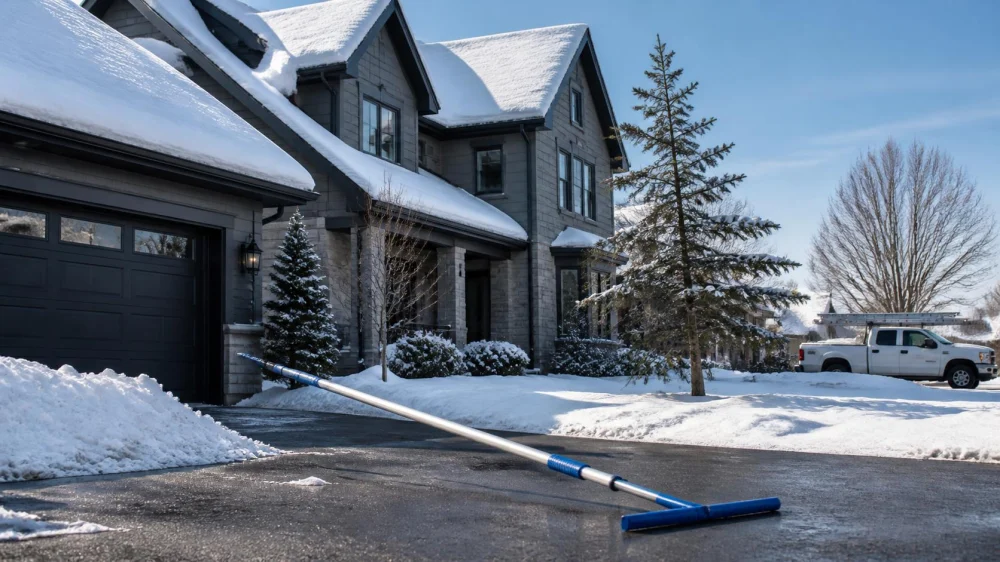
Roof Snow Removal in Canada: Stay on the Ground and Plan
On this page
Quick answer
Do not climb onto a snowy or icy roof to clear it. Sloped surfaces, hidden weak areas, falling snow, cold, wind, and improper ladder use create serious hazards. Inspect from the ground and attic, keep people away from the fall zone, and hire an insured roofing or snow-removal professional when loading, ice dams, drainage, or structural concerns require action.
Leave the building and call emergency services for sudden cracking, major roof movement, ceiling collapse, a strong gas smell, electrical arcing, or other immediate danger. A structural engineer or qualified contractor should assess suspected overload.
Ck Roofing Solutions / ck roofing solutions
MarkhamRegional Municipality of YorkOntario
8 Hikers Ln, Markham, ON L6B 0K3, Canada
Warning signs that need help
- new sagging, bowing, or visible roof deformation;
- doors or windows that suddenly bind;
- cracking sounds, ceiling cracks, or displaced finishes;
- water entering near lights or electrical wiring;
- large overhanging cornices or heavy sliding snow above entrances;
- blocked vents or flues; and
- uneven drift accumulation after wind.
These signs do not measure snow load by themselves. Keep occupants away and obtain professional evaluation rather than testing the roof.
Edmonton Roofing Company / replace roof edmonton
8023 182 St NW, Edmonton, AB T5T 0T6, Canada
Ground-level observations
Use binoculars or a zoom camera from a safe distance. Photograph roof planes, valleys, gutters, vents, dormers, and drift areas. From inside, note ceiling stains, attic moisture, unusual sounds, and changes in doors or walls without walking on attic insulation or concealed framing.
Do not stand beneath roof edges while snow or ice is moving. Mark a drop zone around entrances, parked vehicles, heat pumps, and walkways.
Use a roof rake only within limits
A long-handled roof rake may let a trained person remove limited snow from the ground when the roof and tool manufacturers permit it. Stay clear of overhead electrical lines and falling snow. Keep both feet on stable, cleared ground and work small sections without standing directly below.
Do not use a ladder on snow or ice, stretch beyond balance, strike shingles, scrape to bare roofing, or pull snow toward people. If access, height, power lines, heavy ice, or physical capability creates doubt, stop.
Choose qualified snow-removal help
Ask for current liability insurance, worker coverage required in Ontario, experience with the roof type, fall-protection plan, equipment, access plan, and written scope. Clarify snow placement, protection of vents and gutters, emergency repairs, cleanup, and photographs.
Do not choose a contractor who plans to work on a snowy roof without appropriate training and fall protection. Confirm who is responsible for property damage and disposal.
Avoid roof and property damage
Metal shovels, axes, salt, open flame, and pressure equipment can damage membranes, shingles, flashings, gutters, and landscaping. Do not chip ice around vents or skylights. Chemical de-icers may corrode materials or harm plants.
Removing all snow from one area can create uneven loading. A professional should plan the sequence and protect workers below.
Prepare before the next storm
Have recurring leaks, attic ventilation, insulation, drainage, and structural concerns evaluated before winter. Record the roof age and repair history. Keep emergency contacts, insurance details, and interior leak supplies ready.
Monitor official weather alerts and property-specific guidance. Snow depth alone does not determine weight because wetness, ice, drifting, roof geometry, and construction matter.
Snow safety checklist
- Stay off snowy and icy roofs.
- Observe from the ground and attic.
- Keep people out of fall zones.
- Keep tools far from power lines.
- Use a ground rake only within instructions.
- Verify contractor insurance and fall protection.
- Evacuate for structural or electrical danger.
Frequently asked questions
How much snow is too much?
Depth alone cannot answer; structure, drifting, ice, and snow density matter.
Can I use a ladder?
Snow, ice, height, and roof access make ladder work hazardous; hire qualified help.
Should I remove every inch?
No. Scraping can damage roofing, and uneven removal can create loading issues.
Can I use salt?
Not without roof-specific professional guidance; it can damage materials.
What about icicles?
Keep the area below clear. Do not strike them while standing underneath.
Who assesses structural risk?
A qualified structural professional or contractor familiar with the building.
Sources and evidence notes
CCOHS identifies falls, improper ladder use, slippery surfaces, weather, and weak roofs as residential roofing hazards. See CCOHS residential roofing safety.
CCOHS warns against extension ladders near power lines and on snow or ice without secured feet. See CCOHS extension ladder guidance.
Conclusion and next steps
Inspect snow from safe ground, protect the fall zone, and do not climb onto a slippery roof. Use ground tools only within clear limits and away from electricity. Hire insured, trained help for meaningful accumulation, ice, complex access, or damage, and evacuate immediately for signs of structural or electrical failure.

 JXN ROOFING5.0 (1 reviews)
 Hamati Roofing Ltd.5.0 (10 reviews)
 Abby Roofing - Roofing Orléans0.0 (0 reviews)
 DB Roofing5.0 (4 reviews)
 iRoofing5.0 (1 reviews)
 NP Roofing3.0 (5 reviews)
 How Much Does a New Roof Cost in 2025? Canadian Roofing Price Guide
 Top Signs Your Roof Has a Leak and What to Do About It in Canada
 Can You Install a New Roof Over an Old One in Canada?
 The Top Questions to Ask Before Hiring a Roofer in Canada
 What Are the Most Common Roofing Scams and How to Avoid Them in Canada
 How to Prepare Your Home for a Roofing Project in Canada