
Roofing Material Delivery: Clear Driveway and Access
Table of contents
Quick answer
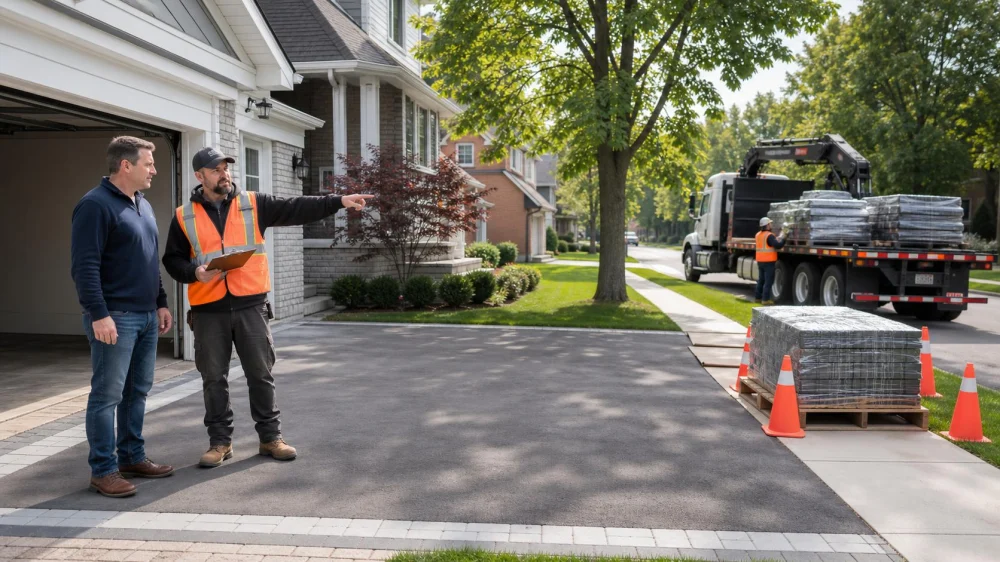
Ask the roofer when the truck will arrive, where it will stop, and where materials will be staged. Move every vehicle you may need before that window, clear toys and bins from the driveway, and keep children and pets indoors. Do not guide the truck, handle bundles, or choose roof loading yourself. The contractor and delivery crew must manage weight, equipment, property protection, and public access.
Toitures Garant et Frères Inc / toiture garant
LévisChaudière-AppalachesQuébec
6615 Rue Alfred-Pellan, Lévis, QC G6V 9S9, Canada
Confirm the delivery plan
Roofing materials may arrive before the installation crew, on the first morning, or in several loads. The truck may use a lift, conveyor, crane-style boom, forklift, or hand-off procedure selected by the supplier. Ask the contractor to explain the site plan rather than assuming the truck can use your usual parking space.
- Delivery date and expected arrival window.
- Contractor or foreperson who will meet the driver.
- Truck approach, stopping point, and exit direction.
- Ground staging area and whether any material will be roof-loaded.
- Garage, front door, side gate, and neighbour access that must remain open.
- Responsibility for permits, traffic control, overhead clearance, and surface protection.
Share accurate information about a steep drive, narrow gate, soft shoulder, underground structure, recently paved surface, sprinkler head, low branch, or overhead service. The professionals decide whether the route and placement are suitable.

XACT Roof & Renovation Ltd. / xact roofing
227 Regent Ave W, Winnipeg, MB R2C 1R3, Canada
Move vehicles early
Move cars, bicycles, trailers, and recreational equipment before the delivery window. Park far enough away that a long truck can turn and the crew can operate equipment without working around your vehicle. If street parking rules or temporary restrictions apply, follow the current municipal instructions and the contractor's plan.
Take out anything you may need from the garage before material blocks the door. That includes a work bag, stroller, mobility device, medication, school gear, and emergency supplies. Keep car keys accessible in case the crew requests an additional move from a safe location.
Do not drive through cones, under a raised boom, beside operating equipment, or between a truck and its spotter. If you must leave unexpectedly, call the foreperson and wait for a cleared route.
Clear the route without creating hazards
Remove ordinary movable items such as toys, hoses, planters, sports nets, seasonal decorations, garbage bins, and loose cords. Close garage cabinets and secure lightweight items that could blow into the route.
- Walk from the curb to the proposed staging area.
- Look for trip hazards, ice, mud, standing water, and loose gravel.
- Mark features the crew may not see, such as low landscape lights or sprinkler heads, using a method the contractor approves.
- Open only gates the crew has asked to use and secure pets elsewhere.
- Leave utility equipment, overhead lines, branches, and structural obstacles for qualified professionals to assess.
Do not trim near power lines, remove municipal signs, build a ramp, cover a utility access, or alter a driveway to accommodate the truck. Report the condition and let the contractor revise the plan.
Protect household and public access
Material placement should not block a required exit, neighbouring driveway, public sidewalk, fire hydrant, utility access, or the route needed by emergency responders. The contractor is responsible for planning the work zone and any necessary controls.
Tell the foreperson about scheduled home-care workers, accessible transit, school transport, deliveries, or residents who require a step-free route. Reschedule nonessential visitors. Keep children and pets inside or off-site from before the truck arrives until the area is released.
Do not stand in the street to direct traffic or place personal cones on public property without authorization. Use the contractor's designated communication channel if a pedestrian or neighbour raises a concern.
Let professionals choose material placement
Shingle bundles and other roofing products are heavy. Their storage and roof distribution depend on product instructions, building conditions, weather, equipment, and crew procedures. Homeowners should not move bundles, climb onto the delivery truck, operate lifting equipment, or tell the driver where to load the roof.
Ask the foreperson to confirm that materials match the order before they are opened, how they will be protected from weather, and when packaging will be removed. If something appears unstable, wet, damaged, or in the wrong location, keep clear and report it. Do not restack it yourself.
Check the site after delivery
When equipment is shut down and the foreperson says the area is safe, inspect from ground level. Confirm the household exit and vehicle plan still work. Photograph the driveway, garage, and staging area for your records without entering the material zone.
- Materials remain inside the contractor's marked area.
- Wrapping and straps are contained rather than loose in the yard.
- Sidewalks and neighbour access are clear as planned.
- Garage doors, gates, drains, and utility access are not unintentionally blocked.
- Any surface mark or property concern is reported promptly to the foreperson.
Delivery checklist
- Confirm time, truck route, staging area, and responsible contact.
- Move vehicles and retrieve needed garage items early.
- Clear movable objects from the approved access route.
- Tell the contractor about hidden, soft, narrow, or overhead conditions.
- Arrange access for residents, neighbours, and scheduled services.
- Keep children, pets, and visitors outside the work zone.
- Let trained crews handle traffic, equipment, bundles, and roof loading.
- Inspect from the ground only after the foreperson releases the area.
Limitations
Delivery methods, vehicle sizes, product weights, municipal requirements, and site conditions vary. This guide helps homeowners prepare ordinary access; it does not determine driveway capacity, lifting setup, traffic control, roof load, or code compliance. The roofing contractor, supplier, equipment operator, and relevant authorities must make those decisions for the actual property.
Frequently asked questions
Can roofing bundles be delivered onto my driveway?
Possibly, but the contractor and supplier must assess the surface, route, equipment, material protection, and access needs. Tell them about recent paving, cracks, underground rooms, drains, or other concerns.
Should I move my car the night before?
Yes, if parking it elsewhere is safe and permitted. Early movement prevents the vehicle from becoming trapped by a truck, material stack, waste container, or work zone.
Can I help carry shingle bundles?
No. Let the trained crew handle heavy materials and lifting equipment. Stay outside the marked zone and direct questions to the foreperson.
What if the truck cannot reach the planned area?
Do not improvise a route. The driver and contractor should stop, reassess, and select another professional delivery or staging method.
Who handles a blocked sidewalk or street?
Ask the contractor before delivery. Current local requirements, permits, and traffic controls must be managed by the responsible company and authorities, not improvised by the homeowner.
Next steps
Send the roofer current photos of the driveway, curb, garage, side access, overhead area, and proposed staging space. Confirm the delivery plan in writing, move vehicles the evening before, and appoint one household contact. On delivery day, remain available by phone while staying out of the truck and material zone.




 Ottawa Roofing & Siding by Parliament Contracting4.0 (35 reviews)
 Lutz Roof Masters5.0 (4 reviews)
 Cordner Brothers roofing a gutter services2.0 (2 reviews)
 Chisholm Roofing1.0 (2 reviews)
 Valad roofing5.0 (9 reviews)
 Markham Metal Roofing | PMR Team Inc. | Professional Metal Roofers5.0 (4 reviews)
 How Much Does a New Roof Cost in 2025? Canadian Roofing Price Guide
 Top Signs Your Roof Has a Leak and What to Do About It in Canada
 Can You Install a New Roof Over an Old One in Canada?
 The Top Questions to Ask Before Hiring a Roofer in Canada
 What Are the Most Common Roofing Scams and How to Avoid Them in Canada
 How to Prepare Your Home for a Roofing Project in Canada