
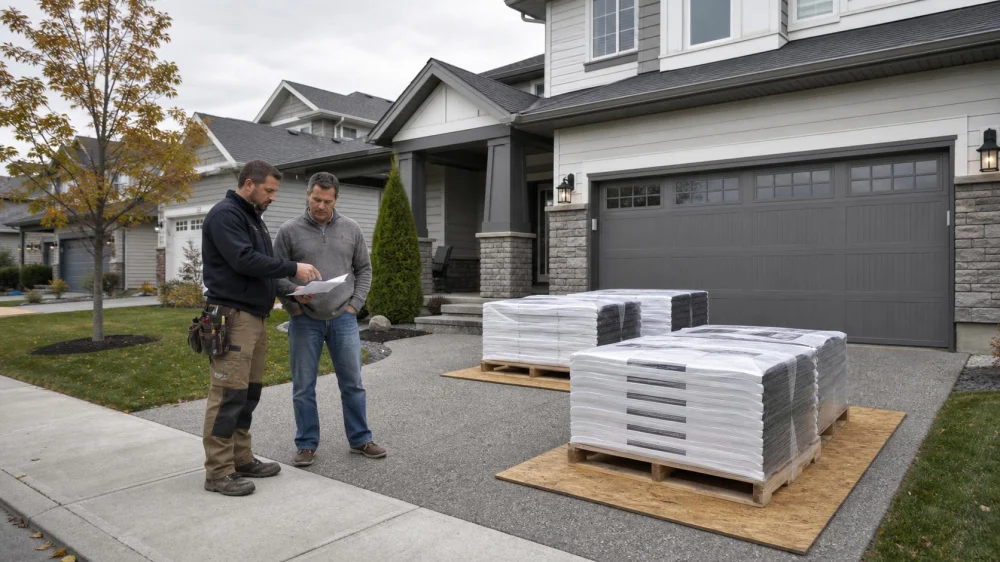
Roofing Material Delivery: Protect Your Driveway and Access
A roof replacement may begin before the crew arrives, when shingles, underlayment, bins, or equipment are delivered. The weight, placement, weather protection, and traffic impact of those materials can affect the property and schedule. Canadian homeowners should settle the delivery plan in writing rather than discovering on delivery day that a driveway, laneway, or neighbour’s access is blocked.
Match Delivery to Scope
Ask the contractor which products, quantities, colours, profiles, accessories, and disposal equipment will arrive. Compare them with the signed scope and approved changes. Clarify whether materials come from the roofer or a separate supplier and who accepts them. Do not authorize substitutions at the curb without written information about compatibility, price, warranty, and schedule.

Toitures Bernier et Fils / toitures bernier
QuébecCapitale-NationaleQuébec
1095 Chem. de la Canardière #4, Québec, QC G1J 2C2, Canada
Choose a Staging Location
Walk the property with the contractor from ground level and agree where pallets, a disposal bin, lifts, and crew vehicles may go. Consider roof access, overhead branches, eaves, gates, drainage, soft landscaping, and emergency routes. Put the location on a sketch or photo. A delivery driver should not need to improvise placement based on a vague instruction.
Best Roofer & Renovation / best roofing toronto
2967 Dundas St W #1584, Toronto, ON M6P 1Z2, Canada
Assess the Driveway
Tell the contractor about cracked asphalt, decorative concrete, pavers, recent repairs, underground structures, steep slopes, or weight restrictions. Ask how loads and bins will be distributed and what protective boards or pads will be used. Photograph existing conditions with dates. Do not assume a residential driveway can accept any truck, forklift, pallet, or loaded debris container.
Keep Access Clear
Plan where household vehicles will park before material arrives. Keep sidewalks, fire hydrants, mailboxes, accessible routes, shared drives, and municipal collection points clear. Coordinate with neighbours when legal shared access could be affected, but do not place items on their property without permission. Arrange a path for children, pets, deliveries, and emergency responders throughout the work.
Mark Utilities and Hazards
Identify septic components, irrigation, low wiring, exterior outlets, gas equipment, and underground services relevant to staging. Follow local locate requirements before stakes or equipment could disturb the ground. Keep materials away from furnace, water-heater, and dryer vents. The contractor should evaluate hazards; a homeowner should not climb, move overhead lines, or direct a truck beneath unsafe clearance.
Plan for Weather
Canadian rain, snow, wind, and freeze-thaw conditions can change a safe staging plan. Ask which products must stay dry, whether packaging is sufficient, and who will add or inspect covers. Tarps should be secured without creating trip hazards or trapping water. Confirm what happens if delivery arrives but roofing is postponed, including storage duration and responsibility for weather damage.
Verify the Load
Have the contractor or authorized crew member count and inspect the shipment. From a safe distance, record pallet labels, visible damage, and colour information without opening packages that affect warranty or return status. Keep the delivery ticket. A correct bundle count does not prove every component is present, so the contractor should reconcile ventilation, flashing, fasteners, and membranes too.
Secure Materials
Ask how loose items, ladders, tools, and packaging will be secured after hours. Keep children and pets away from the staging area. Do not let household members climb pallets or move heavy bundles. Exterior cameras and lighting may help document activity, but aim them lawfully and tell the contractor about relevant property security requirements.
Document Damage
If delivery damages pavement, landscaping, siding, fencing, or another surface, photograph the condition promptly from several angles. Note the time, vehicle, witnesses, and weather without arguing with the driver. Notify the contractor using the contract’s communication method and preserve receipts or prior photos. Ask for the proposed remedy and responsibility in writing before approving unrelated final payment.
Plan Final Pickup
Clarify when unused materials, pallets, packaging, and the debris bin will leave. Some matching shingles may be intentionally left for future repair; label and store them according to manufacturer guidance. Inspect the staging area after pickup for nails, oil, dents, blocked drainage, and damaged vegetation. Record unresolved items on the final walkthrough list.
Send the final delivery plan to the contractor before the scheduled day and keep the site contact available. Include parking restrictions, gate dimensions, school-bus timing, municipal noise or road limits, and any date when the household cannot provide access. If conditions differ on arrival, pause placement and contact the contractor rather than directing an unfamiliar driver into a questionable area. A brief delay is easier to resolve than a blocked street, damaged drive, or pallet placed where the roofing crew cannot use it safely.
A controlled delivery protects more than the shingles. Match the load to the contract, select a safe staging area, document the driveway, preserve access, prepare for weather, and confirm pickup. Written decisions give the homeowner, roofer, supplier, and driver the same plan before heavy materials reach the property.




 Top Roof Repair4.0 (21 reviews)
 Troughway5.0 (5 reviews)
 Scott Roofing Inc4.0 (82 reviews)
 D Hoyle Odd Jobs4.0 (3 reviews)
 AMJ Exteriors5.0 (13 reviews)
 Cima Roofing Contractors Inc.5.0 (6 reviews)
 How Much Does a New Roof Cost in 2025? Canadian Roofing Price Guide
 Top Signs Your Roof Has a Leak and What to Do About It in Canada
 Can You Install a New Roof Over an Old One in Canada?
 The Top Questions to Ask Before Hiring a Roofer in Canada
 What Are the Most Common Roofing Scams and How to Avoid Them in Canada
 How to Prepare Your Home for a Roofing Project in Canada