
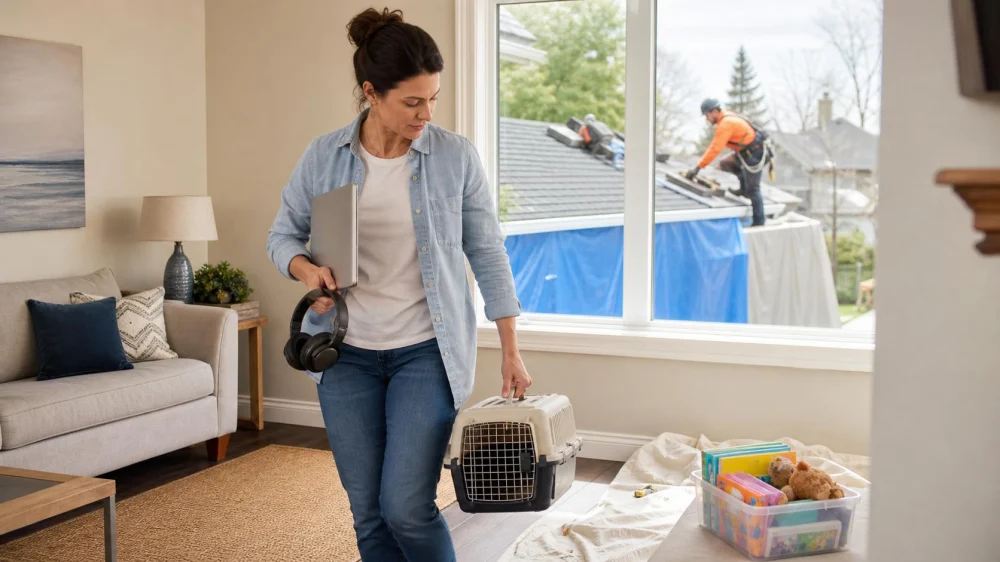
Roofing Work Noise: Plan for Kids, Pets, and Remote Work
Table of contents
Quick answer
Roof replacement can bring repeated impact noise, vibration, deliveries, and crew movement throughout the day. Ask the contractor for expected start times and the loudest phases, then relocate important calls, naps, children, and noise-sensitive pets before work begins. Keep everyone away from exterior work zones, use one household contact for the foreperson, and expect weather to shift the schedule.
Vancouver Moss Removal / moss removal north vancouver
VancouverMetro VancouverBritish Columbia
1615 Frances St #105, Vancouver, BC V5L 1Z3, Canada
Ask for the daily work schedule
Roofing does not produce a steady background hum. Tear-off, deck work, fastening, deliveries, cleanup, and equipment movement create different bursts of sound and vibration. The contractor may not predict every minute, but can usually explain the expected sequence.
- Confirm the crew's planned arrival and departure window.
- Ask which day is likely to include tear-off or other especially disruptive work.
- Identify driveway, door, and yard areas that must remain clear.
- Ask how deliveries, waste containers, and cleanup will affect access.
- Share any essential household timing, such as school pickup or medical transport.
Get the day-of-work contact and decide who in the household will answer. Too many people giving the crew instructions can create confusion.
Stokes Roofing / stokes roofing
PeterboroughPeterborough CountyOntario
641 Bellaire St, Peterborough, ON K9J 3Y5, Canada
Move remote work and calls
A lower-level room may reduce some direct impact noise, but it may not make a roof project quiet enough for confidential calls, recordings, tutoring, or client presentations. The most reliable plan is to move critical work off-site.
- List meetings that cannot tolerate interruption.
- Reserve a coworking room, library room, office, or trusted alternate location.
- Download files and pack chargers, headset, and authentication devices the night before.
- Tell colleagues that noncritical calls may need flexibility.
- Keep the contractor contact accessible without monitoring the site from a work call.
Noise-cancelling headphones can help with ordinary concentration, but they do not remove vibration and should not prevent you from hearing a smoke alarm, doorbell, contractor alert, or emergency instruction.
Plan for babies and children
Infants and young children may find sudden overhead impact sounds frightening or lose their usual nap routine. Arrange childcare, a family visit, or an outing during the loudest work. Pack comfort items, meals, medication, schoolwork, and weather-appropriate clothing before access around the house becomes busy.
Older children should understand that the crew area, ladders, waste container, driveway, and material stacks are off-limits. Keep outdoor toys, bicycles, and sports equipment inside. Do not let children watch from windows immediately below active work or approach workers for a closer look.
Maintain normal pickup and drop-off only through the access route agreed with the contractor. If that route becomes blocked, call the foreperson rather than walking beneath work.
Prepare pets before the crew arrives
Hammering, unfamiliar voices, open gates, and repeated door activity can stress pets and increase escape risk. For an anxious animal, arrange boarding, daycare, or a stay with a trusted person before the crew arrives.
- Exercise the pet and complete outdoor needs before the workday starts.
- Secure collars, identification, microchip details, and current contact information.
- Place carriers, leashes, food, medication, and veterinary details together.
- Tell the contractor that animals live in the home and identify doors or gates that must stay closed.
- Keep indoor pets in a closed room away from attic access and worker entry points if they remain home.
Do not leave a pet loose in the yard, garage, or vehicle during roofing work. Check with a veterinarian when an animal has severe noise anxiety or medical needs; do not give unapproved calming products.
Keep one communication channel
Name one adult as the household contact and one backup. The primary contact should know who is in the home, which rooms are occupied, where pets are located, and how to reach everyone if access changes.
Agree on how the foreperson will report an unexpected deck issue, weather pause, delivery, or request for attic access. Put important decisions in writing and keep the contract scope available. Questions about materials, added work, or cost should go through the authorized contact rather than an occupant speaking casually with different crew members.
Never climb a ladder or enter an active exterior work zone to get attention. Call or message from a safe location.
Handle weather and schedule changes
Rain, wind, temperature, material delivery, site conditions, or discovered damage can change the plan. Keep childcare and remote-work arrangements flexible for at least one backup day when practical. Ask when the contractor will confirm the next day's start.
If work pauses, do not assume the property is ready for normal yard use. Materials, fasteners, tarps, ladders, or protected openings may remain. Wait for the foreperson to release entrances and outdoor areas, and keep children and pets inside until cleanup is complete.
Workday checklist
- Confirm start time, likely loud phases, access route, and daily contact.
- Move critical calls and focused work off-site.
- Arrange childcare or outings before the crew arrives.
- Relocate noise-sensitive pets or secure them in an approved interior room.
- Keep ladders, driveway zones, yard, and material areas off-limits.
- Maintain a way to hear alarms and urgent contractor messages.
- Use one person to authorize questions and changes.
- Wait for the foreperson to release outdoor areas after cleanup.
Limitations
Actual noise and vibration depend on roof design, materials, work method, home construction, crew size, and project scope. A contractor's timeline is an estimate and weather can change it. This guide supports household planning; it does not replace the roofing contract, site-specific safety directions, childcare judgment, veterinary advice, or local noise rules.
Frequently asked questions
Can I work from home during a roof replacement?
You can remain in an approved area if the contractor says occupancy is allowed, but calls and focused work may be difficult. Move important meetings off-site and stay clear of work access routes.
Will the noise be constant?
Usually it changes with the work phase. Expect bursts of impact, scraping, movement, and equipment noise rather than a predictable steady level.
Should my cat stay in the basement?
Only if the room is secure, comfortable, ventilated, away from worker access, and suitable for that animal. An off-site stay may be better for a pet with strong noise anxiety.
Can children watch the roofers from the yard?
No. The yard and areas below active roof work can contain falling debris, tools, vehicles, and fasteners. Observe only from a location the contractor confirms is safe.
What if I need to leave during the workday?
Use the agreed safe exit, notify the household contact, and confirm the vehicle route is open. Do not walk beneath active work or move barriers yourself.
Next steps
Ask the roofing company for a sample day schedule before signing or before the pre-start meeting. Put critical work, childcare, pet care, and transportation into one household plan, with a backup day for weather. Share the final access and contact plan with the foreperson before materials arrive.




 Ottawa Roofing & Siding by Parliament Contracting4.0 (35 reviews)
 Lutz Roof Masters5.0 (4 reviews)
 Cordner Brothers roofing a gutter services2.0 (2 reviews)
 Chisholm Roofing1.0 (2 reviews)
 Valad roofing5.0 (9 reviews)
 Markham Metal Roofing | PMR Team Inc. | Professional Metal Roofers5.0 (4 reviews)
 How Much Does a New Roof Cost in 2025? Canadian Roofing Price Guide
 Top Signs Your Roof Has a Leak and What to Do About It in Canada
 Can You Install a New Roof Over an Old One in Canada?
 The Top Questions to Ask Before Hiring a Roofer in Canada
 What Are the Most Common Roofing Scams and How to Avoid Them in Canada
 How to Prepare Your Home for a Roofing Project in Canada