
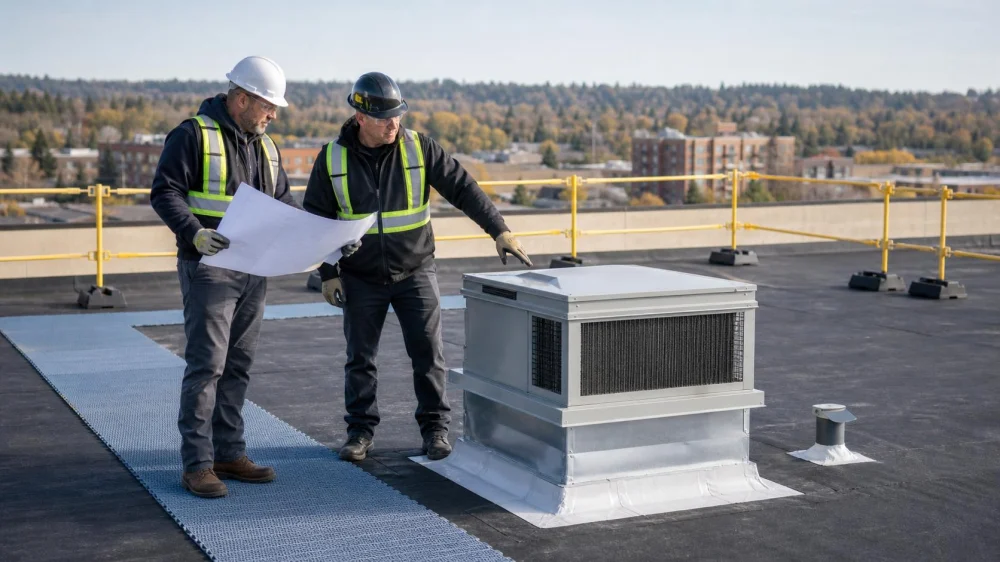
Rooftop HVAC and Roofing Work: Coordinate the Trades
Table of contents
Quick answer
When a roof has HVAC units, vents, refrigerant lines, or electrical feeds, assign one person to coordinate the roofer and licensed mechanical and electrical trades. Confirm shutdowns, equipment lifting, curb and flashing responsibility, weather protection, and recommissioning in writing. The roof should not be closed until penetrations, supports, drainage, and required clearances have been checked.
Christensen & McLean Roofing / christensen & mclean roofing
16173 132 Ave NW, Edmonton, AB T5V 1H7, Canada
Plan before work starts
Begin with a joint site review rather than separate assumptions. Record every rooftop unit, curb, duct, pipe, cable, drain, and service path. The written plan should identify:
- which equipment stays, moves, or is replaced;
- who disconnects and reconnects power, controls, gas, and refrigerant systems;
- who supplies and installs curbs, sleepers, flashings, and protective pads;
- how lifting loads and roof access will be managed;
- how openings will be protected from rain;
- what warranty inspection or documentation each manufacturer requires;
- who tests the equipment and signs off after roofing.
Notify occupants about planned shutdowns and any limits on heating, cooling, ventilation, or business operations. Protect air intakes from dust and debris using methods approved for the equipment; do not improvise a blockage that could damage a running system.
Ck Roofing Solutions / ck roofing solutions
MarkhamRegional Municipality of YorkOntario
8 Hikers Ln, Markham, ON L6B 0K3, Canada
Coordinate the work sequence
- Verify permits, drawings, equipment weights, and current site conditions.
- Complete authorized shutdown, isolation, and disconnection procedures.
- Move or lift equipment only with suitable rigging and qualified personnel.
- Repair or install curbs and supports, then complete the roof membrane and flashing system.
- Check slope, drainage paths, fasteners, penetrations, and service clearances.
- Reconnect and recommission equipment using the manufacturer’s procedures.
- Document roof and HVAC inspections, test results, photos, and warranty records.
Keep loose tools, sharp metal, oils, and discarded fasteners away from the finished membrane. If another trade must return later, agree on protected walkways and a check-in process so new damage can be identified quickly.
Limits and safety
Roofers should not disconnect regulated electrical, gas, or refrigerant systems unless separately qualified and authorized. HVAC technicians should not cut or patch a warranted roof without the roofing contractor’s approved detail. Fall protection, lifting, lockout, electrical, and fuel-safety requirements apply throughout the job.
Stop work when undocumented services are found, a curb is structurally unsound, rain protection is inadequate, or the planned detail conflicts with manufacturer instructions. An engineer may be needed for new loads, altered openings, unusual vibration, or questionable structure.
Frequently asked questions
Can an HVAC unit stay in place during reroofing?
Sometimes, if access, curb height, flashing, drainage, clearances, and the selected roof system permit it. The roofer and HVAC contractor should verify the detail on site.
Who is responsible for a leak around a curb?
Responsibility depends on the contract and the cause. Define ownership of the curb, flashing, membrane, penetrations, and later service damage before work begins.
When should equipment be restarted?
Only after authorized reconnection, inspection, and commissioning. Confirm that temporary intake protection is removed and that operation, controls, and drainage are normal.
Sources and evidence
Follow the current Ontario requirements that apply to construction and worker safety, municipal permit guidance, and the published instructions for the roofing, curb, and HVAC products. Electrical, gas, and refrigerant work should be handled under the applicable licensing and safety rules by qualified trades.
Next steps
Schedule one pre-work meeting with the roofer, HVAC contractor, electrician or other required trades, and the building representative. Leave with a written sequence, named responsibilities, shutdown window, weather contingency, inspection points, and a single record package for warranties.

 Avon Roofing4.0 (16 reviews)
 Three Bro Squirrels Roofing Ltd.5.0 (2 reviews)
 Muskoka Roofing Company3.0 (19 reviews)
 AM Group Exteriors - London4.0 (260 reviews)
 Stark Roofing4.0 (4 reviews)
 CALGARY ROOFING & EXTERIORS LTD4.0 (44 reviews)
 How Much Does a New Roof Cost in 2025? Canadian Roofing Price Guide
 Top Signs Your Roof Has a Leak and What to Do About It in Canada
 Can You Install a New Roof Over an Old One in Canada?
 The Top Questions to Ask Before Hiring a Roofer in Canada
 What Are the Most Common Roofing Scams and How to Avoid Them in Canada
 How to Prepare Your Home for a Roofing Project in Canada